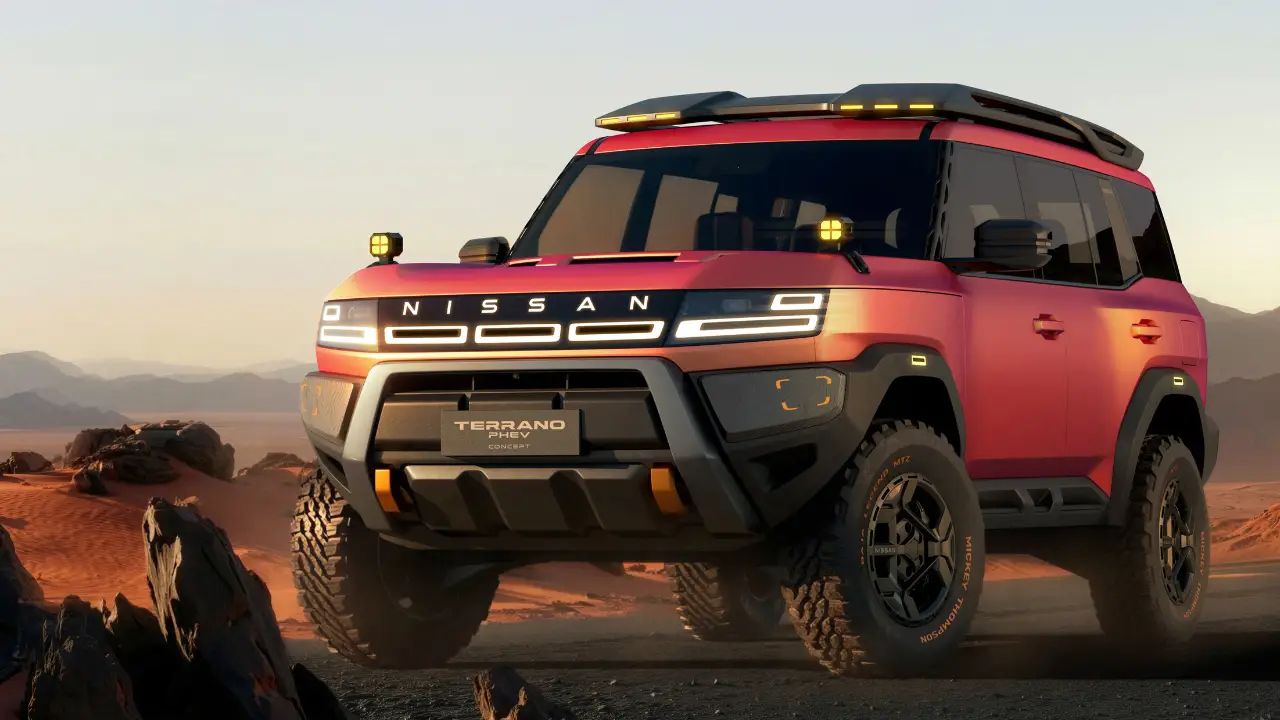
Nissan India appears to be gearing up for a significant product revival, and at the heart of its most exciting plans is a rugged, plug-in hybrid SUV derived from the Terrano PHEV concept unveiled at the Beijing Auto Show 2026. The upcoming vehicle, expected to be positioned against the likes of the Toyota Fortuner and MG Gloster, could arrive in India in under two years and is being evaluated as a locally manufactured model priced at around Rs 40 lakh. Here is everything we know so far about what could be one of the most consequential SUV launches in India’s midsize segment in recent years.
Nissan India’s Product Revival Plan: From Four Models to Many More
With the launch of the Tekton and its upcoming three-row derivative, Nissan India will have expanded its product lineup to four models. While all four are shared with alliance partner Renault, the company has made it clear that this is only the beginning. Thierry Sabbagh, Nissan’s president for the Middle East, KSA, CIS, and India regions, confirmed to Autocar India that Nissan is keen on launching its own distinct models, separate from those shared with Renault. While Sabbagh remained cautious about specifics, alluding only to the Patrol as one possibility, industry sources indicate that vehicles from Nissan’s joint venture with Chinese automaker Dongfeng are being actively evaluated for India.
The company’s chief performance officer, Guillaume Cartier, reinforced this direction at the launch of the new-generation Nissan Kicks when he said that after the Magnite, Nissan did not really have a plan but now has a well thought-out one, with a clear ambition to stay and perform well in India. That statement signals a genuine shift in intent from a brand that has struggled to find consistent traction in one of the world’s fastest-growing car markets.
What Is the Nissan Terrano PHEV Concept?
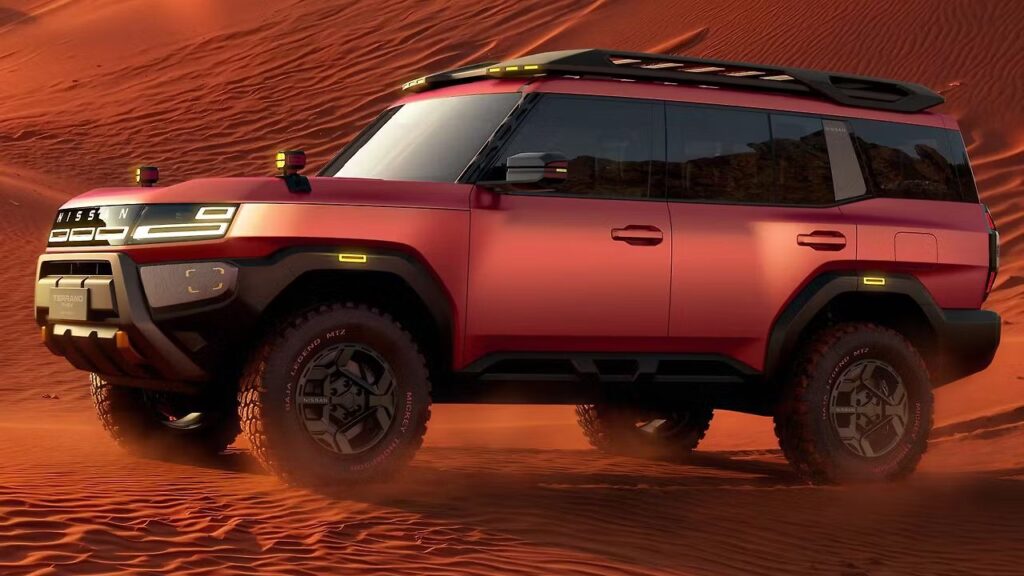
The Terrano PHEV concept was among the most talked-about unveilings at the Beijing Auto Show 2026. It is an SUV body variant of the Nissan Frontier Pro and Dongfeng Z9 pickup trucks, sharing the same ladder-frame chassis and powertrain architecture. What makes it particularly significant is that it introduces plug-in hybrid technology to the Nissan lineup in a segment that has traditionally been dominated by diesel-only options.
Key highlights of the Terrano PHEV concept include:
- Built on a ladder-frame chassis shared with the Nissan Frontier Pro and Dongfeng Z9 pickups
- Available with both a conventional internal combustion engine and a plug-in hybrid powertrain
- The PHEV variant would be a first of its kind for Nissan globally in this segment
- Designed to deliver both off-road capability and improved urban fuel efficiency through electrification
- Positioned as a premium, feature-loaded product in line with the expectations of emerging market buyers
Nissan is specifically keen on bringing the plug-in hybrid variant to India, which would give the brand a clear technological differentiator in a segment where most competitors still rely on conventional diesel powertrains.
The Dongfeng Joint Venture: Why China Could Be Nissan’s Biggest Advantage in India
Nissan has maintained a 50-50 joint venture with Chinese automaker Dongfeng since 2003. This partnership has quietly become one of the more strategically valuable assets Nissan could deploy in the Indian market. Chinese manufacturing offers a low-cost production base combined with vehicles that are typically feature-rich from the factory floor, a combination that aligns closely with what Indian buyers have consistently demanded.
Speed of development is another significant advantage. Nissan’s Dongfeng JV can develop a vehicle from scratch in approximately 30 months, compared to the industry norm of up to 60 months. In a market as dynamic and competitive as India, the ability to respond quickly with fresh products at competitive price points is an asset that legacy manufacturers building entirely in-house struggle to match.
The Dongfeng partnership essentially gives Nissan access to vehicles that are modern, well-equipped, cost-efficiently built, and capable of being updated frequently, three traits that have historically been the defining demands of the Indian automotive market.
How Nissan Plans to Manufacture This SUV in India
Local manufacturing will be central to making a viable India launch possible, and Nissan is better positioned than it might appear. While the brand no longer holds a stake in the Chennai manufacturing plant it previously shared with Renault, it retains a production capacity reservation of 2,50,000 units per annum at the facility. The plant’s total installed capacity stands at 5,00,000 units annually, a figure that is currently far from being fully utilized.
This available headroom means the Dongfeng-derived lineup, starting with the Terrano PHEV-based SUV, can be accommodated without requiring an entirely new manufacturing setup. What Nissan will need to commit to, however, is additional investment to localize production and meet the kind of cost structure that makes a Rs 40 lakh ex-showroom price point feasible. Signals from the brand suggest that willingness to invest is present, and the strategic rationale for doing so is compelling.
Nissan Terrano PHEV vs Fortuner vs Gloster: Where It Could Stand
If launched at the expected price of around Rs 40 lakh ex-showroom, the production version of the Terrano PHEV concept would directly enter the premium midsize body-on-frame SUV segment, a space currently dominated by the Toyota Fortuner, MG Gloster, and the Isuzu MU-X. The table below gives a sense of where Nissan’s upcoming SUV could position itself among existing rivals.
| Model | Price Range (Ex-Showroom) | Powertrain | Chassis Type |
|---|---|---|---|
| Nissan Terrano PHEV (Expected) | Around Rs 40 lakh | PHEV (Plug-in Hybrid) | Ladder Frame |
| Toyota Fortuner | Rs 33 – 51 lakh | Diesel / Petrol | Ladder Frame |
| MG Gloster | Rs 38 – 45 lakh | Diesel | Ladder Frame |
| Isuzu MU-X | Rs 34 – 38 lakh | Diesel | Ladder Frame |
The PHEV powertrain would be the most immediate differentiator. None of the current competitors in this segment offer electrification, which means Nissan could carve out a unique space for buyers who want the go-anywhere capability of a ladder-frame SUV but are also drawn to the lower running costs and cleaner credentials of a plug-in hybrid.
Timeline: When Could the Nissan Terrano PHEV Launch in India?
No official launch date has been announced, and Nissan has not formally confirmed an India debut for this model. However, based on available information and the pace at which the company is progressing with its product revival plan, the picture looks like this:
- The Terrano PHEV concept was unveiled at the Beijing Auto Show in May 2026
- Nissan’s Dongfeng JV has the capability to take a vehicle from concept to production in around 30 months
- If planning and investment decisions are formalized quickly, a production launch could materialize in under two years from now
- Local manufacturing at the Chennai plant would be a prerequisite for achieving the targeted price point
- Nissan’s current capacity reservation at Chennai provides a ready production pathway without needing a new facility
The two-year window places a potential launch somewhere around mid-to-late 2027 or early 2028, depending on how quickly investment commitments are made and homologation work progresses.
Why This Launch Matters for the Indian SUV Market
The Indian premium SUV segment has been waiting for a genuine disruptor. The Toyota Fortuner has enjoyed near-monopoly status among buyers who specifically want a ladder-frame, go-anywhere SUV with strong resale value. While the MG Gloster and Isuzu MU-X offer alternatives, neither has meaningfully challenged the Fortuner’s dominance.
A well-priced, feature-packed, plug-in hybrid Nissan SUV built on a proven ladder-frame platform could change the conversation in this segment. For buyers who are already considering the leap to electrification but do not want to give up the ruggedness of a traditional SUV, the Terrano PHEV would be the first real option in its class. Combined with the cost advantages of Dongfeng manufacturing and Nissan’s established service network, the fundamentals of a compelling product case are already visible. The execution, timeline, and pricing will ultimately determine whether this becomes a genuine Fortuner rival or another missed opportunity for a brand that has long been capable of far more than its India sales history suggests.