Maruti Suzuki India Limited has achieved a milestone that no Indian automaker has reached before. In April 2026, the country’s largest carmaker sold a total of 2,39,646 units, its highest-ever monthly sales figure in the company’s history. Domestic passenger vehicle sales hit an all-time high of 1,91,122 units in the same month, reinforcing Maruti’s commanding position at the top of the Indian automotive market. From entry-level hatchbacks to premium SUVs and its first-ever electric vehicle, Maruti’s entire portfolio contributed to this record-breaking performance. Here is a complete breakdown of the numbers, the key drivers behind this result, and what the brand has planned for the rest of 2026.
Maruti Suzuki April 2026 Sales – Complete Data at a Glance
The table below captures the full sales data for Maruti Suzuki in April 2026, compared against the same month in 2025. The year-on-year growth across every category tells a clear story of accelerating demand.
| Category | Models | April 2026 (Units) | April 2025 (Units) |
|---|---|---|---|
| A: Mini | Alto, S-Presso | 16,066 | 6,332 |
| A: Compact + Mid-Size | Baleno, Celerio, Ciaz, Dzire, Ignis, Swift, WagonR | 80,659 | 61,912 |
| Total A: Passenger Cars | – | 96,725 | 68,244 |
| B: Utility Vehicles | Brezza, Ertiga, eVitara, Fronx, Grand Vitara, Invicto, Jimny, Victoris, XL6 | 77,892 | 59,022 |
| C: Vans | Eeco | 13,087 | 11,438 |
| Total Domestic PV Sales | – | 1,87,704 | 1,38,704 |
| Light Commercial Vehicles (LCV) | Super Carry | 3,418 | 3,349 |
| Total Domestic Sales (PV + LCV) | – | 1,91,122 | 1,42,053 |
| Sales to Other OEM | – | 8,470 | 9,827 |
| Total Domestic Sales (PV + LCV + OEM) | – | 1,99,592 | 1,51,880 |
| Total Export Sales | – | 40,054 | 27,911 |
| Total Sales (Domestic + Export) | – | 2,39,646 | 1,79,791 |
The numbers paint a remarkable picture. Total sales grew by approximately 33 percent year-on-year, with domestic passenger vehicle sales alone jumping by nearly 35 percent compared to April 2025. Export volumes also surged by over 43 percent, reflecting growing international demand for Maruti-manufactured vehicles.
What Drove the Record: Passenger Cars and Utility Vehicles Both Fire Together
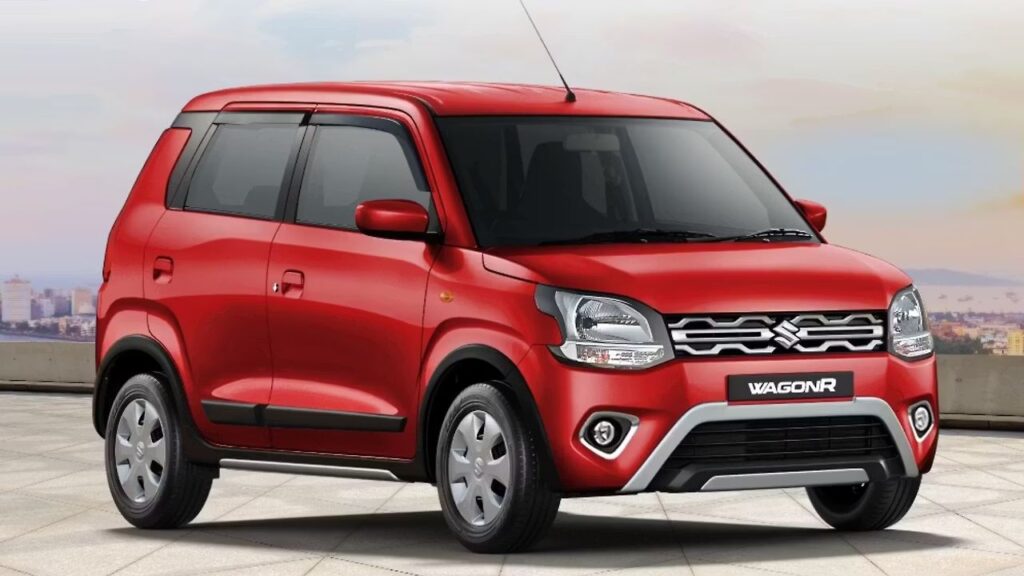
The April 2026 record was not carried by a single segment or a single hero product. Both the passenger car and utility vehicle categories delivered strong growth simultaneously, which is what made this month’s performance exceptional.
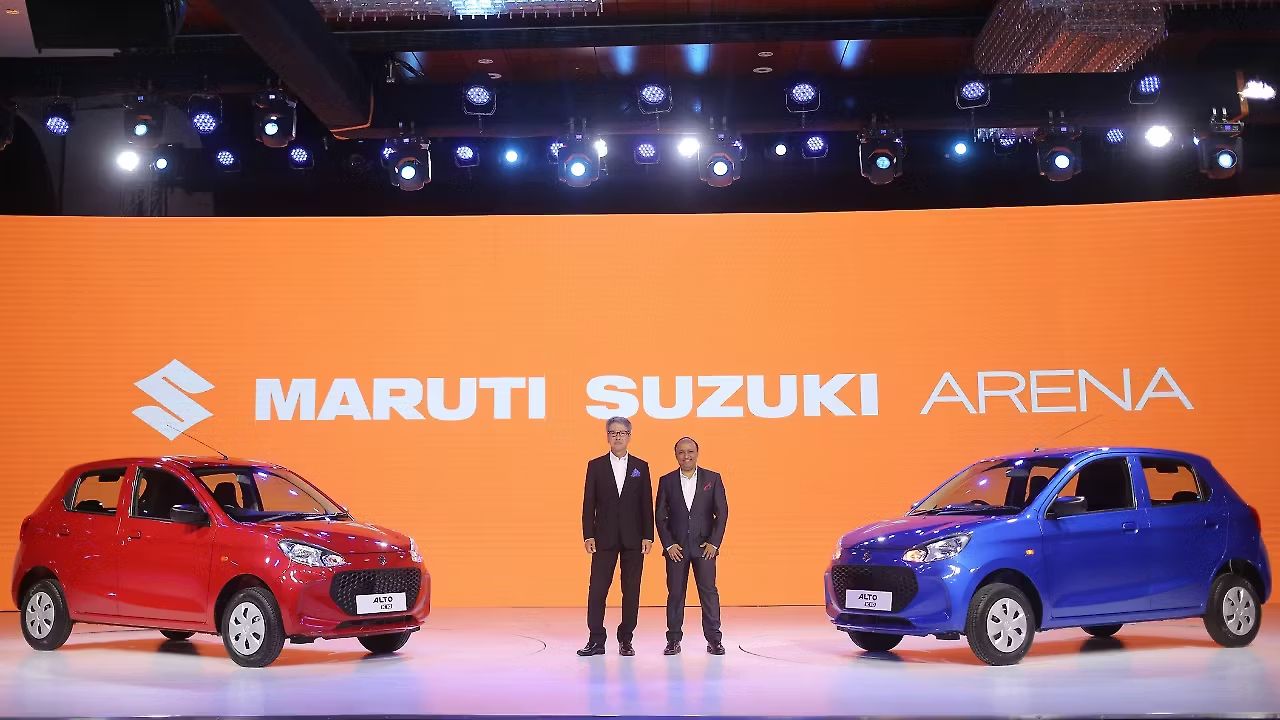
In the passenger car segment, the compact and midsize category led the charge with 80,659 units. This group includes some of Maruti’s most consistently popular nameplates, the Swift, WagonR, Dzire, and Baleno all of which continue to attract strong buyer interest across urban and semi-urban markets. The entry-level mini segment, represented by the Alto and S-Presso, more than doubled year-on-year, jumping from 6,332 units in April 2025 to 16,066 units in April 2026, a signal that first-time car buyers are re-entering the market in meaningful numbers.
The utility vehicle segment contributed 77,892 units, up from 59,022 in April 2025. The Brezza, Grand Vitara, Fronx, and Ertiga remain the workhorses of this category, while the newly launched eVitara electric SUV has begun adding to the tally as well.
Maruti eVitara April 2026: The Electric Chapter Begins
One of the most closely watched numbers within Maruti’s April data is the performance of the eVitara, the company’s first-ever electric vehicle. The eVitara recorded sales of 2,006 units in April 2026, a solid opening for a brand entering the EV space for the first time.
Key details from the eVitara’s April 2026 sales performance include:
- Total units sold in April 2026: 2,006 units
- Nearly 85 percent of demand is coming from the larger 61 kWh battery pack variant
- The 61 kWh variant offers a longer real-world range, which appears to be the deciding factor for most buyers
- The eVitara competes in the premium electric SUV space alongside the Tata Curvv EV and MG ZS EV
- As production ramps up and waiting periods normalize, monthly volumes are expected to rise steadily
The strong preference for the larger battery pack reveals an important insight about Indian EV buyers at this price point: range anxiety is still a primary concern, and buyers are willing to pay a premium to address it. For Maruti, this data will likely shape how it allocates production capacity between the two battery variants going forward.
Exports Surge: Maruti’s Global Footprint Expands in April 2026
Maruti Suzuki’s export performance in April 2026 was equally impressive. The company shipped 40,054 units to international markets, a jump of over 43 percent compared to the 27,911 units exported in April 2025. This growth reflects both the increasing global appeal of Maruti-manufactured vehicles and the company’s growing role as an export hub for Suzuki’s international markets.
Strong export volumes are strategically important for Maruti beyond just the revenue they generate. Higher production utilization at Indian plants keeps per-unit costs lower, which in turn supports the competitive pricing that Maruti relies on for domestic market leadership. As Suzuki continues to channel more global production through its India operations, export numbers are likely to remain a significant part of Maruti’s overall sales story.
Upcoming Maruti Updates: Brezza, Baleno and Fronx Facelifts on the Way
Beyond the April sales numbers, Maruti Suzuki has a busy product calendar ahead. The company is working on midlife updates for three of its most popular models, all of which are currently in the testing phase.
Here is what is expected from each upcoming update:
- The 2026 Maruti Brezza facelift is expected to receive a 1.0-litre turbo petrol engine sourced from the Fronx, paired with a new 6-speed manual gearbox. The existing 1.5-litre petrol and CNG powertrain options will continue alongside it. The CNG variant is also likely to get an underbody CNG tank, similar to what has been seen on the Victoris.
- The 2026 Maruti Baleno facelift is expected to bring a wider redesigned grille, revised front and rear bumpers, and new headlamp and taillamp units. It may also share the 1.0-litre turbo petrol engine with the Fronx.
- The Maruti Fronx facelift is expected to be the most significant of the three updates, with an ADAS suite, refreshed interior and exterior design, and potentially the first application of Maruti’s in-house developed strong hybrid powertrain.
These updates are designed to keep Maruti’s most competitive nameplates fresh and relevant against newer rivals from Hyundai, Kia, and Tata Motors, all of which have been investing heavily in interior quality and safety features.
Maruti’s In-House Strong Hybrid: The 2027 Technology Bet
One of the more consequential developments on Maruti’s product roadmap is the development of an in-house strong hybrid powertrain, expected to be ready for deployment in 2027. Unlike the mild hybrid systems currently used across the lineup, a strong hybrid would offer meaningfully better fuel efficiency and reduced tailpipe emissions, bringing Maruti into more direct competition with Toyota’s proven hybrid technology that powers the Urban Cruiser Hyryder and Innova Hycross.
The rollout plan for this hybrid system is expected to follow this sequence:
- The Maruti Fronx facelift is expected to be the first model to receive the strong hybrid system
- A new sub-4 metre MPV is lined up to receive the technology shortly after
- The next-generation Maruti Baleno is also expected to feature the strong hybrid powertrain
If Maruti can bring a competitively priced strong hybrid system to the market at its typical price points, it would represent a significant shift in the Indian hybrid landscape, making self-charging hybrid technology accessible to a much broader audience than what Toyota’s current pricing allows.
What the April 2026 Record Means for Maruti’s Market Position
Maruti Suzuki’s April 2026 performance is more than just a record on paper. It is a statement about the brand’s ability to grow across every single segment it competes in, from the most affordable entry-level cars to premium electric SUVs, all in the same month. The data comparison with April 2025 is particularly telling, a 33 percent jump in total sales in just one year is not the result of a single product launch or a pricing promotion. It reflects broad-based demand recovery, improved model availability, and a product range that continues to meet the evolving expectations of Indian buyers.
| Key Sales Metric | April 2026 | April 2025 | Year-on-Year Growth |
|---|---|---|---|
| Total Domestic PV Sales | 1,87,704 | 1,38,704 | +35.3% |
| Total Export Sales | 40,054 | 27,911 | +43.5% |
| Total Sales (Domestic + Export) | 2,39,646 | 1,79,791 | +33.3% |
| Mini Segment (Alto + S-Presso) | 16,066 | 6,332 | +153.7% |
| Utility Vehicles | 77,892 | 59,022 | +32.0% |
With a strong pipeline of facelifts, a new in-house hybrid system on the horizon, and its EV journey just beginning with the eVitara, Maruti Suzuki looks well-positioned to defend and extend its market leadership through the remainder of FY2027. The April 2026 record may be the high point for now, but the foundations being laid today suggest that Maruti is building toward making such numbers a regular occurrence rather than an exception.