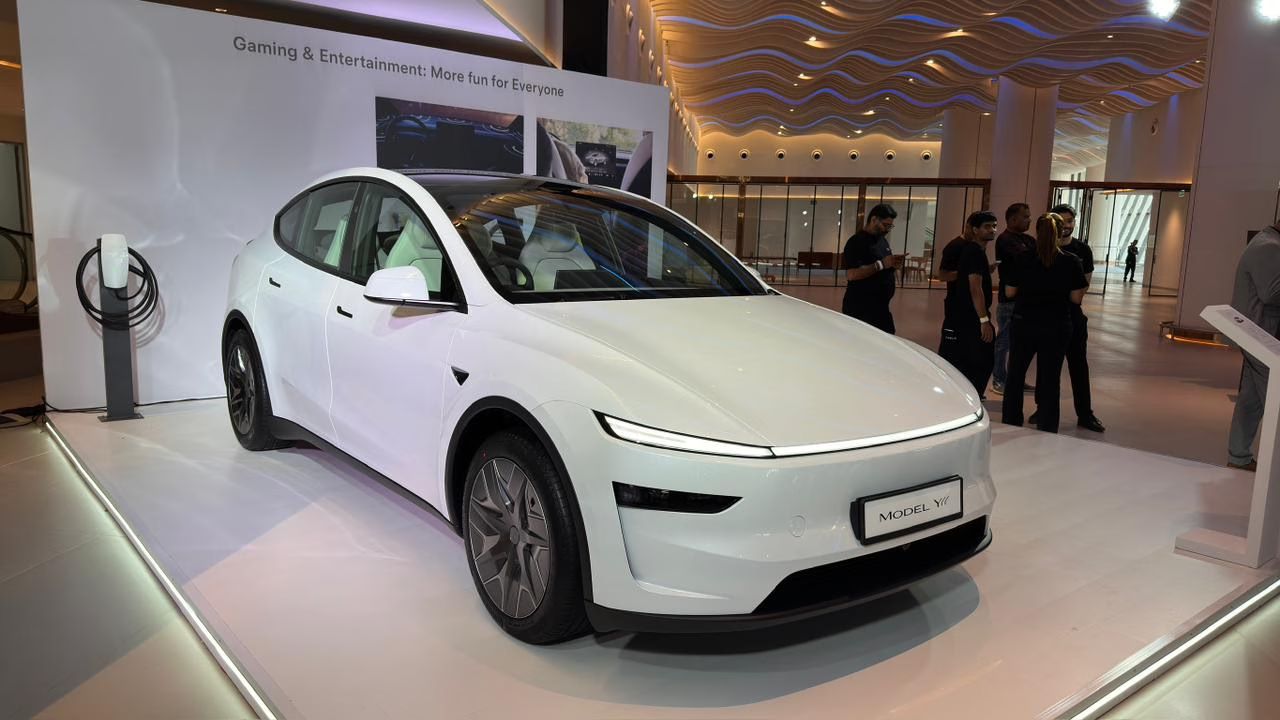
The automotive market undergoes constant transformation, yet one parameter remains non-negotiable for modern families and daily commuters alike: vehicle safety. In recent automotive safety news, the Australasian New Car Assessment Program (ANCAP) released its comprehensive crash test results for the highly anticipated Tesla Model Y L. For consumers evaluating this model, the announcement brought exceptional news as the six-seater premium electric crossover officially secured a perfect five-star safety rating. This rating is an extension of Tesla’s core engineering principles, building upon the crash performance established by the standard five-seater Model Y. Car safety assessments are continuously evolving, and the Model Y L was subjected to stringent 2023–2025 assessment protocols, which demand a much higher baseline of active and passive safety measures compared to previous years. The achievement establishes this electric vehicle as an industry benchmark for midsize family crossovers, validating that expanding cabin space does not inherently compromise structural integrity or crash avoidance.
To comprehend the significance of this milestone, it helps to understand what the Model Y L represents. Developed as an adaptable multi-row electric vehicle, this variant caters heavily to the growing demand for spacious family transport across key global markets. When manufacturers stretch a vehicle’s wheelbase or modify a cabin layout to incorporate three rows of seating, it often alters the structural load paths and changes the mass distribution of the vehicle. This raises engineering challenges regarding how impact forces migrate through the safety cage during severe side-impact or frontal offset collisions. ANCAP, working in alignment with strict Euro NCAP methodologies, rigorously cross-referenced extensive technical data and structural telemetry provided by Tesla. The results confirmed that the Model Y L delivers excellent physical containment and advanced crash-mitigation capabilities, proving that its protective envelope extends securely to all three rows of passengers.
Dissecting the Four Pillars of the ANCAP Safety Framework
The assessment protocol used by ANCAP evaluates a vehicle across four core dimensions: Adult Occupant Protection, Child Occupant Protection, Vulnerable Road User Protection, and Safety Assist. To achieve a five-star rating, a vehicle must pass specific high-performance thresholds in every single category rather than relying on a stellar performance in one area to camouflage deficiencies in another. The Model Y L demonstrated balanced proficiency, recording strong percentiles across the matrix. It earned an impressive 91 percent for protecting adults, 84 percent for shielding children, 86 percent for safeguarding pedestrians and cyclists, and a class-leading 92 percent for its active safety assist technologies.
| Core Safety Category | Points Earned | Maximum Points | Percentage Score |
| Adult Occupant Protection (AOP) | 36.52 | 40.00 | 91% |
| Child Occupant Protection (COP) | 41.40 | 49.00 | 84% |
| Vulnerable Road User Protection (VRU) | 54.38 | 63.00 | 86% |
| Safety Assist (SA) | 16.65 | 18.00 | 92% |
This structured data highlights that while the passive crash protection remains robust, Tesla’s reliance on its software-driven active safety suite acts as an effective shield. The data points demonstrate that the vehicle handles both physical impacts and preventative collision avoidance with equal efficacy. In the sections below, we analyze the engineering, real-world dynamics, and biomechanical readings behind these raw metrics.
Adult Occupant Protection: Structural Resilience and Impact Telemetry
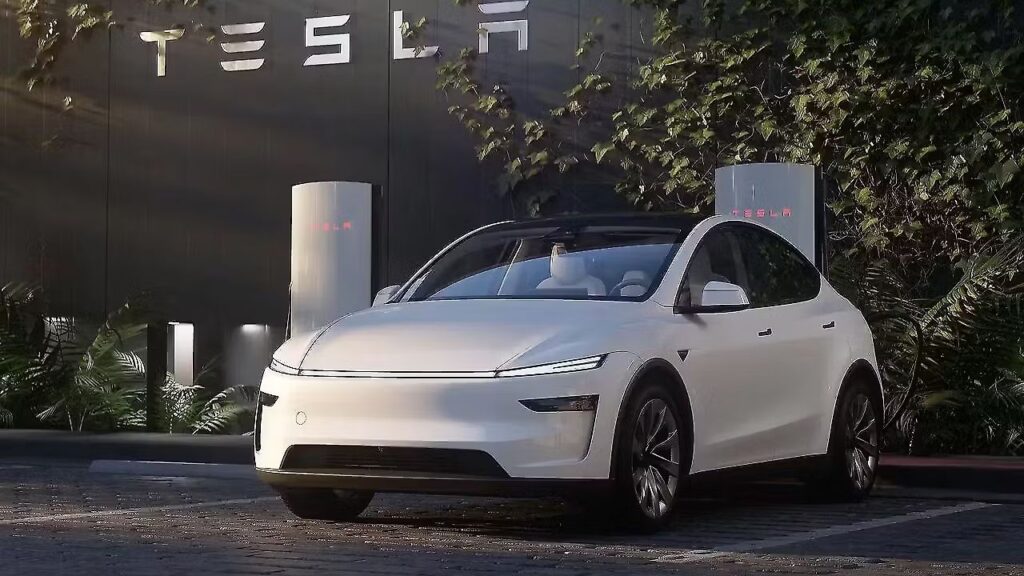
When a vehicle undergoes a frontal offset crash test, it is propelled at 50 kilometers per hour into a moving progressive deformable barrier, simulating a severe head-on collision with an oncoming vehicle. During this test, the passenger compartment of the Model Y L remained completely stable, preventing the dashboard or steering column from intruding into the driver’s survival space. Biomechanical instrumentation inside the dummy figures indicated good protection for the knees, femurs, and lower limbs of both the driver and front passenger. However, it was noted that the driver’s chest received an “adequate” rating due to the sheer deceleration forces managed by the seatbelt pre-tensioners. The test also evaluated vehicle-to-vehicle compatibility, which measures how aggressively a vehicle strikes an oncoming car. Because of its dense front structure, the Model Y L received a minor 1.00-point penalty for presenting a moderate risk to the occupants of an opposing vehicle.
The vehicle performed exceptionally well during the full-width frontal impact test, which propels the car directly into a rigid barrier at 50 kilometers per hour. For the front seat driver, protection was rated as good across all critical body regions, while chest protection for the rear passenger dummy was rated as adequate. Side-impact testing yielded even better marks. In the lateral side barrier crash test, which simulates another car t-boning the vehicle at 60 kilometers per hour, the Model Y L scored maximum points, showcasing the strength of its reinforced B-pillars and side door beams. The more severe oblique pole test where the vehicle is slithered sideways into a rigid telephone pole at 32 kilometers per hour revealed adequate chest protection and good head protection. Whiplash protection on the front and rear seats was rated as excellent, preventing dangerous neck hyperextension during simulated rear-end collisions.
Child Occupant Protection: Triple-Row Safety Dynamics and ISOFIX Compliance
For a family-centric vehicle like the Model Y L, child protection is of paramount importance. ANCAP utilizes crash test dummies modeled after six-year-old and ten-year-old children to evaluate the rear seating area. In the frontal dynamic and lateral impact tests, the Model Y L scored full marks for occupant containment. The side-curtain airbags deployed quickly, providing a cushioned barrier between the child dummies and the hard interior plastic trim. This minimized lateral head movement and kept both dummies safely within the protective contours of their designated seating zones.
Despite the high scores in dynamic crash testing, the Model Y L experienced some point deductions in the child restraint installation and onboard safety features categories. The vehicle scored 8.4 out of 12 points for restraint installation and 9.0 out of 13 for onboard child safety infrastructure. ANCAP engineers noted specific practical challenges regarding the ISOFIX mounting anchorages. The design and physical recessing of the anchors caused compatibility issues with certain styles of child seats commonly sold across Australia and New Zealand. While safety remains excellent once a car seat is locked into position, the physical process of installing the seats was deemed overly complex and less intuitive than industry standards. Furthermore, the vehicle’s Child Presence Detection system—which alerts parents via a smartphone app or horn beep if a child is accidentally left behind in the car—only monitors the first and second rows of seats, leaving the third row unassessed for this feature.
Vulnerable Road User Protection: Passive Hood Engineering and Tesla Vision
Car safety extends beyond protecting the individuals inside the vehicle; it also involves minimizing injuries to pedestrians, cyclists, and motorcyclists who might come into contact with the exterior. The Model Y L features an active hood system. When the vehicle’s external sensors detect an imminent impact with a pedestrian, pyrotechnic actuators lift the trailing edge of the aluminum hood within milliseconds. This creates a mechanical buffer zone between the soft hood surface and the unyielding engine components underneath, significantly reducing the severity of head injuries.
Test results indicated that head protection was good to adequate across most of the center hood area, though poor scores were recorded along the stiff windshield A-pillars. The bumper assembly performed perfectly, securing maximum points for safeguarding a pedestrian’s lower legs and knees. In tandem with these physical features, the vehicle uses a camera-only active safety system called Tesla Vision to prevent these accidents entirely. The Autonomous Emergency Braking (AEB) system demonstrated strong forward detection capabilities, successfully avoiding collisions with pedestrians and cyclists across daytime and nighttime testing parameters. The system also scored high marks for its motorcycle detection and its built-in anti-dooring feature, which temporarily locks the doors if a camera senses a cyclist approaching from behind.
Safety Assist Technologies: Active Prevention and Driver Monitoring
The highest individual score achieved by the Model Y L was in the Safety Assist category, highlighting Tesla’s commitment to software-defined accident prevention. To secure a high score under the latest ANCAP guidelines, active driver-assistance systems must intervene during critical driving scenarios, such as crossing an intersection or avoiding a head-on collision when an oncoming vehicle swerves into your lane. The Model Y L features an advanced Lane Support System functional between 1 and 150 kilometers per hour. This system monitors lane markings and gently steers the car back into place if it begins to drift, providing stronger corrections if it detects a vehicle in the blind spot.
The onboard AEB system also excelled in car-to-car collision tests, receiving high marks for its performance at intersections and during cross-traffic scenarios. The electronic suite includes a highly responsive Speed Assistance System that utilizes digital mapping databases and real-time camera inputs to read road signs, automatically adjusting the vehicle’s maximum speed limit if the driver enables the function. Additionally, a direct driver monitoring system comes standard, using an infrared cabin camera to analyze head position and eye movement. If the system detects signs of fatigue or prolonged distraction, it provides loud audible and visual warnings on the central infotainment display to encourage the driver to refocus on the road.
Comprehensive Overview of Active and Passive Safety Equipment
The vehicle’s safety rating relies heavily on its standard array of active and passive equipment. The Model Y L features nine strategically placed airbags, including expanded side-curtain airbags that drop down to cover all three rows of seats, and a specialized center airbag positioned between the driver and front passenger to prevent head-to-head contact during lateral side impacts.
Standard Safety Technologies and Structural Hardware
- Tesla Vision Camera Suite: Provides 360-degree situational awareness for collision avoidance.
- Nine Airbag Defensive Array: Includes a front-center airbag and full-length three-row side curtain protection.
- Advanced Lane Support Systems: Features emergency lane keeping, lane departure warnings, and lane keep assist.
- Multi-Collision Braking: Automatically locks the vehicle’s brakes after a primary impact to prevent secondary collisions.
- Post-Collision Safety Unlocks: Automatically cuts high-voltage battery lines and unlocks all doors after an airbag deployment.
- Advanced eCall Emergency System: Transmits precise GPS data and structural telemetry to emergency services immediately following a crash.
Post-Collision Rescue, Submersion Functionality, and Consumer Key Takeaways
The final phase of ANCAP’s evaluation focuses on what happens after a severe collision has occurred. Emergency response teams rely on clear vehicle documentation to safely extricate passengers from electric vehicles without cutting into high-voltage lines. The Model Y L includes a standardized digital Rescue Sheet that guides first responders through disabling the battery packs safely. During physical testing, all doors remained fully operational after major impacts, allowing occupants to exit without tools. Additionally, ANCAP confirmed that the vehicle’s electronic window regulators remain functional for a minimum required duration after water submersion, allowing passengers to roll down the glass and escape if the vehicle plunges into a body of water.
Ultimately, the five-star ANCAP safety rating confirms that the Tesla Model Y L is a highly secure option for family transportation. By combining structural strength with advanced software prevention, the electric crossover offers peace of mind across all three rows of seats. While there are minor inconveniences regarding the physical installation of child car seats and the lacks of third-row child presence sensors, the overall results show that the Model Y L excels in protecting its occupants. For buyers navigating the premium electric vehicle landscape, this independent crash test data establishes the Model Y L as a clear leader in automotive safety engineering.