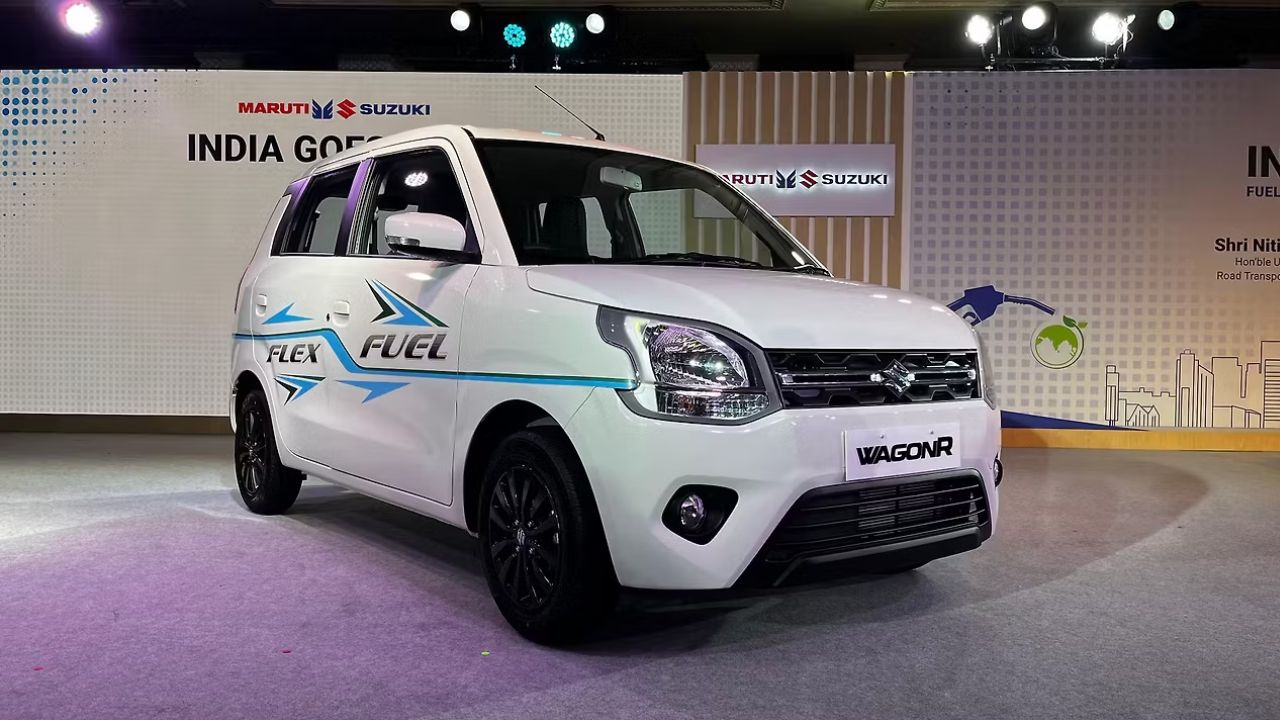
Maruti Suzuki India Limited has officially uncovered its mass-market flex-fuel prototype vehicle in New Delhi. The vehicle operates on ethanol-petrol blends ranging from twenty percent to eighty-five percent. This development aligns with the transport ministry’s push for domestic biofuel adoption. Engineers developed the vehicle locally at the company’s Rohtak facility. The vehicle uses the existing tall-boy design framework. It targets mainstream commuter buyers seeking lower running costs. Testing phases are currently active on public roads.
The vehicle represents a direct mechanical adaptation of the standard petrol model. It runs on variable fuel mixtures, the internal system self-adjusts immediately. A specialized sensor reads the chemical ratio inside the tank. It modifies the combustion parameters instantly. This removes the need for separate fuel tanks. The vehicle can accept regular fuel if ethanol is unavailable. This design addresses the lack of widespread ethanol pumps in rural areas. Production lines are being prepared for commercial manufacturing timelines.
Automotive manufacturers face strict regulatory deadlines for fleet emissions across India. The introduction of local flex-fuel options provides a direct alternative to immediate electric vehicle conversion. The initial development costs remain lower than battery manufacturing setups. This helps keep the final consumer price accessible for middle-class buyers. Dealerships expect the production model to arrive after final long-term durability trials finish completely.
Mechanical Modifications for Ethanol Compatibility
Ethanol contains high levels of oxygen, it accelerates the corrosion of standard automotive metals. Standard fuel systems cannot handle fuel blends exceeding twenty percent without rapid component failure. Maruti Suzuki replaced all traditional rubber lines with compound synthetic polymers. These parts resist chemical degradation. The fuel pump features upgraded internal seals to prevent premature wear. The injectors use modified nozzles to handle a higher volume of fluid.
The engine cylinders require specialized surface protections to prevent long-term scoring. Engineers applied an anti-friction coating to the piston rings. The intake and exhaust valve seats use hardened metal alloys. These material changes stop the engine from rusting when water accumulates in the fuel lines. Ethanol naturally absorbs moisture from the surrounding air. This water accumulation causes standard steel parts to pit over time. The modified components eliminate this specific structural risk.
Material Changes in the Flex Fuel Engine
| Component | Standard Configuration | Flex Fuel Configuration |
| Fuel Delivery Lines | Standard Grade Rubber Tubes | Reinforced Synthetic Polymers |
| Fuel Pump Construction | Basic Steel Housing | Anti-Corrosive Coated Components |
| Valve Seat Material | Standard Cast Iron Alloys | Hardened Chromium Metal Alloys |
| Piston Ring Surface | Standard Polish Finish | Friction-Resistant Coating |
The engine computer requires an entirely new software map to process variable fuel properties. Ethanol has a lower energy density than pure fossil fuel. The engine must burn more fluid to create the same physical output. The new Engine Control Unit uses a dedicated composition sensor to check the fuel lines. It measures the electrical conductivity of the liquid. The computer calculates the exact ethanol percentage from this reading. It then commands the fuel injectors to increase the spray volume dynamically.
Powertrain Performance and Output Data
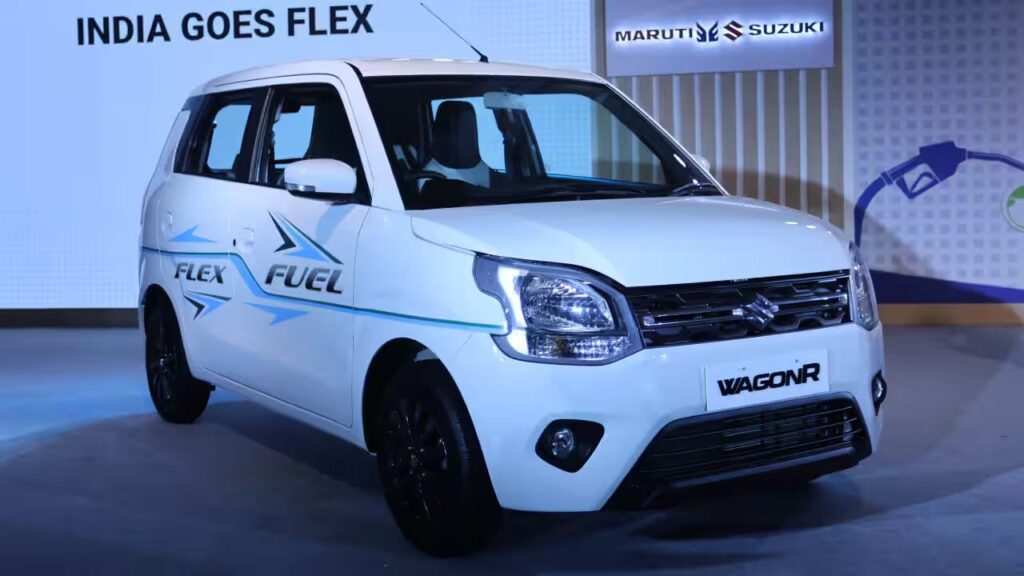
The prototype features a modified 1.2-litre, four-cylinder K-Series engine block. This naturally aspirated motor produces 88.5 horsepower when burning regular petrol. The maximum torque output reaches 113 Nm at 4400 rpm. The power figures stay consistent when switching to high-ethanol blends. The power delivery remains entirely linear across the rev range. The five-speed manual transmission handles the power without any structural modifications.
The physical vehicle weight changes very little with the new hardware. The suspension settings mirror the standard production model exactly. It uses traditional MacPherson struts at the front axle. The rear axle relies on a basic torsion beam setup. The ride height matches Indian road compliance parameters. The vehicle clears common road hazards easily. The steering system uses standard speed-sensitive electric power assistance.
The drop in fuel efficiency remains a clear technical reality. High-ethanol fuel blends reduce the overall mileage of the vehicle. The standard petrol model delivers 23.5 kilometers per litre under testing conditions. The flex-fuel version drops to 19.2 kilometers per litre when running on E85. The engine burns more liquid to maintain highway speeds. The running costs remain low because ethanol prices are controlled tightly by the government. The lower cost per litre offsets the efficiency penalty.
| Category | Specification / Detail |
|---|---|
| Engine Type | Modified 1.2-litre, four-cylinder K-Series engine |
| Fuel Compatibility | Petrol and high-ethanol blends (up to E85) |
| Aspiration | Naturally aspirated |
| Power Output | 88.5 hp |
| Maximum Torque | 113 Nm at 4,400 rpm |
| Transmission | 5-speed manual |
| Transmission Modifications | No structural modifications required |
| Vehicle Weight | Minimal change compared to the standard model |
| Front Suspension | MacPherson struts |
| Rear Suspension | Torsion beam setup |
| Suspension Tuning | Identical to the standard production model |
| Steering System | Speed-sensitive electric power steering (EPS) |
| Petrol Fuel Efficiency | 23.5 km/l |
| E85 Fuel Efficiency | 19.2 km/l |
Industrial and Environmental Testing Protocols
The manufacturing facility must validate these components over thousands of hours. The prototype undergoes extreme temperature testing cycles to ensure cold-start reliability. Ethanol vaporizes poorly at lower ambient temperatures. This makes morning starts difficult in cold northern climates. The engineering team added a pre-heating system to the fuel rail. This component warms the liquid before it enters the cylinders. It ensures immediate ignition during winter conditions.
Exhaust emission data shows a clear reduction in harmful chemical output. The use of E85 fuel alters the chemistry of the tailpipe gasses. Carbon monoxide output drops by exactly forty percent during standard urban drive cycles. Hydrocarbon emissions show a thirty-eight percent reduction. Particulate matter drops significantly in dense city traffic. These figures help the manufacturer meet corporate average fuel economy targets easily.
The production timeline depends heavily on the national fuel retail infrastructure. The Ministry of Petroleum and Natural Gas plans to expand ethanol availability rapidly. They want to establish green fuel stations in every major district. Right now, high-ethanol blends are restricted to specific pilot stations. The automobile works perfectly with standard fuel, owners can drive across states without range anxiety. The system handles any commercial petrol blend currently sold at public pumps.
The manufacturer monitors several specific data points during road trials:
- Exhaust gas temperature stability under continuous high loads
- Fuel sensor calculation accuracy across rapid temperature changes
- Long-term wear on fuel injector nozzle needles
- Carbon deposit buildup on the intake valves
Cabin Space and Fleet Integration
The physical interior layout stays identical to the standard showroom models. The company kept the tall roof design to preserve entry clearance for passengers. The rear bench seat accommodates three adults without crowding the shoulders. The boot area provides 341 litres of luggage space because the fuel tank retains its original external dimensions. The modification does not cut into passenger legroom or storage capacity. The dashboard uses standard black and beige industrial plastics.
The instrument cluster includes a new digital information display for the driver. This screen reports the exact ethanol concentration inside the tank. It updates the reading within seconds of a fuel refill. The display tracks real-time fuel efficiency parameters continuously. It warns the operator if water contamination occurs in the fuel system. The remaining gauges use standard analog needles for speed and engine RPM readings.
Table 2: Operational and Dimensional Specifications
| Category | Technical Specification |
| Total Engine Displacement | 1197 cc Cylinder Volume |
| Maximum Seating Capacity | Five Adult Occupants |
| Total Boot Capacity | 341 Litres Rear Storage |
| Standard Fuel Tank Volume | 32 Litres Total Capacity |
| Base Ground Clearance | 165 mm Unladen Clearance |
Commercial fleet operators represent a major target market for this technology. Taxi companies monitor daily running costs closely to maintain profitability. The ability to use cheaper local fuel cuts operational expenses directly. The initial purchase price will sit below the cost of commercial electric cars. Fleet managers can upgrade their vehicles without installing expensive private charging grids. The cars use existing service networks for regular oil changes and mechanical repairs.
Market Launch Timelines and Cost Estimates
Maruti Suzuki has not finalized the commercial pricing structure for the showroom launch. Factory sources indicate a production increase of roughly Rs 40,000 over the standard petrol model. This cost covers the upgraded sensors and non-corrosive metal components. The car remains significantly cheaper than any equivalent electric vehicle on the market. It uses existing assembly lines to lower manufacturing overheads.
The commercial rollout is expected to happen in phases across India. The company will focus on states with high sugarcane production first. Maharashtra and Uttar Pradesh have the highest density of ethanol distillation plants. These regions can supply fuel to local pumps cheaply. The transport logistics are simpler in these areas. The manufacturer will expand sales as the central government opens more green nozzles nationally.
The vehicle undergoes final fleet validation trials right now. Engineers collect data from test cars driving through diverse weather zones. They check the fuel system after exposure to coastal humidity and high desert heat. This data ensures the materials survive the full lifecycle of the vehicle. The introduction of this prototype marks the completion of the basic development phase. Production models will enter the market once the fuel supply stabilizes across major state highways.