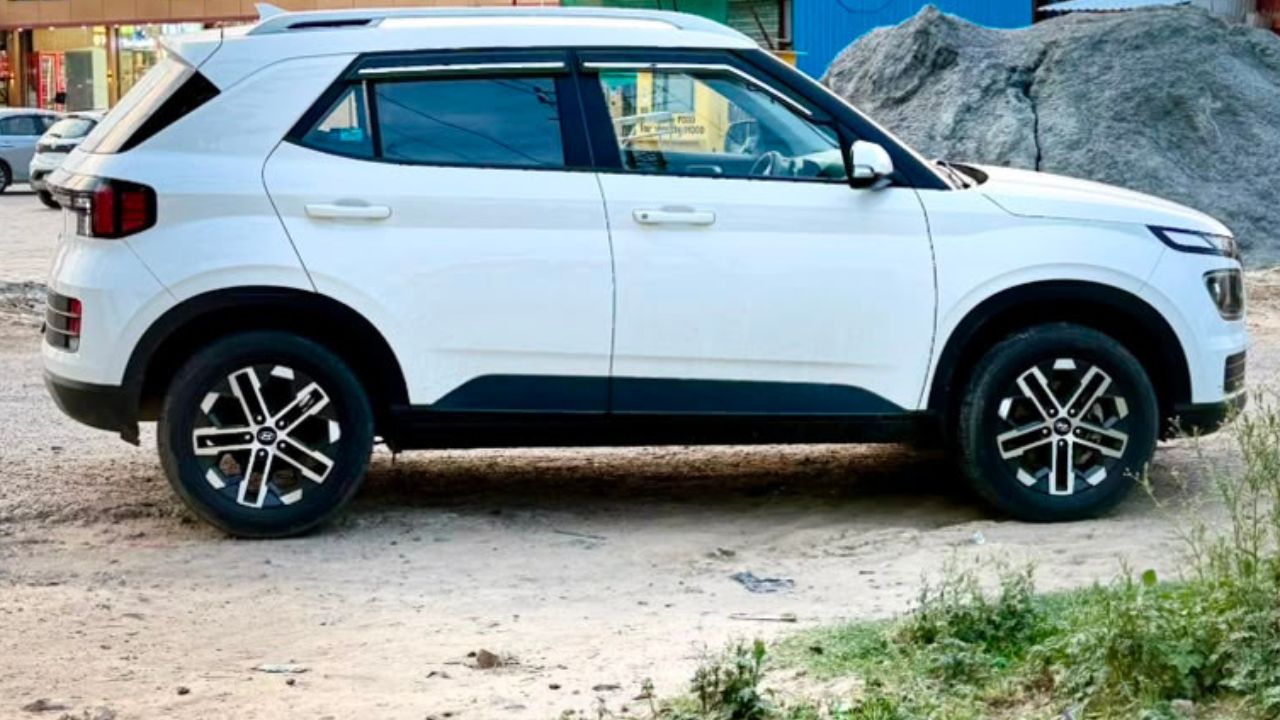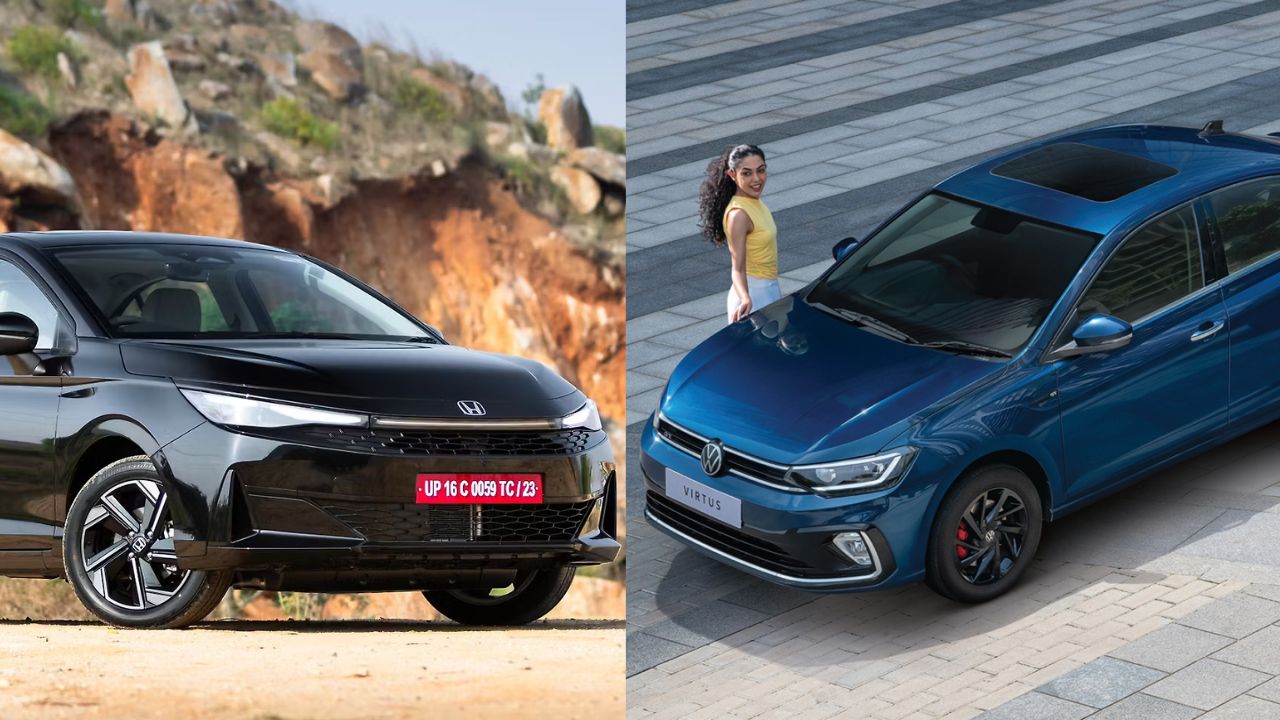
Sedan sales dropped hard over the last few years. People started buying compact SUVs mostly to get extra ground clearance. The mid-size sedan segment shrank, but Honda and Volkswagen refuses to abandon this category. They offer two completely distinct cars for the Indian market right now. The Honda City delivers proven reliability and passenger comfort. The Volkswagen Virtus focuses entirely on driver engagement and straight-line performance. These cars target different buyers, so you need to look past the marketing brochures.
Driving through daily traffic requires a specific type of car. Narrow city lanes really test a vehicle’s low-speed handling, and you feel every inch of the car’s width. Long weekend highway drives demand solid stability. You have to decide what matters most for your daily routine. We will break down exactly how these two sedans compare in real-world conditions. Each car serves a different purpose entirely.
Street Presence and Clearances: Blending In vs. Standing Out
The Honda City retains its familiar shape. Honda designers updated the front grille and the bumper last year to keep it fresh. The car looks sharp but conservative. It blends into the traffic easily, and the LED headlamps provide excellent visibility at night. The side profile looks slightly disproportionate due to the 16-inch alloy wheels. The car looks like it needs bigger wheels to fill the arches completely. The ground clearance sits at 165 mm. You must be careful over large speed breakers to avoid scraping the bottom.
The Volkswagen Virtus takes a more aggressive approach. It shares its platform with the Skoda Slavia, but it has a unique identity. The Virtus looks much wider and planted on the road. The clean European lines give it a muscular stance. The GT line variants get blacked-out wheels and a subtle lip spoiler. These specific additions make the car stand out in a parking lot. Volkswagen gives the Virtus 179 mm of ground clearance. This completely changes how you drive the car. You do not have to slow down to a crawl for every bad patch of road.
Under the Hood: Predictable Power vs. Turbocharged Punch
This is where the two cars separate themselves mechanically. Honda sticks to what it knows best. The City gets a 1.5-litre naturally aspirated petrol engine. It generates 119 bhp. This engine is incredibly smooth at low speeds, and the power delivery feels very linear. You press the pedal, and the car accelerates predictably. The engine wakes up past 4000 rpm. It produces a loud mechanical noise at high revs. Honda also offers a hybrid version. The hybrid uses a small battery to boost fuel economy in heavy traffic. The top ZX Plus Hybrid model claims 17.97 kmpl officially.
Volkswagen offers two turbocharged petrol engines. You can pick a 1.0-litre three-cylinder or a 1.5-litre four-cylinder. The 1.0 TSI produces 113 bhp. The turbo kicks in around 1800 rpm. You feel a sudden surge of power once the turbo spools. The 1.5 TSI is the real performer here. It generates 148 bhp. This engine makes the Virtus the fastest car in its segment, and highway overtakes require barely any effort.
| Engine Type | Fuel Efficiency (ARAI) | Power Output |
| Honda City 1.5L Petrol MT | 17.77 – 17.8 kmpl | 119 bhp |
| Honda City 1.5L Petrol CVT | 17.97 kmpl | 119 bhp |
| Virtus 1.0L Turbo MT | 19.4 – 20.8 kmpl | 113 bhp |
| Virtus 1.5L Turbo DSG | 19.62 kmpl | 148 bhp |
Gearboxes: Navigating City Traffic and Open Highways
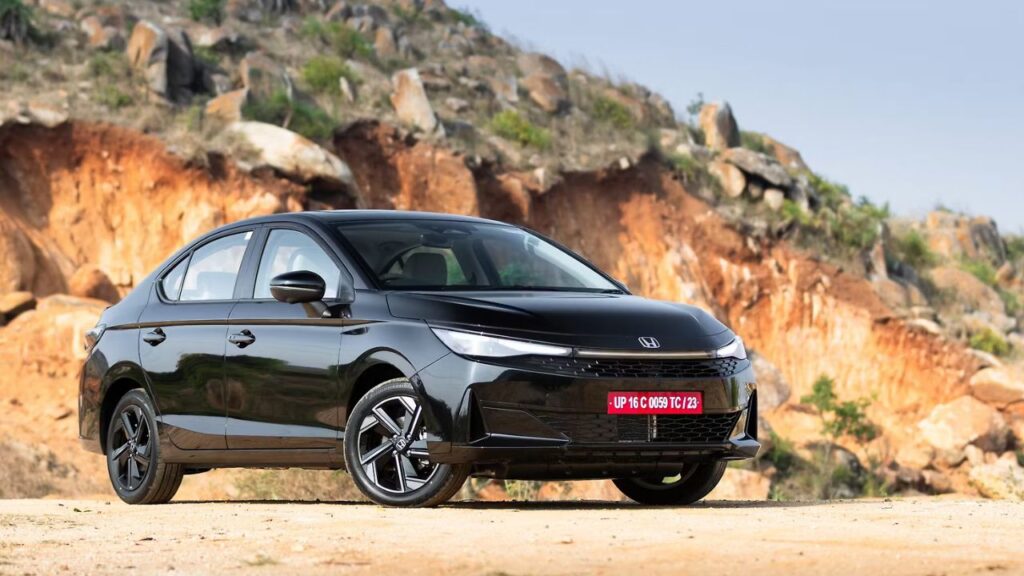
The gearbox choices dictate how these cars feel in the city. Honda pairs the 1.5-litre engine with a 6-speed manual or a CVT. The manual gearbox has short throws. The clutch is very light. You will not get tired shifting gears in heavy traffic. The CVT is the better option for daily commuting. It works perfectly at low speeds. The transmission keeps the engine in its optimal power band. If you press the accelerator hard, the engine gets noisy. The revs rise before the speed catches up.
Volkswagen provides a wider variety of transmissions. The 1.0 TSI gets a 6-speed manual or a 6-speed torque converter automatic. The manual is decent, but the clutch travel is a bit long. The 6-speed automatic shifts smoothly, and it downshifts quickly when you need power. The 1.5 TSI engine comes with a 7-speed DSG dual-clutch automatic. The DSG is brilliant on the open highway. The gear changes are lightning fast. The DSG can feel slightly jerky at very low speeds. It hesitates for a second when you crawl in bumper-to-bumper traffic.
A Complete Breakdown of Trims and Prices
Buyers need accurate price data to make a decision. Both manufacturers recently updated their pricing tiers. The Honda City lineup starts with the SV base model. This manual variant costs ₹12 Lakh. If you want more features, the City V costs ₹13.30 Lakh. Adding a CVT automatic to the V trim pushes the price to ₹14.30 Lakh.
Honda reserves the premium features for the ZX lines. The manual ZX is priced at ₹15.26 Lakh. The newly introduced ZX Plus manual sits at ₹16.15 Lakh. For automatic buyers, the ZX CVT costs ₹16.26 Lakh. The ZX Plus CVT reaches ₹17.15 Lakh. The most expensive model is the ZX Plus Hybrid. It uses a complex automatic powertrain and costs ₹21 Lakh.
Volkswagen structures the Virtus variants differently. The base Comfortline with the 1.0-litre engine starts at a very aggressive ₹10.50 Lakh. The Highline manual steps up to ₹13.46 Lakh. You can get the Highline Plus for ₹13.86 Lakh. The GT Line manual costs ₹14.10 Lakh. If you prefer automatics, the Highline AT is ₹14.66 Lakh, and the Highline Plus AT is ₹14.91 Lakh. The GT Line AT comes in at exactly ₹15 Lakh.
The fully loaded 1.0-litre Topline ES manual costs ₹15.11 Lakh. The automatic Topline AT ES is ₹16.30 Lakh. Buyers who want the powerful 1.5-litre engine must look at the GT Plus models. The GT Plus DSG ES costs ₹18.80 Lakh. The absolute top-tier GT Plus Sport DSG will set you back ₹19 Lakh.
- The City SV base manual starts at ₹12 Lakh.
- The standard City CVT models range from ₹14.30 Lakh to ₹17.15 Lakh.
- The Virtus Comfortline entry model is priced aggressively at ₹10.50 Lakh.
- The Virtus automatic options start at ₹14.66 Lakh.
- The Virtus 1.5L performance engines start at ₹18.80 Lakh.
| Honda City Variant | Price (₹ Lakh) | Comparable Virtus Variant | Price (₹ Lakh) |
|---|---|---|---|
| City SV | 12.00 | Virtus Comfortline | 10.50 |
| City V | 13.30 | Virtus Highline | 13.46 |
| City V CVT | 14.30 | Virtus Highline AT | 14.66 |
| City ZX | 15.26 | Virtus Topline ES | 15.11 |
| City ZX Plus | 16.15 | Virtus Topline AT ES | 16.30 |
| City ZX CVT | 16.26 | Virtus GT Line AT | 15.00 |
| City ZX Plus CVT | 17.15 | Virtus GT Plus DSG ES | 18.80 |
| City ZX Plus Hybrid | 21.00 | Virtus GT Plus Sport DSG | 19.00 |
Floating Over Potholes vs. Hugging Corners
The Honda City prioritizes comfort over everything else. The suspension setup is soft. It absorbs minor bumps and road imperfections easily. You glide over bad roads at low speeds. The steering is light and effortless to turn. This makes parking in tight spots very easy. The soft suspension has a downside at high speeds. The car tends to bounce over highway undulations. The steering lacks feedback when you push the car into corners. You do not feel fully connected to the road.
The Volkswagen Virtus offers a stiffer ride. You feel the sharp bumps inside the cabin at low speeds. The suspension firms up as you pick up speed. The car feels incredibly stable above 100 kmph. It sticks to the road firmly. The steering carries some weight to it, and it points exactly where you want it to go. The Virtus corners flat with minimal body roll. It gives you the confidence to drive fast on winding roads. These cars provide a different feel behind the wheel entirely.
Relaxed Rear Seats vs. Driver-Focused Layouts
The interior layouts reflect the different philosophies of the brands. The Honda City cabin looks elegant and straightforward. The dual-tone beige and black dashboard makes the cabin feel airy. Honda uses soft-touch materials on the dashboard and door pads. The front seats are wide and accommodating. The rear seat is the main selling point of the City. The legroom is massive. The seat angle is relaxed and comfortable. You can easily fit three adults in the back.
The Volkswagen Virtus interior looks very modern. The dashboard design is sharp and driver-focused. The quality of plastics is a mixed bag. The top half of the dashboard feels sturdy. The lower plastics feel scratchy and cheap for this price segment. The front seats offer excellent lateral support. They hold you tightly in place when cornering. The rear seat has good legroom, but the under-thigh support is slightly lacking. The transmission tunnel in the middle is quite high. This makes the middle seat uncomfortable for adults. The Virtus gets a 521-litre boot. It has a wider opening than the City.
Screens, Dials, and Daily Usability
Car buyers expect heavy feature lists today. The Volkswagen Virtus leads in digital technology. The top variants get a 10.1-inch touchscreen infotainment system. The screen is crisp, and it is very responsive. It supports wireless Apple CarPlay and Android Auto. The 8-inch digital instrument cluster looks fantastic. You can customize the dials and the information displayed. Volkswagen also includes ventilated front seats. These seats are a massive relief during the hot summer months.
The Honda City falls behind in screen quality. The 8-inch touchscreen looks outdated. The graphics are basic. The reverse camera resolution is surprisingly poor. Honda does offer wireless phone connectivity. The instrument cluster is semi-digital. You get an analogue speedometer alongside a 7-inch color display. The display shows fuel info and safety warnings. The City gets an electric sunroof, automatic climate control, and an auto-dimming rearview mirror.
Crash Ratings: How They Protect You on the Road
Safety is a primary requirement for car buyers right now. Both cars perform well in independent crash tests. The Volkswagen Virtus scored a full 5-star rating in the updated Global NCAP crash tests. The body shell is incredibly stable. The doors shut with a reassuring heavy thud. The Virtus comes with six airbags, electronic stability control, and multi-collision brakes. These are standard across all variants.
The Honda City achieved a 5-star rating in the ASEAN NCAP tests. The City structure uses high-tensile steel. Honda equips the City with six airbags in the higher trims. The City takes the lead with its active safety technology. It comes with a camera-based advanced driver assistance system. The Honda Sensing suite includes collision mitigation braking, adaptive cruise control, and a lane keeping assist system. The lane watch camera is very useful. It shows a video feed of your left blind spot on the main screen when you use the left indicator. The Virtus does not offer any active ADAS features.
Making the Right Choice for Your Garage
You have to evaluate your daily driving needs. The Honda City is a sensible purchase. It offers unmatched rear-seat comfort. The 1.5-litre engine is reliable and smooth. The CVT makes city driving completely stress-free, and the camera-based safety features add peace of mind. It is the perfect car if you are driven by a chauffeur. The City handles the daily commute without any complaints. It will sit in your garage for years and start perfectly every morning.
The Volkswagen Virtus appeals to the driver. The 1.5 TSI engine changes the character of the car. The power delivery is aggressive. The stiff suspension and sharp steering make highway driving incredibly fun. The 179 mm ground clearance removes the constant worry of scraping the underbelly. It looks modern inside and out. You sacrifice some rear-seat comfort for outright performance. The Virtus requires more attention to maintenance. It rewards you with a driving experience the City simply cannot match. You must decide if you want comfort or performance. Test drive both cars on the roads you use every day. Your driving style will make the choice obvious.