Suppose you walked into a local Nissan showroom last weekend with a friend. You were looking for a reliable family vehicle that would not empty his bank account. You had our eyes fixed on the Nissan Gravite. This sub-four-metre MPV hit the Indian market back in February 2026. The initial launch created a lot of noise because of the very attractive introductory starting price of Rs. 5.65 lakh. People rushed to book it. You arrived at the dealership expecting those exact numbers. The salesperson handed us the updated brochure. Our math had to change immediately.
The honeymoon phase for the Nissan Gravite is officially over. The company decided to pull the plug on those introductory prices. The base price now sits at Rs. 5.73 lakh. It feels a bit disappointing when a car gets more expensive just a few months after launch. You have to consider the overall value proposition before walking away. We sat down with the updated price sheet to understand exactly how much extra buyers will need to pay for each variant.
The Detailed Breakdown of the Price Hike
Every single variant of the Gravite has seen an upward revision. The price jump depends entirely on which specific model you want to park in your garage. Some models saw a minor bump, while others got noticeably more expensive. There is plenty of variants to choose from, which makes the pricing structure slightly complex to navigate.
Here is exactly how the new pricing structure affects your wallet:
| Variant Name | Price Increase |
| Visia Petrol MT | Rs. 8,400 |
| Visia CNG MT | Rs. 8,400 |
| Acenta Petrol MT | Rs. 9,400 |
| Acenta CNG MT | Rs. 9,400 |
| N-Connecta Petrol MT | Rs. 18,400 |
| N-Connecta CNG MT | Rs. 18,400 |
| Tekna Petrol MT | Rs. 17,000 |
| Tekna LE Petrol MT | Rs. 17,000 |
| Tekna CNG MT | Rs. 17,000 |
| Tekna LE CNG MT | Rs. 17,000 |
| N-Connecta Petrol AMT | Rs. 15,000 |
| Tekna Petrol AMT | Rs. 15,000 |
| Tekna LE Petrol AMT | Rs. 15,000 |
The data shows a clear pattern in how Nissan applied these increases. The entry-level Visia petrol manual and Visia CNG manual received the smallest hike. Buyers looking at these base models will pay an extra Rs. 8,400. The mid-spec Acenta petrol manual and Acenta CNG manual went up by Rs. 9,400.
Things get a bit steeper when you look at the upper-middle variants. The N-Connecta petrol manual and its CNG counterpart took the biggest hit. These specific models are now dearer by Rs. 18,400. If you want the top-end manual experience, the Tekna and Tekna LE variants in both petrol and CNG forms demand a premium of Rs. 17,000 over the old prices.
Nissan also adjusted the prices for the automatic transmission models. If you prefer the convenience of the AMT gearbox, you will pay Rs. 15,000 more for the N-Connecta, Tekna, and Tekna LE petrol AMT variants. The complete range now sits between Rs. 5.73 lakh and Rs. 9.08 lakh before you add taxes and insurance.
Exterior Design and Street Presence
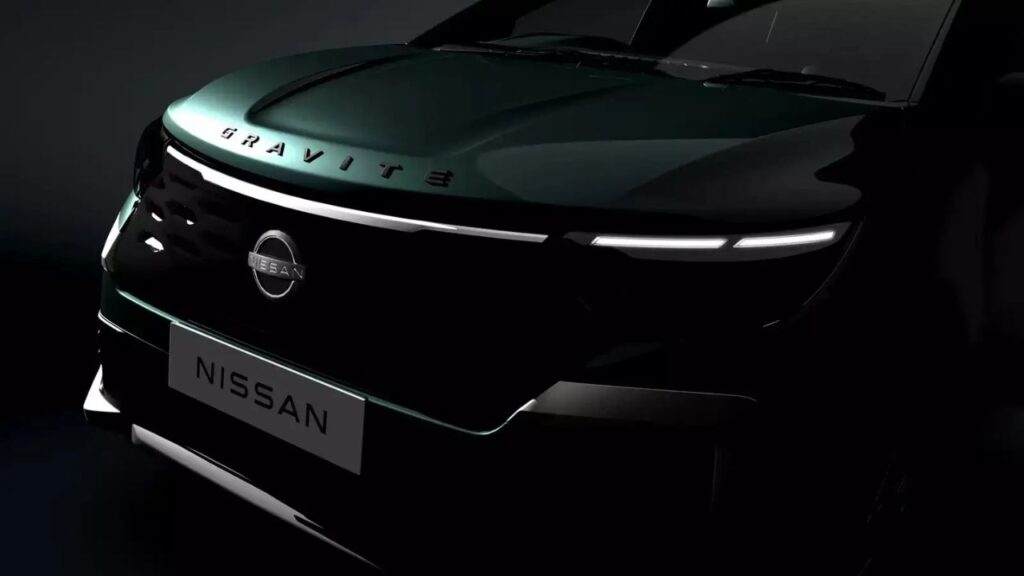
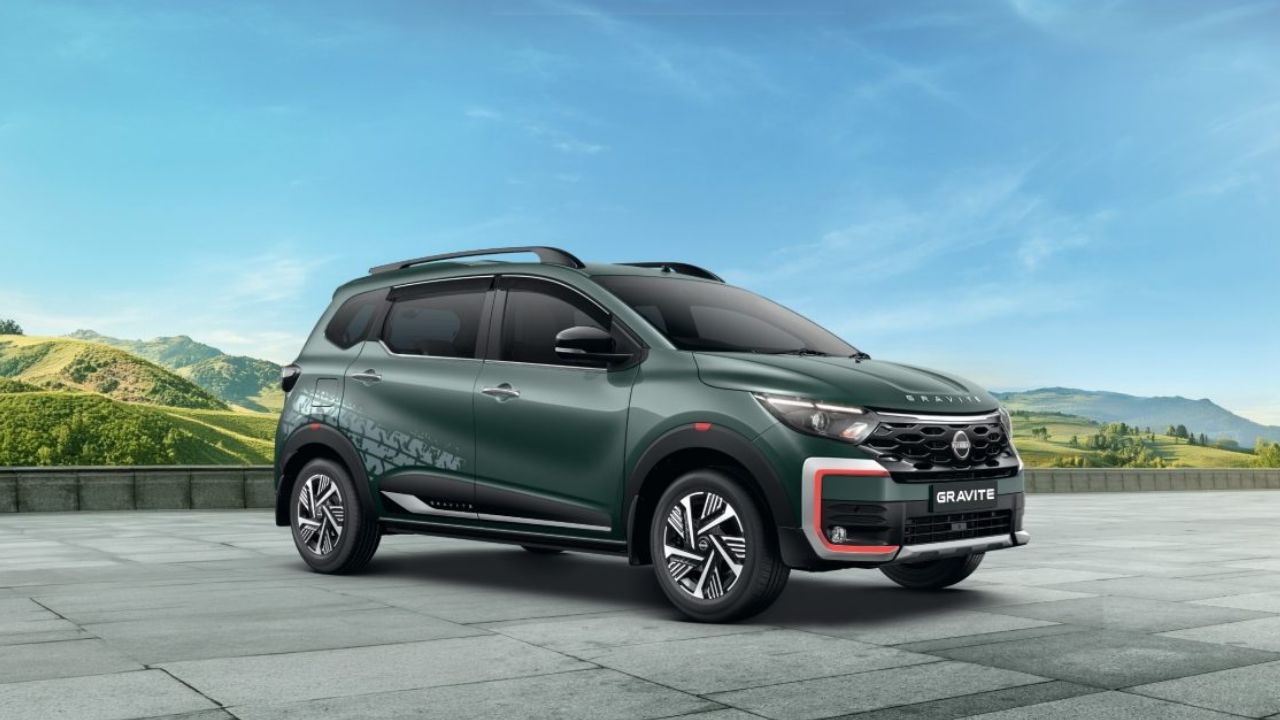
Most budget MPVs look like boring boxes on wheels. Nissan tried to avoid this trap with the Gravite. The car has a surprisingly aggressive front face. You get a large hexagon-pattern grille that immediately grabs attention. The smoked LED headlights and sleek daytime running lights give it a modern appearance. The C-shaped accents in the front bumper add a nice touch of sportiness.
Walk around to the side, and you notice the 15-inch dual-tone alloy wheels on the higher trims. Thick black plastic cladding runs along the wheel arches and the lower doors. This gives the vehicle a slightly rugged, SUV-like stance. Functional roof rails sit on top, capable of carrying light loads if you need extra storage.
The rear design is fairly neat. The LED taillights wrap around the corners cleanly. The large rear windshield provides excellent visibility when you are backing up. The Nissan lettering is spelled out boldly across the tailgate. The car measures under four metres in length, but it looks substantial in person.
Understanding the Engine and Driving Dynamics
You might wonder if the Gravite justifies this higher asking price. We requested a test drive to see how the vehicle handles real-world traffic. The Gravite shares its underpinnings with the Renault Triber. They use the same basic platform to keep development costs under control.
Under the hood, you get a 1.0-litre naturally aspirated petrol engine. It produces 71 horsepower and 96 Nm of torque. These numbers do not look very impressive on a specification sheet. You feel the modest power output when you load the cabin with five adults and turn the air conditioning to maximum. The engine needs to be worked hard to gain momentum on open highways. City driving is a completely different story. The light clutch and the smooth power delivery make it very easy to navigate through heavy traffic.
You have two transmission options to choose from.
- There is a standard five-speed manual gearbox that offers precise shifts.
- You can opt for the five-speed AMT if you hate pressing the clutch pedal during rush hour.
The manual transmission claims a fuel economy of 19.3 kmpl. The AMT version is rated slightly higher at 19.6 kmpl. We drove the manual variant through crowded city streets for an hour. The steering felt incredibly light, allowing me to squeeze the car into tight parking spots without breaking a sweat. You do notice a bit of engine noise creeping into the cabin when you rev past 3,000 RPM. The suspension handles broken roads quite well, absorbing most bumps before they reach the passengers.
Inside the Cabin: Space and Practical Features
The interior of the Nissan Gravite is where the car truly shines. You get a lot of practical space for the money. The dashboard features a clean design with an eight-inch floating touchscreen infotainment system on the higher variants. It supports wireless Apple CarPlay and Android Auto. This makes connecting your phone a seamless process. The driver gets a seven-inch digital instrument cluster that displays all necessary information clearly.
The seating arrangement is the main attraction here. The Gravite is technically a seven-seater. The second-row seats can slide, recline, and fold. They can even be tumbled forward completely to allow access to the back. The third row is definitely tight for full-sized adults. It works perfectly for young children. My friend tried sitting in the last row, and his knees were pointing toward the roof.
The best part about the third row is its flexibility. You can remove the seats entirely when you do not need them. This transforms the boot space into a massive 625-litre cargo area. You can easily fit multiple large suitcases for a week-long family trip.
The manufacturer also included several comfort features to make long journeys pleasant.
- Independent rear AC vents ensure passengers in the back stay cool.
- The cabin has up to 31 litres of storage space spread across various cubby holes.
- A cooled glovebox helps keep your drinks cold during summer road trips.
- Top variants come with a wireless phone charger and ambient mood lighting.
The CNG Alternative for High Mileage Drivers
Fuel prices are a massive concern for families on a strict budget. Nissan introduced the CNG variant of the Gravite to solve this exact problem. You can get a factory-approved CNG kit fitted at the dealership level. It costs an additional Rs. 83,000 on top of the variant price.
The CNG setup uses a smart twin-cylinder design. They place two smaller 25-litre cylinders in the back instead of one massive tank. This clever packaging means you still get to keep the seven-seat layout. Most CNG cars force you to sacrifice the entire boot area, but the Gravite manages space much better. The CNG version claims an efficiency figure of 19.3 km/kg. If you drive more than forty kilometers every day, the lower running costs of the CNG model will help you recover the initial premium within a couple of years.
Safety Equipment and Peace of Mind
Safety is a common concern when buying budget-friendly cars. Nissan addressed this by making six airbags standard across all variants of the Gravite. This is a very welcome move. The car also features an anti-lock braking system with electronic brakeforce distribution. You get reverse parking sensors to help you avoid bumping into walls.
The top models come with an electronic stability program and a tire pressure monitoring system. Hill start assist prevents the car from rolling backward when you stop on a steep incline. The doors lock automatically when you reach a certain speed, and they unlock instantly if the car detects an impact.
Maintaining the Gravite
Ownership costs extend far beyond the initial purchase price. Nissan has worked hard to expand its service network across the country. Routine maintenance for the 1.0-litre engine is relatively cheap. The parts are heavily localized because the car shares components with the Triber.
You need to schedule a service appointment every 10,000 kilometers or once a year. A standard oil change and filter replacement bill usually stays under Rs. 5,000. Nissan also offers prepaid maintenance packages. You pay a lump sum upfront and get free scheduled servicing for the next three to five years. This protects you from sudden inflation in spare part prices.
The Road Ahead and Upcoming Competition
The Nissan Gravite occupies a very specific spot in the market right now. It caters to buyers who need three rows of seats but cannot stretch their budget to buy larger MPVs like the Kia Carens. The recent price hike makes it slightly less attractive than it was in February. It still undercuts many other vehicles in terms of sheer practicality.
The market never stands still. Nissan will launch the Tekon later this year. The Tekon will enter a highly competitive segment. It will go up against established heavyweights like the Tata Sierra, the Hyundai Creta, and the Kia Seltos. It will also face the Maruti Victoris and the Renault Duster. Buyers will soon have even more options to evaluate.
If you are currently looking at the Gravite, you need to decide if the new prices fit your budget. The Rs. 18,400 increase on the N-Connecta variant might force some buyers to reconsider their financing options. The car remains a solid choice for city dwellers who prioritize flexibility over outright performance. You just have to pay a little bit more to get the keys today.
You thanked the salesperson, folded the updated brochure, and walked out of the showroom. Your friend did not book the car that afternoon. He wanted to go home, open his laptop, and recalculate his monthly loan payments. A price hike of Rs. 18,400 translates to a few hundred rupees extra on an EMI. It might not sound like a lot on paper. When you are buying a car built entirely around the concept of tight budgeting, every single rupee counts.