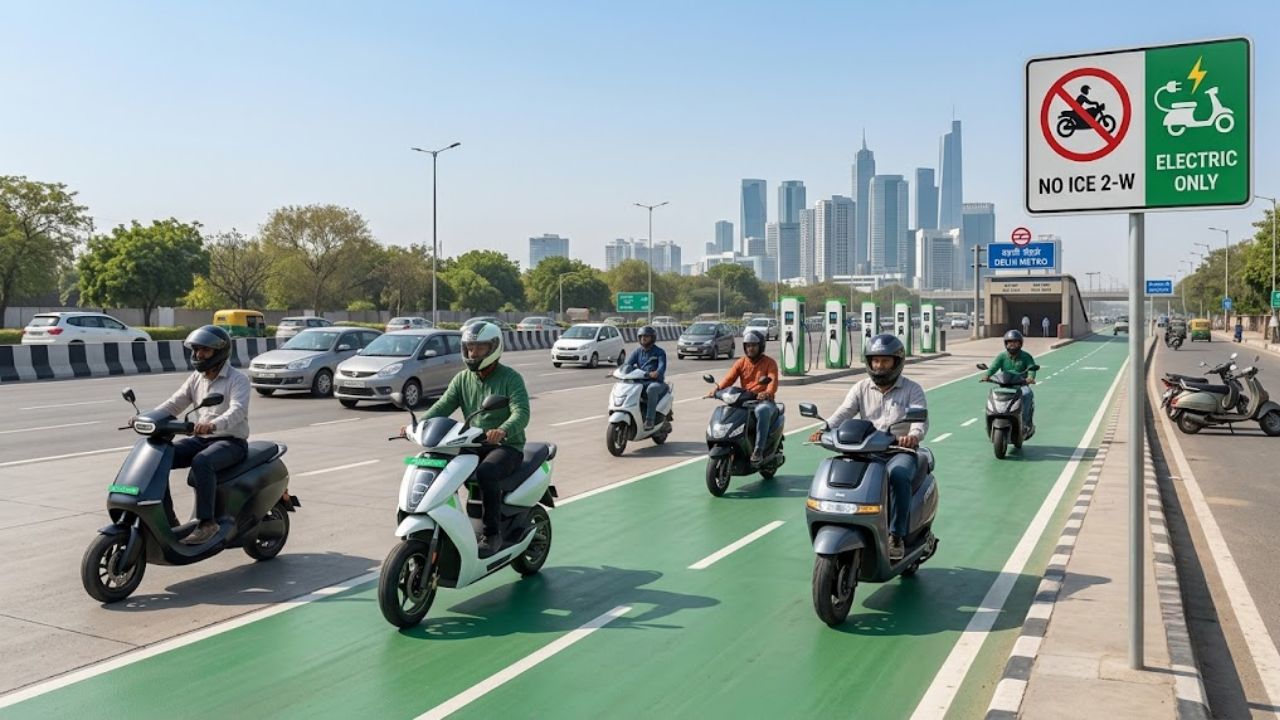
The Delhi government has confirmed a landmark shift in urban mobility with the upcoming Delhi Electric Vehicle Policy 2.0. From April 1, 2028, only electric two-wheelers will be eligible for new registrations in the national capital. This decisive move aims to combat severe air pollution and accelerate the adoption of cleaner transportation options across the city. The policy, expected to be officially notified before the end of June 2026, outlines a structured timeline for phasing in electric vehicles while providing substantial incentives during the transition period.
This development represents one of the most significant regulatory changes for personal mobility in Delhi in recent decades. Two-wheelers dominate the city’s roads, and the policy seeks to address their contribution to emissions without disrupting existing ownership. Buyers and riders now have a clear 22-month window to make informed decisions about their next vehicle purchase.
Understanding the Scope of the Two-Wheeler Mandate
The policy specifically targets new registrations rather than existing vehicles. Starting April 2028, dealerships in Delhi will only be able to register electric two-wheelers for retail customers. Petrol-powered scooters and motorcycles purchased before the deadline can continue to be used without any restrictions for their entire lifespan.
Key aspects include:
- No ban on currently owned petrol two-wheelers.
- No mandatory scrapping or conversion of legacy vehicles.
- Full applicability to all new purchases after the cutoff date.
This targeted approach allows the existing fleet to naturally phase out over time while preventing further growth in petrol-powered additions. The government maintains that this strategy balances environmental goals with practical considerations for residents.
Reasons Behind the Aggressive Timeline
Delhi faces persistent air quality challenges, with vehicles contributing substantially to pollution levels. Two-wheelers constitute nearly 67 percent of the registered vehicle fleet, totaling around 1.15 crore units on the roads. Addressing this dominant category is essential for meaningful improvements in air quality.
The policy forms part of a broader vision under the Delhi EV Policy 2.0 spanning 2026 to 2030. By halting new petrol registrations, authorities aim to curb the expansion of the internal combustion engine fleet and channel all future demand toward electric alternatives. Complementary measures include mandates for commercial fleets and three-wheelers to ensure a comprehensive transition.
Financial Incentives Favor Early Adopters
One of the most attractive elements of the policy is the package of incentives designed to make electric two-wheelers more affordable in the initial years. These benefits are time-bound and will gradually reduce, making immediate purchases particularly advantageous.
Current incentives for eligible electric two-wheelers include:
- Subsidy of up to ₹30,000 for models priced under ₹2.25 lakh ex-showroom.
- 100 percent waiver on road tax until March 31, 2030.
- Complete exemption from registration fees during the same period.
- Additional ₹10,000 scrappage incentive for replacing old BS4 or earlier petrol vehicles.
Central government schemes like PM E-DRIVE provide further support through direct bank transfers. Buyers who act before incentives taper off stand to save significantly on upfront costs and benefit from lower operating expenses over time.
Timeline and Phased Implementation
The policy introduces changes in stages to allow the market and infrastructure to adapt smoothly. Aggregators and delivery fleets face restrictions on adding new petrol vehicles from January 2026, with limited exceptions for BS-VI models until the end of that year. Electric three-wheelers become mandatory for new registrations from January 1, 2027.
For individual buyers, the critical date remains April 1, 2028. This phased rollout provides ample time for manufacturers to expand electric offerings, for charging infrastructure to grow, and for consumers to evaluate options based on their needs.
Implications for Different Types of Riders
The policy affects various segments of Delhi’s riding population differently. Those planning a new purchase in the near term have a genuine choice supported by maximum incentives. Opting for an electric model now can result in substantial savings on purchase price, taxes, and daily running costs.
Riders planning to buy in 2027 will still benefit from some incentives but may face reduced subsidies. By then, the range of available electric models is expected to expand with improved battery technology and more charging stations. Owners of existing petrol two-wheelers face no immediate changes and can continue riding as usual. However, those with older BS4 models may find the scrappage incentive attractive for upgrading.
Challenges and Industry Perspectives
The announcement has sparked discussions within the automotive industry. Some manufacturers and associations have expressed concerns about readiness, supply chain dependencies, and potential impacts on consumers who rely on affordable petrol options. Despite this feedback, the Delhi government has proceeded with the timeline, emphasizing long-term environmental and health benefits.
Infrastructure development remains a key focus. Expanded public charging networks, home charging solutions, and battery swapping facilities will be crucial for widespread adoption. The policy encourages private investment in these areas to support the transition.
Advantages of Switching to Electric Two-Wheelers
Electric scooters and motorcycles offer several practical benefits beyond environmental gains. Operating costs are significantly lower due to cheaper electricity compared to petrol and reduced maintenance needs without oil changes or complex engine servicing. Many models provide instant torque for responsive acceleration in city traffic.
Modern electric two-wheelers come equipped with features such as digital displays, smartphone connectivity, and regenerative braking. With ranges improving steadily and charging times decreasing, they suit most daily commuting patterns in Delhi.
Comparison of Ownership Costs
- Fuel/Energy: Electric models cost a fraction per kilometre.
- Maintenance: Fewer moving parts lead to lower expenses.
- Incentives: Substantial waivers and subsidies for EVs.
- Resale: Growing demand may support better future values for electric vehicles.
These factors contribute to a compelling total cost of ownership equation for many users.
What Buyers Should Consider Now
Prospective buyers have 22 months to evaluate options. Test riding multiple electric models helps assess range, comfort, and suitability for individual routes. Factors such as daily distance, parking and charging access, and budget play important roles in decision making.
Dealerships across Delhi are preparing for increased interest. Consumers can explore financing options, including those aligned with government schemes, to make the switch more manageable. Staying informed about policy updates and new model launches will help in making timely choices.
Broader Impact on Delhi’s Mobility Landscape
This policy positions Delhi as a leader in urban electric mobility within India. By focusing on the high-volume two-wheeler segment, it sets an example for other cities grappling with similar pollution challenges. The transition also stimulates local manufacturing, job creation in the EV ecosystem, and technological innovation.
Long-term benefits include cleaner air, reduced noise pollution, and lower dependence on imported fossil fuels. As electric vehicle adoption accelerates, supporting infrastructure and grid capacity will continue to evolve.
The Delhi government’s firm stance on the 2028 deadline sends a clear message about the future of personal transport in the capital. While existing petrol two-wheeler owners remain unaffected, new buyers face an inevitable shift toward electric options. The current incentives create a strong financial case for early adoption.
Residents are encouraged to use the coming months to explore electric two-wheelers and plan their mobility needs accordingly. With robust policy support and growing model availability, the transition offers opportunities for cost savings and contribution to a cleaner environment. Delhi’s move toward full electrification for new two-wheelers marks a pivotal step in reshaping urban transportation for generations to come