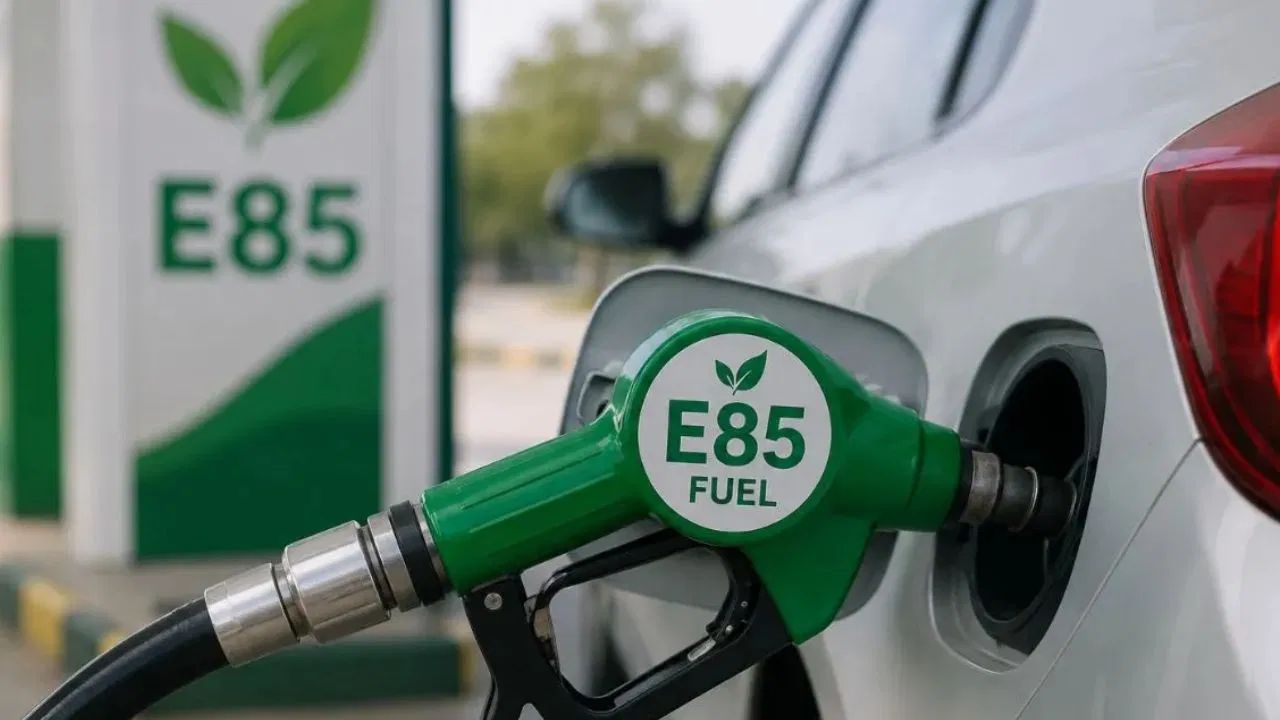
You pull up to a busy Indian fuel station on a humid Tuesday morning. The numbers on the digital fuel dispenser climb incredibly fast, your wallet takes a painful hit before the tank even fills up completely. The high cost of standard petrol strains the monthly household budget of millions of commuters across the country today. Then you notice a new fuel nozzle painted bright green at the station counter. It says E85 right on the plastic handle, the digital screen lists a shocking price of Rs. 82.12 per litre. This alternative fuel option costs significantly less than standard unleaded petrol. Most vehicles currently operating on Indian roads will sustain severe mechanical damage if you pump this fluid inside them without preparation. The high ethanol content dissolves regular rubber fuel hoses over time, it rusts internal steel engine components rapidly.
The central government officially introduced E85 fuel to combat rising foreign crude oil expenditures directly. This alternative fuel consists of exactly eighty-five percent bio-ethanol mixed with fifteen percent standard petrol. Local sugar mills produce this ethanol from agricultural waste and excess sugarcane stalks. This domestic production route keeps the actual retail cost of the fuel remarkably low for the end consumer. You can save massive amounts of money at the pump every single month. You just need to understand the mechanical requirements before switching over to the green nozzle. The transition requires a highly specific type of engine architecture to run safely. Let us examine the exact factual details regarding this massive alternative fuel rollout.
The market rollout begins across major metropolitan hubs before expanding into rural districts later this year. Government authorities want to establish dedicated green fuel corridors along major national expressways. This strategic deployment helps long-distance commercial fleet operators lower their daily running costs immediately. Private car owners are also looking at this cheap fuel option with immense curiosity. You do not need to purchase an incredibly expensive electric vehicle to reduce your monthly transport bills. You keep your familiar internal combustion engine, you pay less money per litre at the station.
The Core Mechanical Changes For Bio-Ethanol Compatibility
You cannot simply pour high-ethanol fuel blends into a standard petrol car from the showroom. Ethanol is naturally highly corrosive to traditional automotive metals, it also absorbs moisture from the surrounding atmosphere very quickly. This water accumulation causes standard steel parts inside the fuel network to pit and rust during operation. Automobile manufacturers must modify the entire fuel delivery pipeline from the factory floor to ensure long-term durability. They replace standard rubber fuel lines with reinforced synthetic polymer tubes. These components resist chemical breakdown completely when exposed to pure alcohol fuel blends.
The internal components of the fuel pump require heavy metallurgical upgrades as well. Engineers use hardened stainless steel housings and specialized fluoropolymer elastomers to handle the highly abrasive fluid safely. The engine cylinders receive an advanced friction-resistant surface coating to prevent long-term piston scoring. The intake and exhaust valve seats are manufactured from hardened chromium metal alloys. These material updates stop the engine from rusting when the car sits idle in your office garage for weeks. The physical modifications increase the manufacturing cost slightly, they prevent catastrophic mechanical failures down the line.
Material Differences In Alternative Fuel Networks
| Mechanical Component | Standard Petrol Architecture | Flex-Fuel Engine Configuration |
| Fuel Delivery Hoses | Standard Grade Industrial Rubber | Reinforced Synthetic Polymer Tubes |
| Internal Pump Seals | Basic Nitrile Rubber Compounds | Viton Fluoropolymer Elastomers |
| Valve Seat Metallurgy | Standard Cast Iron Alloys | Hardened Chromium Metal Alloys |
| Fuel Tank Interior Protection | Bare Treated Steel Sheet | Anti-Corrosive Liquid Internal Liner |
The engine computer requires an entirely new software map to process variable fuel properties in real-time. Ethanol has a much lower energy density than pure fossil fuel, the system must inject a larger volume of liquid into the cylinders. The updated Engine Control Unit connects to a dedicated inline fuel composition sensor. This sensor checks the electrical conductivity of the fuel line continuously. The computer reads this chemical data instantly, it then commands the fuel injectors to stay open a fraction of a second longer. The adjustment happens automatically behind the dashboard without any human driver input.
Real-World Mileage Penalties And Financial Calculations
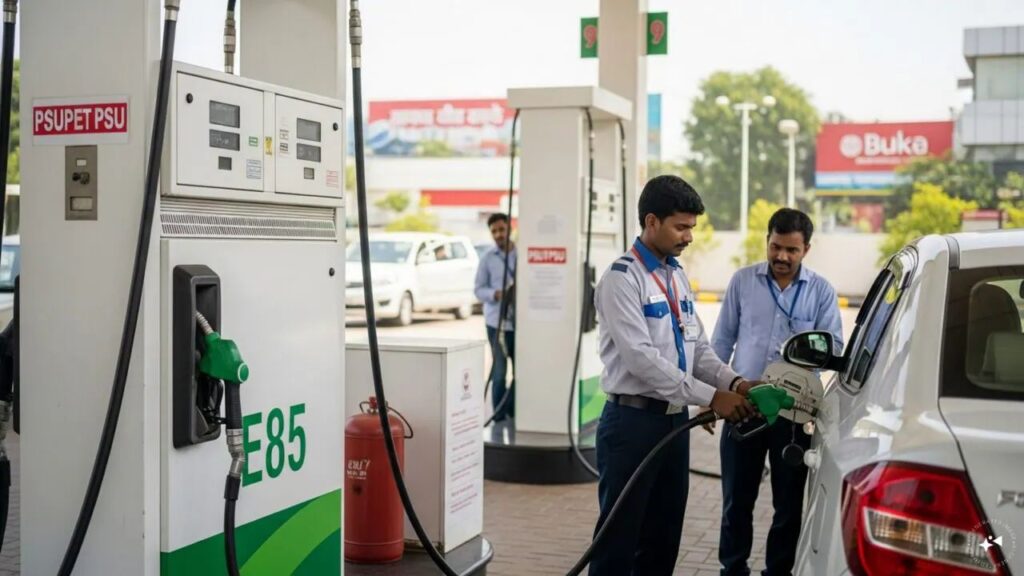
Driving a flex-fuel vehicle on E85 delivers a very familiar performance on public roads. The engine starts up with a quiet hum, the power delivery stays perfectly linear across the rev range. You press the accelerator pedal down, the vehicle picks up speed smoothly without any sudden hesitation. The maximum horsepower and peak torque output values remain nearly identical to the standard petrol model. You will not feel any noticeable loss of power when overtaking slow commercial trucks on the highway. The physical driving dynamics remain completely adequate for daily urban commuting duties.
There is a clear technical reality regarding overall fuel efficiency that buyers must accept. The lower energy density of bio-ethanol drops your total driving range per tank significantly. A standard compact hatchback delivers roughly 20 kilometers per litre on pure petrol fuel. That exact same vehicle drops to approximately 16.4 kilometers per litre when running entirely on an E85 blend. The engine burns more liquid volume to maintain standard highway cruising speeds over long distances. This efficiency drop sounds like a massive disadvantage until you complete the actual financial math.
The lower retail price of Rs. 82.12 per litre offsets the mileage penalty completely for the consumer. Regular petrol currently costs well over Rs. 100 per litre across most Indian states. You pay significantly less money every time you fill the metal storage tank at the station. Your total operational cost per kilometer drops by roughly twenty percent overall. This saving keeps thousands of rupees inside your household budget every single month. The financial benefit accumulates rapidly if you cover heavy distances for work daily.
Operational Cost and Efficiency Comparison
| Cost Parameter | Standard Petrol Fuel | E85 Bio-Ethanol Blend |
| Average Retail Price Per Litre | Rs. 104.50 (Approximate) | Rs. 82.12 (Fixed) |
| Average Compact Car Mileage | 20.0 km/l | 16.4 km/l |
| Estimated Cost Per Kilometer | Rs. 5.22 | Rs. 5.00 |
| Total Fuel Volume In 35L Tank | 35 Litres | 35 Litres |
| Total Estimated Driving Range | 700 Kilometers | 574 Kilometers |
Direct Environmental Impact On Crowded Metro Cities
Air pollution remains a severe public health crisis across major Indian metropolitan hubs like Mumbai and Delhi. Toxic tailpipe emissions from lakhs of vehicles create a permanent layer of hazardous smog every single winter. Bio-ethanol contains high levels of natural oxygen inside its chemical structure. This extra oxygen helps the fuel mixture burn completely during the power stroke. The complete combustion cycle reduces the amount of unburnt hydrocarbons escaping through the exhaust pipe.
Switching to E85 fuel reduces total carbon monoxide emissions by up to forty percent during standard urban drive cycles. Hydrocarbon outputs show a thirty-eight percent reduction compared to standard petrol cars. Particulate matter emissions drop significantly in dense stop-and-go city traffic lanes. These environmental numbers help automobile manufacturers meet corporate average fuel economy targets easily. The city air stays a little cleaner for your children without forcing everyone to buy expensive battery cars.
Here are the specific environmental and economic benefits of the new fuel:
- Lower total tailpipe carbon monoxide emissions inside dense urban zones.
- Significant reduction in harmful particulate matter soot output.
- Utilization of domestic agricultural waste instead of imported foreign crude oil.
- Absolute protection against global oil price fluctuations controlled by foreign nations.
The economic source of the fuel provides massive secondary benefits to the national agricultural sector. India spends billions of dollars every year importing raw crude oil from overseas nations. Bio-ethanol production happens locally inside domestic distillation plants using excess food grains and sugarcane stalks. Buying flex-fuel vehicles helps support Indian farmers working in local rural fields directly. The money remains inside the domestic economy instead of going abroad to foreign oil corporations. It serves as a highly sustainable financial path for a developing country.
Launch Timelines And Future Vehicle Infrastructure
Automobile manufacturers are rapidly expanding their flex-fuel lineups to take advantage of the cheap fuel. Maruti Suzuki and Hero MotoCorp already displayed fully functional prototypes ready for mass production. These vehicles use existing assembly lines to lower overall manufacturing overhead costs. Industry experts expect the first commercial flex-fuel passenger cars to hit showrooms by the end of next year. The initial purchase price will sit roughly Rs. 40,000 higher than standard petrol models to cover the upgraded metallurgy.
This small price premium looks incredibly reasonable compared to the current cost of electric vehicles. A basic electric hatchback costs over ten lakh rupees in the Indian market today. Flex-fuel commuter cars will remain highly accessible to middle-class households operating on strict budgets. You do not need to install an expensive fast-charging station at your house, you do not face any unexpected range anxiety on long highway trips. If you cannot find a green nozzle on a rural road, you just fill the tank with regular petrol. The smart ECU handles the mixture change without throwing strange mechanical error codes.
The absolute success of this transition depends entirely on the speed of public infrastructure deployment. The Ministry of Petroleum and Natural Gas plans to open thousands of E85 pumps across major states over the next twenty-four months. Initial distribution centers focus on Uttar Pradesh and Maharashtra due to the high density of local sugar distillation mills. The transport logistics are simpler in these regions, the fuel can reach the pumps very cheaply. The retail network will expand nationally as production volumes stabilize across state boundaries.
The Indian automotive sector enters an entirely new era with the arrival of Rs. 82.12 E85 fuel. Automakers must adapt to stricter emission rules while keeping transportation affordable for common citizens. Flex-fuel technology offers a highly practical, very sensible middle path for the mass market segment. It preserves the classic strengths of internal combustion engines while cutting down your monthly running costs directly. You can walk up to the green nozzle with complete financial confidence very soon. You save money at the pump while keeping the city air cleaner for everyone.