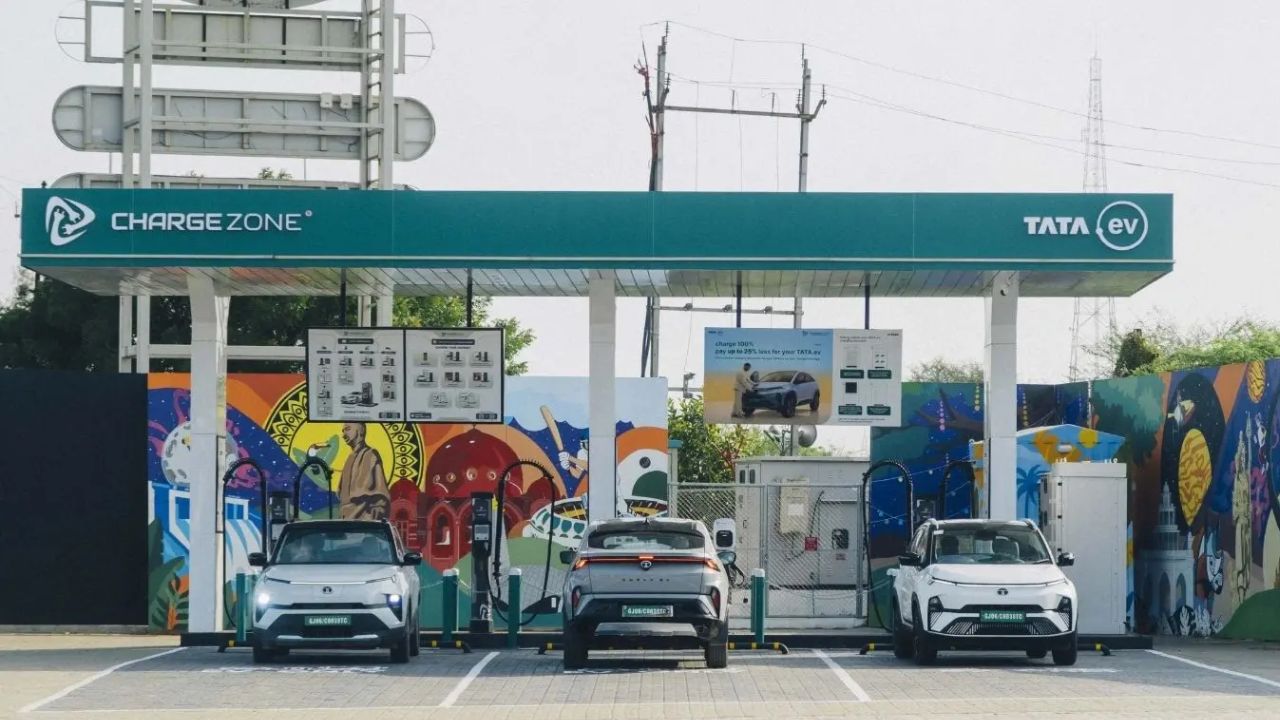
ChargeZone and Tata.ev have jointly launched a co-branded Mega Charging Hub at Khalapur on the Mumbai–Pune Expressway, marking a significant step forward for highway EV charging infrastructure in India. With a total installed capacity of 720 kW and the ability to charge up to 10 electric vehicles simultaneously, the facility is among the most powerful public EV charging setups in the country. The Khalapur hub is the 75th installation under the ongoing ChargeZone and Tata.ev co-branded initiative, which is targeting over 100 such hubs across key national highway corridors.
Hub Specifications at a Glance
| Specification | Detail |
|---|---|
| Location | Khalapur, Mumbai–Pune Expressway |
| Total Installed Capacity | 720 kW |
| Number of Dispensers | 5 |
| Total Charging Points | 10 |
| Simultaneous Charging | Up to 10 EVs |
| Maximum Charging Speed | Up to 360 kW (Boost Mode) |
| Hub Number in Series | 75th co-branded hub |
| Target Total Hubs | 100+ across national highways |
| Tata.ev Customer Discount | Up to 25 percent |
Why This Hub Matters
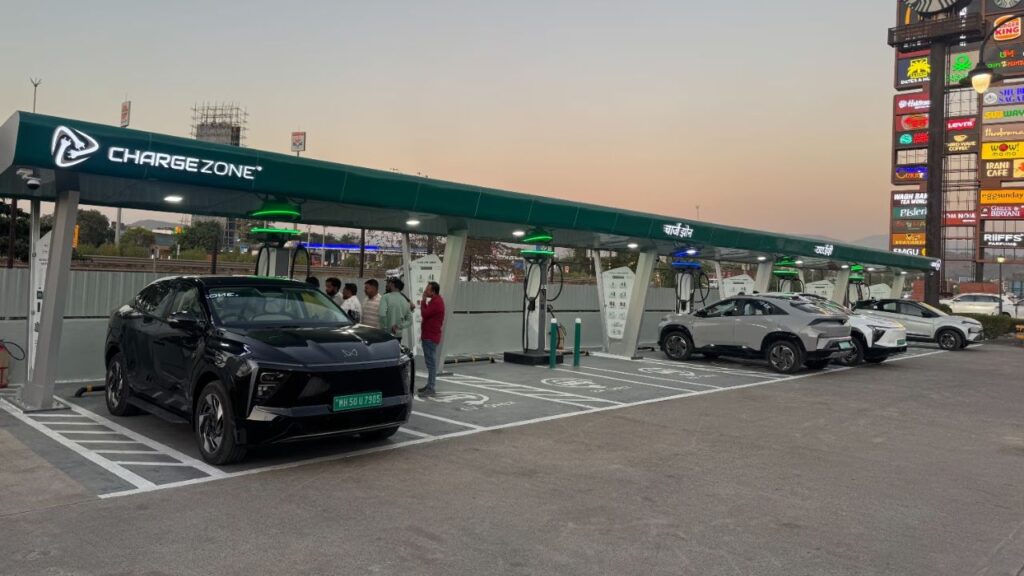
Highway charging has been one of the most persistent barriers to EV adoption in India, particularly for intercity travel where range anxiety is most acute. The Khalapur hub addresses this directly by offering high-speed charging in Boost Mode at up to 360 kW, which significantly cuts down charging time compared to conventional public chargers. The five-dispenser, ten-point setup also means that even during peak travel hours on one of India’s busiest highway corridors, wait times should remain manageable.
The Mumbai–Pune Expressway is one of the most heavily trafficked intercity routes in India, making Khalapur a strategically important location for this kind of infrastructure. As EV ownership grows in both cities, the demand for reliable, high-speed highway charging between them will only increase.
The Broader Initiative
The Khalapur facility is part of a larger co-branded Mega Charging Hub programme that ChargeZone and Tata.ev launched in 2025. The initiative is focused on building high-speed charging infrastructure across key highway corridors and major urban hotspots, with a target of deploying over 100 such hubs nationally.
Key goals of the programme include:
- Reducing wait times during peak travel periods on national highways
- Improving reliability and consistency of highway charging for long-distance EV travel
- Addressing infrastructure gaps that currently limit intercity EV adoption
- Expanding high-power charging access beyond metro cities into key corridor locations
What Tata.ev Owners Get
Tata.ev customers will receive an exclusive discount of up to 25 percent at the Khalapur charging hub, making it a meaningfully more affordable charging stop for owners of Tata electric vehicles, which currently represent the largest share of four-wheeler EVs on Indian roads.
What the Leaders Are Saying
Kartikey Hariyani, Founder and CEO of ChargeZone, described the Khalapur hub as a significant milestone in building a high-power, future-ready EV charging network across India, adding that highway charging is the backbone of intercity electrification and needs to be built at scale.
Vivek Srivatsa, Chief Commercial Officer of Tata Passenger Electric Mobility Ltd, stated that as leaders of India’s four-wheeler electric revolution, Tata.ev is focused on co-creating a charging network that is fast, reliable, and accessible for EV owners across the country.
Pros and Cons of the Initiative
| Pros | Cons |
|---|---|
| 720 kW capacity is among the highest for public EV charging in India | Discount currently limited to Tata.ev customers only |
| Up to 10 EVs can charge simultaneously | 100 hub target still leaves large highway stretches underserved |
| Boost Mode delivers up to 360 kW per session | Infrastructure concentrated on premium highway corridors for now |
| Strategically located on India’s busiest intercity route | |
| Part of a scaled, long-term national highway programme |
The ChargeZone and Tata.ev Mega Charging Hub at Khalapur is a well-timed and well-placed addition to India’s growing EV infrastructure landscape. At 720 kW total capacity with Boost Mode speeds of up to 360 kW, it sets a new benchmark for public highway charging in the country. With 75 hubs already operational and a target of over 100 across national corridors, the initiative is building the kind of intercity charging backbone that India’s EV market will need as four-wheeler EV ownership continues to accelerate through 2026 and beyond.