The Volkswagen Taigun and Skoda Kushaq are about as closely related as two cars from different brands can be. They share the same MQB-A0-IN platform, identical engine options, and nearly identical feature lists. On paper, choosing between them should be straightforward. In practice, the differences in design philosophy, cabin character, and pricing give each car a distinct identity that will appeal to different kinds of buyers. Here is a detailed look at how the 2026 facelifts of both SUVs compare across every key area.
Quick Comparison
| Specification | Volkswagen Taigun | Skoda Kushaq |
|---|---|---|
| Engine Options | 1.0L TSI / 1.5L TSI | 1.0L TSI / 1.5L TSI |
| Power | 115 PS / 150 PS | 115 PS / 150 PS |
| Torque | 178 Nm / 250 Nm | 178 Nm / 250 Nm |
| Gearbox (1.0L) | 6-speed MT / 8-speed AT | 6-speed MT / 8-speed AT |
| Gearbox (1.5L) | 7-speed DCT | 7-speed DCT |
| Cylinder Deactivation (1.5L) | Yes (ACT) | Yes (ACT) |
| Wheel Size | 17-inch alloys | 17-inch alloys |
| NCAP Rating | 5-star Global NCAP | 5-star Global NCAP |
| Starting Price | Rs 11.00 lakh | Rs 10.69 lakh |
| Top Variant Price | Rs 19.30 lakh | Rs 18.99 lakh |
Exterior Design: Sporty vs Sophisticated
Front End
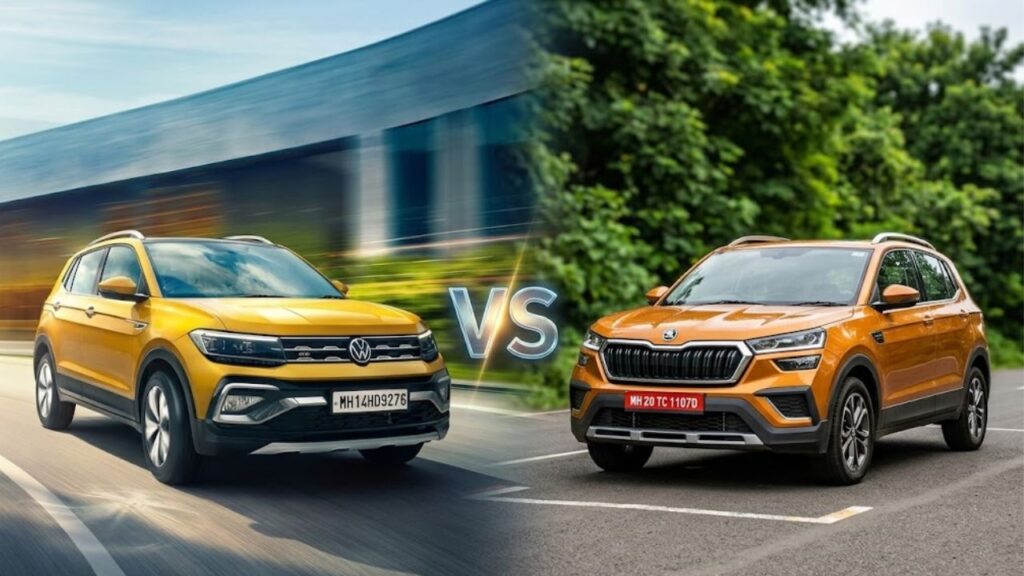
The front end is where the two SUVs diverge most noticeably. The Taigun leans into a sportier, more aggressive aesthetic. Updated LED headlamps are connected by a DRL strip, and the illuminated Volkswagen logo on the grille adds a modern premium touch, particularly effective at night. The multi-horizontal-element grille keeps the front end clean yet assertive.
The Kushaq takes a more mature and refined approach. Sharper headlamps pair with Skoda’s signature grille, which now features more intricate detailing than before. The chunkier bumper and fog lamps that double as cornering lights give it a more functional, grown-up character.
Side Profile
The side profiles of both SUVs are nearly identical, which is unsurprising given the shared platform. Both get roof rails, strong character lines, body cladding, and 17-inch alloy wheels. The differences are subtle: the Taigun gets a GT badge on select variants, while the Kushaq carries Skoda fender branding.
Rear End
The Taigun continues its sporty theme at the rear with C-shaped tail lamps connected by a gloss black strip and an illuminated Volkswagen logo. The Kushaq opts for a connected LED tail lamp setup with a clean red light bar and Skoda lettering integrated neatly within the lighting element, a more restrained and elegant finish.
Interior: Two Distinct Cabin Personalities
Despite sharing the same fundamental architecture, the cabins of the Taigun and Kushaq carry genuinely different personalities.
The Taigun’s dashboard is clean and edgy with sharp lines and a well-integrated touchscreen. GT variants get a full black theme that reinforces the sporty character, while Chrome variants mix black and grey for a more balanced feel. Textured dashboard inserts and a familiar 3-spoke steering wheel complete the look.
The Kushaq feels slightly more premium and understated. Standard variants come in a black and beige combination that makes the cabin feel airier, while sportier trims switch to black with matte red inserts. More chrome detailing across the dashboard and door handles, combined with a two-spoke steering wheel and a floating touchscreen unit, give the Kushaq a distinctly different character despite the shared bones.
Features: Nearly Identical, With One Kushaq Advantage
Both SUVs share an almost identical features list across comparable variants:
Common features on both:
- 10.1-inch touchscreen infotainment with wireless Apple CarPlay and Android Auto
- 10.25-inch digital driver’s display
- 6-speaker sound system with subwoofer
- Automatic climate control
- Ambient lighting
- Ventilated front seats with power adjustment
- Keyless entry with push-button start
- Panoramic sunroof
- Cruise control
The one area where the Kushaq pulls ahead is the addition of a rear seat massage function, which is a genuinely unusual feature for the compact SUV segment and gives it a practical edge for rear passengers on long journeys.
Safety: Identical Across the Board
There is no meaningful difference in safety equipment between the two SUVs. Both offer:
- 6 airbags
- ABS with EBD
- Electronic stability control
- All-wheel disc brakes
- Tyre pressure monitoring system
- Front and rear parking sensors
- ISOFIX child seat mounts
- Rear defogger and reverse parking camera
- 5-star Global NCAP crash test rating
One notable gap for both is the absence of ADAS features and an electronic parking brake, both of which have become standard on several rivals in this segment.
Powertrain: Identical Under the Bonnet
| Engine | Transmission | Power | Torque |
|---|---|---|---|
| 1.0L Turbo-Petrol TSI | 6-speed MT / 8-speed AT | 115 PS | 178 Nm |
| 1.5L Turbo-Petrol TSI | 7-speed DCT | 150 PS | 250 Nm |
Both SUVs receive the same update for 2026: a new 8-speed automatic gearbox replaces the older 6-speed torque converter for the 1.0L engine, making the entry-level automatic option more refined and responsive. The 1.5L engine in both cars also gets Active Cylinder Deactivation technology, which shuts down two of the four cylinders during light-load cruising for improved fuel efficiency.
Pricing
| Model | Starting Price | Top Variant Price |
|---|---|---|
| 2026 Volkswagen Taigun | Rs 11.00 lakh | Rs 19.30 lakh |
| 2026 Skoda Kushaq | Rs 10.69 lakh | Rs 18.99 lakh |
The Kushaq is slightly more affordable across the board, with a Rs 31,000 lower entry price and a Rs 31,000 lower top variant price compared to the Taigun.
Pros and Cons
| Volkswagen Taigun | Skoda Kushaq | |
|---|---|---|
| Pros | Sportier, more aggressive design | Slightly more affordable pricing |
| Illuminated VW logo is a premium touch | Rear seat massage function is a segment first | |
| Strong Volkswagen brand appeal | More mature, refined interior feel | |
| 5-star NCAP safety rating | 5-star NCAP safety rating | |
| Cons | Slightly higher price across variants | More conservative styling may not appeal to all |
| No ADAS features | No ADAS or electronic parking brake | |
| No rear seat massage | Floating screen looks less integrated |
The 2026 Volkswagen Taigun and Skoda Kushaq are genuinely excellent compact SUVs that offer almost identical driving experiences, engine options, and safety credentials. The Taigun wins on design drama and sporty character, making it the better pick for buyers who want a sharper-looking SUV with strong brand recognition. The Kushaq wins on value and cabin refinement, with a slightly lower price, a more premium interior feel, and the bonus of rear seat massage that no rival in this segment currently offers. Either way, you are getting a well-rounded, thoroughly capable compact SUV. The final choice comes down to whether you prefer sporty flair or understated sophistication.