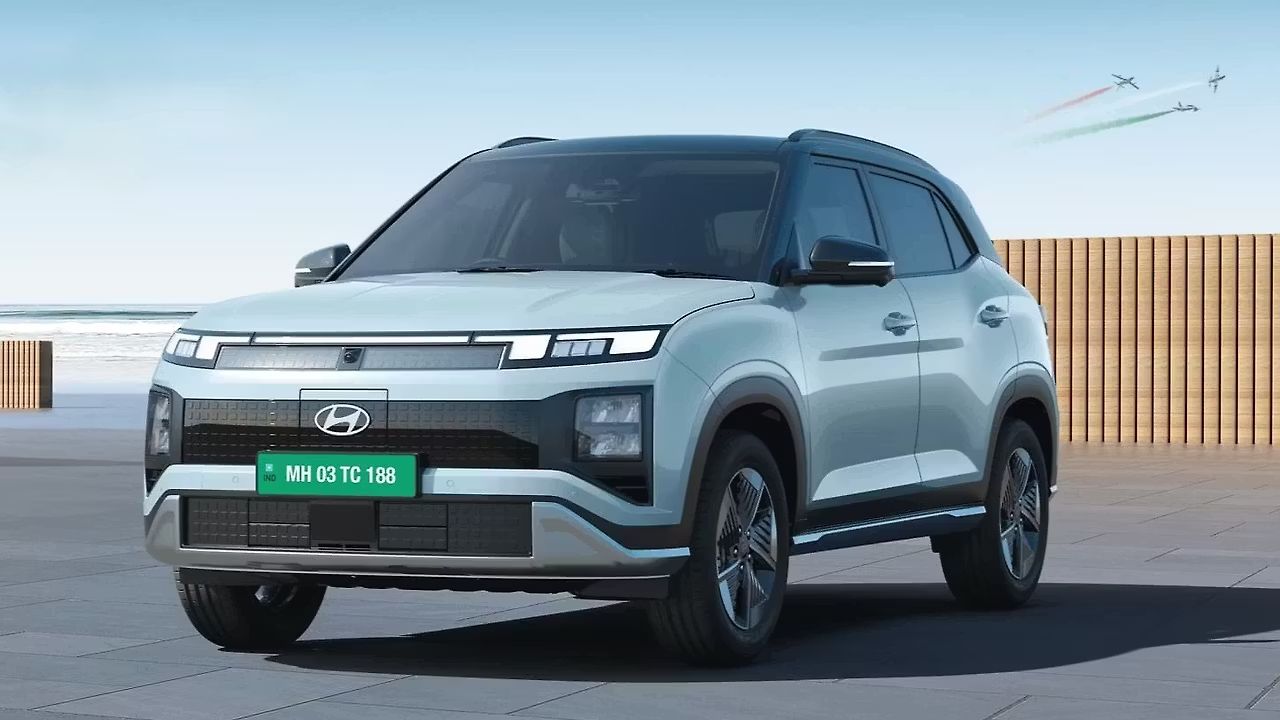
The Hyundai Creta has long been one of India’s most popular compact SUVs, offering a practical balance of comfort, features, and everyday usability. With the Creta EV entering the market in early 2025, buyers now face a clear choice between familiar ICE variants and the electric option. Starting from approximately ₹18.02 lakh (ex-showroom) for base models and going up to around ₹23-24 lakh for long-range top trims, the Creta EV carries a significant premium over comparable ICE versions.
For buyers in cities like Mumbai, Delhi, Bangalore, and Pune, the central question is whether that premium makes financial and practical sense in 2026. This article lays out the key variables, running costs, charging realities, and a break-even estimate, to help buyers think through that decision for their own situation.
A note on data: The TCO estimates, running cost figures, and real-world range observations in this article draw on a combination of manufacturer-published specifications, ARAI certification data, and aggregated owner experiences shared across Indian EV community forums (including dedicated Creta EV owner groups). These are indicative figures. Individual results will vary based on driving style, location, electricity tariffs, fuel prices, and charging access. Readers are encouraged to calculate their own numbers using the framework provided.
Creta EV vs. Creta ICE: The Price Gap
According to Hyundai’s published specifications, the Creta EV is available in two battery configurations:
- 42 kWh pack: ARAI-certified range of approximately 390-420 km depending on variant; approximately 133 bhp
- 51.4 kWh long-range pack: ARAI-certified range of up to 473 km; approximately 171 bhp
ARAI-certified range figures represent standardized test conditions. Based on experiences shared by owners in community forums, real-world mixed driving (city plus highway with AC use) has generally been reported in the 350-420 km range for the long-range variant, a reasonable result for daily urban use but one that requires planning on longer intercity trips.
The standard Creta ICE range starts from approximately ₹10.79 lakh (ex-showroom) for petrol variants, with diesel and turbo-petrol options available. Top-spec ICE Cretas reach approximately ₹19-20 lakh, placing the EV premium at roughly ₹6-8 lakh for comparable feature levels. This price difference is the core of the break-even question.
Design and Practicality
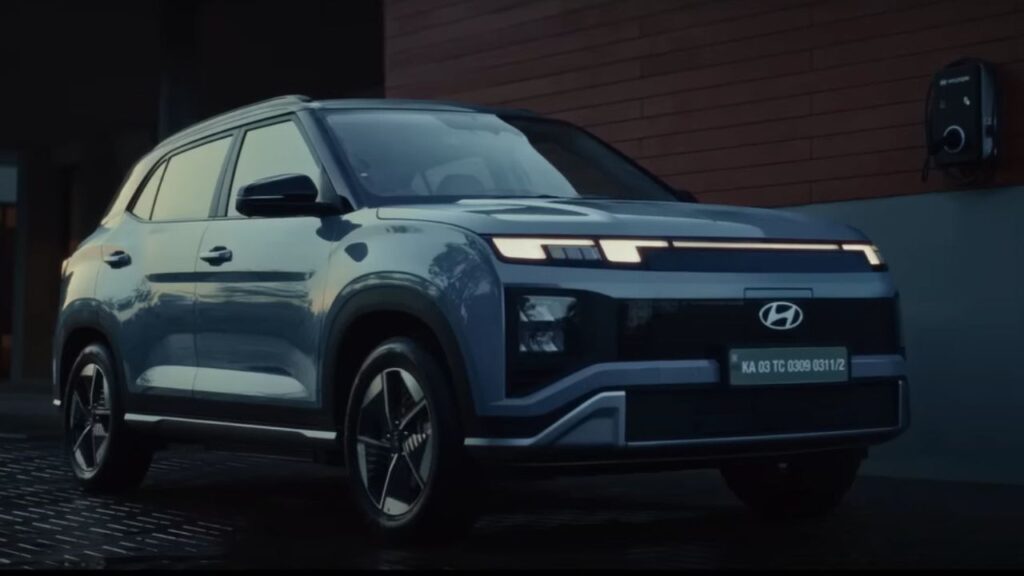
The Creta EV retains the ICE model’s overall silhouette with EV-specific updates, including a closed front grille, aerodynamic 17-inch wheels, and a revised interior featuring a black-and-white theme and a three-spoke steering wheel. A vehicle-to-load (V2L) function, which allows external devices to be powered using the battery, is available on higher variants and has been noted by forum owners as useful during family trips or power outages.
Boot space is slightly reduced compared to the ICE version due to battery packaging, though most owners in forum discussions describe it as adequate for everyday use. The added weight of the battery pack is generally said to contribute to a composed and settled ride rather than agile handling. Higher variants are well equipped with Level 2 ADAS, ventilated seats, a panoramic sunroof, and premium audio, making them broadly comparable to top-spec ICE trims.
Charging: Real-World Usability
As Per Hyundai’s published data:
- DC fast charging (50 kW): 10-80% in approximately 58 minutes for the 42 kWh pack.
- AC home charging (11 kW wall box): Full charge in under 5 hours.
Home charging is where the economics work best. At typical residential electricity tariffs of ₹7-10 per unit, owners in community forums commonly report effective running costs of approximately ₹1-1.5 per km, a substantial saving over petrol or diesel. Public fast charging typically costs ₹15-25 per unit at commercial chargers, which owner reports suggest translates to approximately ₹2.5-4 per km. This is still competitive against petrol but narrows the advantage considerably.
For apartment residents in Mumbai or Delhi without access to dedicated home charging, reliance on public networks increases both cost and planning complexity. Owners in forum discussions frequently cite home charging access as the single most important factor in their overall satisfaction with the ownership experience.
Owners in cities like Bangalore report comfortable daily usage of 40-60 km with overnight top-ups at home. Highway runs are generally manageable but require identifying charging stops in advance, with sessions adding approximately 30-45 minutes to travel time based on typical forum accounts.
Break-Even Analysis: 2026 Estimates
The following analysis compares a mid-to-top spec Creta EV (51.4 kWh, approximately ₹22-24 lakh ex-showroom) against a comparable diesel Creta (approximately ₹15-17 lakh ex-showroom). On-road prices vary by state due to EV road tax exemptions available in several states.
Key assumptions used in this estimate:
| Variable | Creta Diesel | Creta EV (Home Charging) | Creta EV (Public Charging) |
|---|---|---|---|
| Fuel/electricity cost | ₹100/litre (diesel) | ₹8/unit (home) | ₹20/unit (avg. public) |
| Real-world efficiency | ~18 km/litre | ~7-8 km/kWh | ~7-8 km/kWh |
| Running cost per km | ~₹5.5-6 | ~₹1-1.5 | ~₹2.5-4 |
Fuel price assumption of ₹100/litre is used for indicative purposes. Actual diesel prices vary by city and are subject to change.
Indicative 5-Year TCO (15,000 km/year = 75,000 km total):
| Parameter | Creta Diesel (approx.) | Creta EV Long Range (approx.) | Notes |
|---|---|---|---|
| Ex-Showroom Price | ₹15-17 lakh | ₹22-24 lakh | Mid-to-top variants |
| On-Road, Delhi (indicative) | ₹17-19 lakh | ₹21-23 lakh | EV tax benefits vary by state |
| Running cost per km | ₹5.5-6.7 | ₹1.1-3.5 | Home vs. public charging |
| 5-Year Fuel/Service Cost | ₹4.5-6 lakh | ₹0.8-2 lakh | Over 75,000 km |
| Indicative Break-Even | – | 3-6 years (home charging) | 6-8 years on public charging |
Based on these estimates, buyers with home charging access and annual mileage of 12,000-15,000 km or above can expect a break-even on the purchase premium approximately within 3-5 years. Those relying primarily on public charging see a slower break-even, closer to 6-8 years.
These are estimates based on the assumptions stated above. Actual outcomes depend on individual electricity tariffs, fuel price movements, state EV incentives, and annual mileage. Buyers should input their own numbers to arrive at a personalized estimate.
Who Is the Creta EV Best Suited For?
Likely a strong fit if you:
- Have reliable home or workplace charging access
- Drive 12,000-15,000+ km annually, primarily in urban areas
- Prioritise a refined, quiet driving experience
- Are in a state offering road tax exemptions or other EV incentives
Worth reconsidering if you:
- Live in a smaller city or town with limited charging infrastructure
- Frequently undertake long highway trips without convenient charging stops
- Are working within a tight upfront budget where the ₹6-8 lakh premium is a constraint
- Do not have access to home or overnight charging
Hyundai’s service network is expanding EV support, though forum owners in smaller cities occasionally note longer wait times for EV-specific service compared to ICE models – a practical consideration worth researching for your specific location.
Key Takeaways
The Hyundai Creta EV offers a compelling proposition for the right buyer profile: primarily urban use, home charging access, and moderate-to-high annual mileage. For those buyers, the running cost savings are real and the break-even period is achievable within a reasonable ownership window. For buyers without home charging, lower annual mileage, or frequent long-distance travel needs, the ICE Creta remains a proven, cost-effective choice with simpler refueling logistics.
The estimates in this article are built on manufacturer-published specifications, ARAI-certified range data, and aggregated owner experiences drawn from Indian EV community forums. They are intended as a starting framework, not a definitive financial projection. Given that fuel prices, electricity tariffs, and state EV incentives can shift meaningfully, prospective buyers are strongly encouraged to run their own numbers based on their actual usage patterns, local electricity rates, and available state incentives before making a final decision.