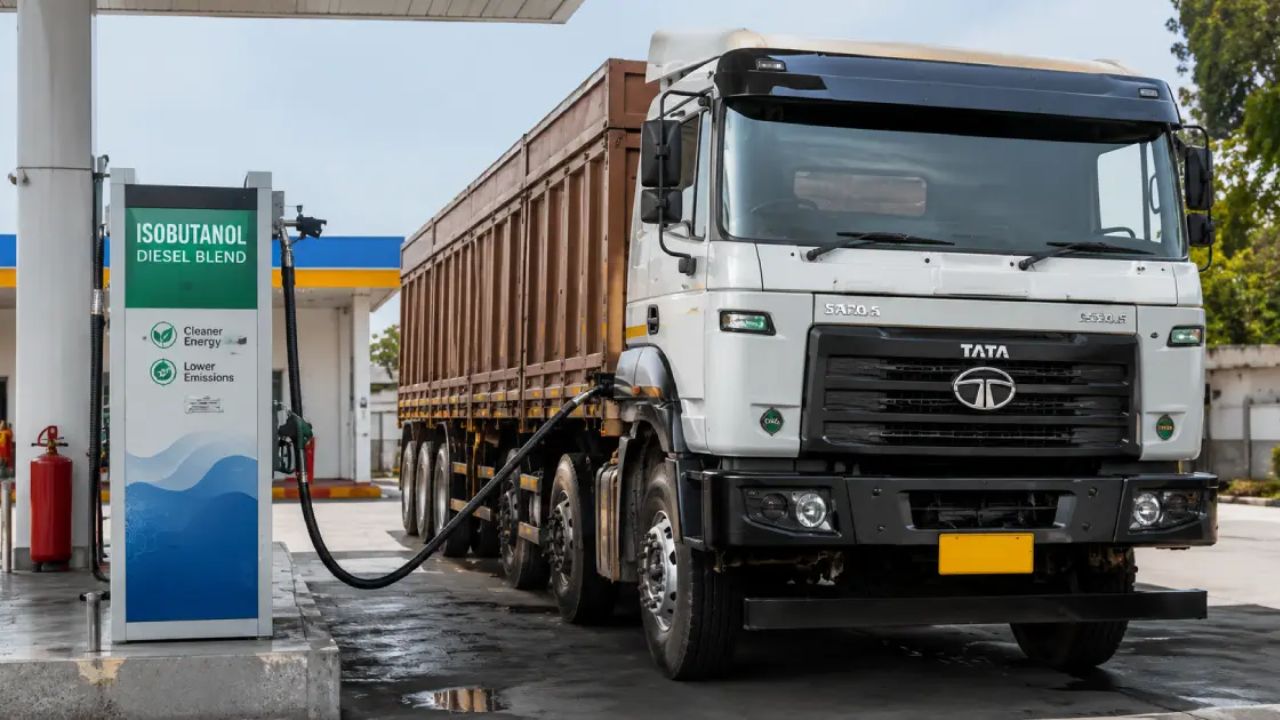
India is set to advance its biofuel initiatives with the commencement of isobutanol diesel blending trials in the second quarter of fiscal year 2027. This pilot project marks a significant step toward reducing dependence on imported crude oil and promoting sustainable fuel alternatives for the commercial vehicle sector. Girish Wagh, Managing Director and CEO of Tata Motors Commercial Vehicles, confirmed the timeline during a recent media interaction, highlighting collaborative efforts involving multiple stakeholders.
The initiative aligns with the government’s broader push for energy independence. It builds upon successful ethanol blending programmes in petrol while addressing long standing challenges in diesel decarbonisation. Industry experts view this development as a pragmatic approach to lowering emissions and enhancing fuel supply resilience amid global uncertainties.
Government Task Force Drives the Initiative
A high level government task force is steering the isobutanol diesel blending project. The group includes original equipment manufacturers, oil marketing companies, testing agencies, and other key players from the automotive and energy sectors. Tata Motors is actively coordinating with Hindustan Petroleum Corporation Limited to procure the specialised blended fuel required for the trials.
This collaborative framework ensures comprehensive evaluation across real world operating conditions. The pilot will focus on a modest two percent isobutanol blend initially. Such a low concentration is expected to minimise any potential impact on existing vehicle performance while providing valuable data on compatibility and efficiency.
Technical Advantages of Isobutanol Over Ethanol
Isobutanol presents a more viable option for diesel blending compared to previous attempts with ethanol. As a four carbon alcohol, it exhibits better miscibility with diesel and greater stability in fuel mixtures. Its higher flash point, typically between 27 and 30 degrees Celsius, aligns closely with diesel safety standards, reducing logistical and storage risks.
In contrast, ethanol diesel blends faced significant hurdles due to phase separation and lower flash points. Engineers often required costly additives, and even then, blends rarely exceeded five percent without compromising combustion or safety. Isobutanol avoids many of these issues, making it a promising drop in biofuel candidate for India’s vast diesel powered fleet.
Praj Industries, a leading bioenergy technology firm, has conducted extensive research on isobutanol production and blending. Early tests indicate that blends up to ten percent remain stable for over 40 days without separation. Dynamometer evaluations on standard driving cycles have shown emission reductions with only marginal effects on fuel economy.
ARAI to Oversee Comprehensive 10 Month Assessment
The Automotive Research Association of India will lead a detailed 10 month technical validation programme in partnership with Praj Industries. This assessment will involve multiple commercial vehicle types and focus on critical parameters such as engine performance, fuel system durability, emissions, and long term reliability.
Major original equipment manufacturers are expected to participate, providing a robust dataset for potential nationwide implementation. Oil companies like Bharat Petroleum have already conducted preliminary trials in stationary engines and are investing in broader vehicle validation across diverse operating environments.
The programme represents a departure from earlier, less successful diesel biofuel efforts. By prioritising a chemically compatible molecule like isobutanol, stakeholders aim to achieve meaningful decarbonisation without requiring extensive modifications to existing infrastructure or vehicles.
Key Benefits Anticipated from Isobutanol Diesel Blending
- Reduced reliance on imported crude oil through domestic biofuel production.
- Lower greenhouse gas emissions from commercial transport.
- Minimal disruption to current fuel distribution networks.
- Enhanced energy security for the transportation sector.
- Potential for higher blending ratios following successful pilot results.
Context of India’s Ethanol Blending Success
The isobutanol initiative follows substantial progress in petrol ethanol blending. The country has achieved a 20 percent ethanol blend in petrol, with standards notified for higher levels including E22, E25, E27, and E30. Plans for E85 and E100 fuels are also underway to further cut fossil fuel consumption.
These advancements have demonstrated the feasibility of large scale biofuel integration. The government now seeks similar outcomes for diesel, which powers a significant portion of freight and passenger transport. Isobutanol blending could complement electrification efforts and contribute to overall decarbonisation targets.
Girish Wagh emphasised the strategic importance of such measures. He noted that while isobutanol has a lower calorific value than pure diesel, a two percent blend is unlikely to cause noticeable performance degradation in vehicles. The focus remains on achieving energy independence, a goal that warrants collective industry support.
Potential Challenges and Mitigation Strategies
Any new fuel blend requires careful evaluation of its effects on engine components, fuel injection systems, and overall vehicle efficiency. The pilot trials will specifically monitor these aspects under Indian driving conditions, including varying loads, temperatures, and terrains typical for commercial vehicles.
Initial findings suggest that the low blend percentage will have negligible impact on power output or fuel mileage. However, the 10 month ARAI led study will provide definitive insights into durability and maintenance requirements. Data from these tests will inform future policy decisions on mandatory blending levels.
Oil marketing companies are simultaneously upgrading production capabilities for isobutanol. This parallel development ensures supply readiness once technical validations conclude successfully.
Broader Implications for Commercial Vehicles and Economy
India’s commercial vehicle industry, dominated by diesel engines, stands to benefit significantly from stable and sustainable fuel options. Reduced import dependence could help stabilise fuel prices and support economic growth in the logistics sector.
Tata Motors, as a leading player, is well positioned to contribute expertise from its extensive vehicle portfolio. Successful trials could pave the way for broader adoption across other manufacturers, accelerating the transition toward greener transport solutions.
The project also aligns with national objectives under initiatives promoting biofuels and circular economy principles. By utilising agricultural residues and other biomass for isobutanol production, the programme could generate additional income for farmers and promote rural development.
Future Outlook and Next Steps
Following the pilot phase, authorities will analyse results to determine scalability. Positive outcomes may lead to phased implementation of isobutanol diesel blends, starting with select fleets or regions before nationwide rollout.
Stakeholders remain optimistic about the technology’s potential. The combination of government support, industry collaboration, and technical innovation positions India favourably in the global biofuel landscape.
As trials commence in Q2 FY2027, the automotive and energy sectors will closely monitor progress. This initiative could mark a turning point in diesel fuel decarbonisation, offering a balanced path toward sustainability without compromising performance or economic viability.
The successful integration of isobutanol would strengthen India’s energy security and contribute meaningfully to climate goals. It exemplifies how targeted innovation and cross sectoral partnerships can address complex challenges in the transportation fuel domain.