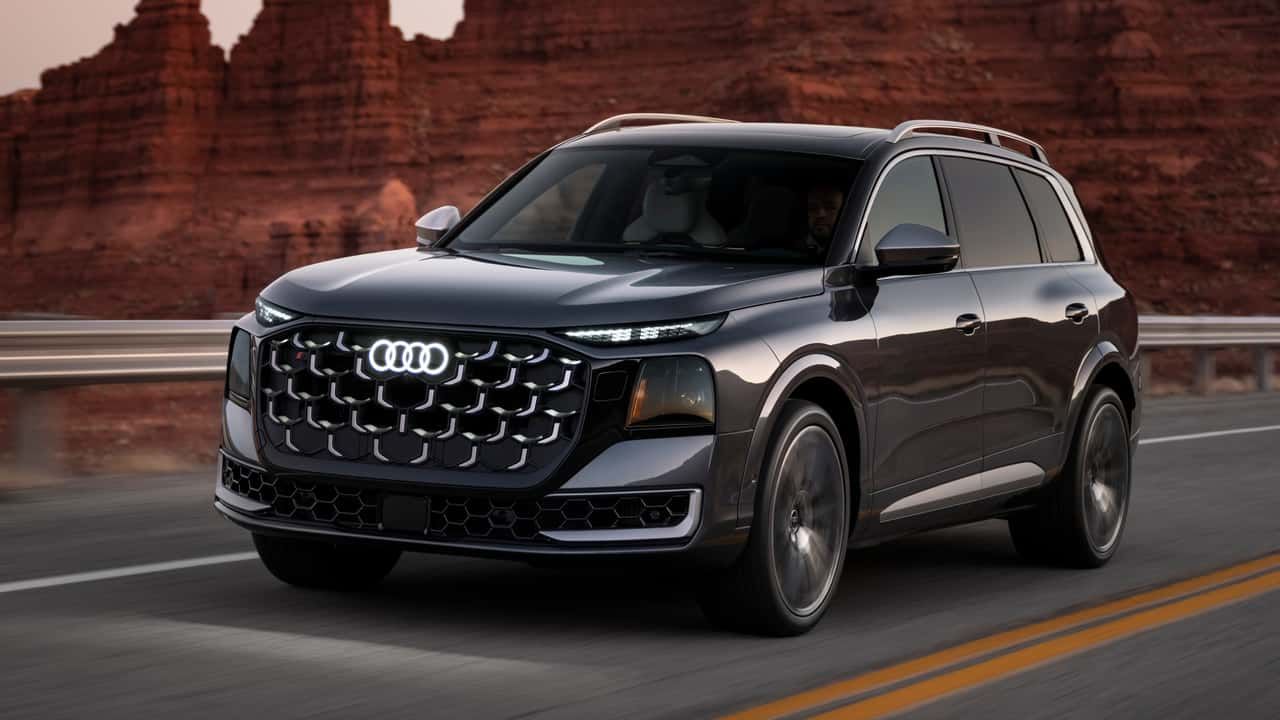
Audi has officially expanded its SUV lineup with the introduction of the Audi Q9, the brand’s largest and most luxurious SUV to date. Positioned above the Q7, the all-new Q9 becomes Audi’s flagship SUV and the first model to wear the prestigious “9” badge. It brings a more spacious cabin, cutting-edge technology, premium comfort, and powerful engine options aimed directly at rivals such as the BMW X7 and Mercedes-Benz GLS.
Meanwhile, the next-generation Audi Q7 has also undergone a complete transformation. Built on Audi’s latest Premium Platform Combustion (PPC) architecture, the new Q7 focuses on practicality, efficiency, and advanced technology while continuing to serve as the brand’s versatile family luxury SUV. If you’re wondering which premium three-row SUV deserves a place in your garage, here’s a detailed comparison.
Audi Q9 vs Audi Q7 Specifications
| Specification | Audi Q9 | Audi Q7 |
|---|---|---|
| SUV Position | Flagship SUV | Premium Luxury SUV |
| Seating | 7 Seats (6-seat optional) | 5, 6 or 7 Seats |
| Platform | Premium Platform Combustion | Premium Platform Combustion |
| Engine Options | 2.9L Twin-Turbo V6 Petrol, SQ9 4.0L Twin-Turbo V8 | 3.0L Mild-Hybrid V6 Diesel |
| Transmission | 8-Speed Tiptronic | 8-Speed Automatic |
| Drivetrain | Quattro AWD | Quattro AWD |
| Suspension | Adaptive Air Suspension (Standard) | Steel Suspension (Standard), Optional Air Suspension |
| Launch | Global deliveries from November 2026 | Launching in select markets from 2026 |
| India Launch | Expected Q2 2027 | Expected after global rollout |
Exterior Design
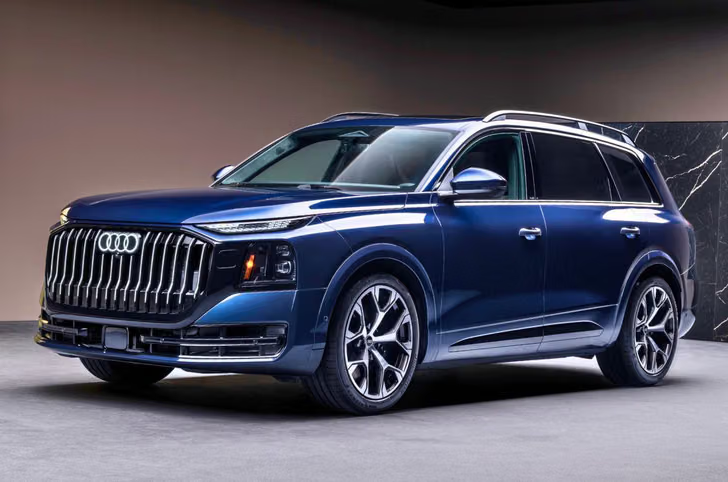
The Audi Q9 has been designed to make an immediate statement. As Audi’s new flagship SUV, it features a bold front fascia, an imposing grille, slimmer Digital Matrix LED headlights, flush automatic doors, muscular proportions, and curved digital OLED tail lamps. Despite its size, the SUV maintains Audi’s clean and elegant design language while projecting a commanding road presence.
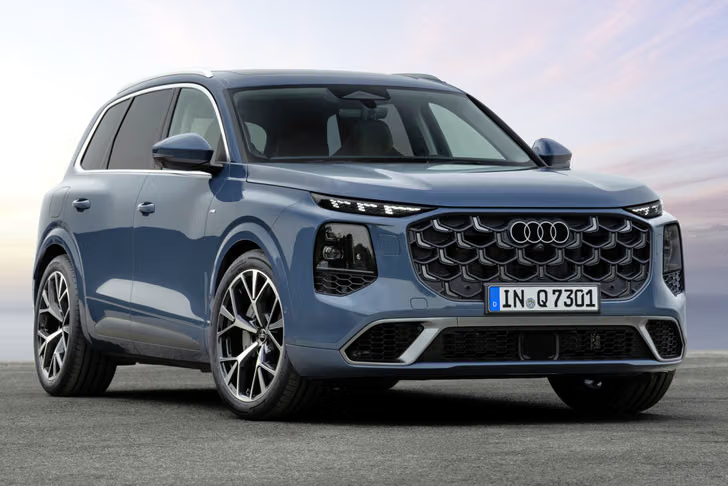
The new Audi Q7, on the other hand, adopts a more upright two-box silhouette compared to its predecessor. While the outgoing model emphasized sleek curves, the latest Q7 focuses on maximizing interior space and practicality. The redesigned front end, updated lighting signature, and stronger body lines give it a more mature and confident appearance without becoming overly aggressive. If visual presence is your priority, the larger Q9 clearly stands out as Audi’s new design flagship.
Interior and Cabin Experience
Audi has significantly upgraded the interiors of both SUVs, but the Q9 takes luxury to another level. The dashboard is finished with extensive wooden trim and features a three-screen layout consisting of a 12.3-inch digital instrument cluster, a 14.5-inch driver-focused infotainment display, and a 12.3-inch passenger touchscreen with a dedicated privacy mode. A redesigned four-spoke steering wheel with Audi’s latest 2D logo further modernizes the cabin.
The Q7 also receives Audi’s newest digital cockpit, complete with a full-width infotainment setup and a self-learning voice assistant powered by ChatGPT. Premium materials, customizable ambient lighting, and multiple interior themes give it a sophisticated atmosphere.
While both cabins are technologically impressive, the Q9 delivers a noticeably more luxurious and flagship-like experience.
Features Comparison
Technology is one of the biggest highlights of both SUVs. The Audi Q9 comes equipped with Audi’s largest panoramic sunroof ever, a 22-speaker Bang & Olufsen 4D audio system, dual wireless charging pads, USB-C ports for all three rows, Android Automotive OS, powered doors, illuminated panoramic roof, heated armrests, and extensive personalization options.
The Q7 also offers an impressive equipment list, including cooled wireless charging, electrically adjustable air vents, a panoramic roof with variable transparency, a premium 4D sound system featuring headrest speakers and seat actuators, and multiple seating configurations. Although both SUVs are loaded with technology, the Q9 offers slightly more premium features as standard.
Engine and Performance
This is where the two SUVs begin to separate themselves. The Audi Q9 is available globally with multiple engine choices depending on the market. Buyers can choose between a 3.0-liter V6 diesel, a 2.9-liter twin-turbocharged V6 petrol, or the high-performance SQ9, which is powered by a 4.0-liter twin-turbocharged V8 producing 591 horsepower and 800 Nm of torque. Audi claims the SQ9 accelerates from 0-100 km/h in just 4 seconds.
The new Audi Q7 launches with a single 3.0-liter mild-hybrid V6 diesel engine. Depending on the version, it produces either 242 horsepower or 295 horsepower. The new-generation engine incorporates a 48-volt mild-hybrid system, an electric compressor, and an electrically assisted turbocharger that significantly improves throttle response while enhancing fuel efficiency.
For buyers looking for maximum performance, the Q9 offers a much broader and more powerful engine lineup.
Ride Quality and Driving Dynamics
Audi equips the Q9 with adaptive air suspension as standard, allowing the ride height to be adjusted by up to 90 mm depending on road conditions or driver preference. It also features all-wheel steering, improving maneuverability in city traffic while increasing stability at highway speeds.
The Q7 comes with steel suspension as standard but offers adaptive air suspension as an option. Higher variants also receive all-wheel steering, delivering a smoother ride and greater agility despite the SUV’s large dimensions. The Q9 clearly enjoys an advantage by offering premium chassis technologies as standard equipment.
Safety and Driver Assistance
Audi has packed both SUVs with the latest driver assistance technologies. The Q9 introduces one of Audi’s most advanced Level 2 ADAS systems, including Adaptive Driving Assistant Plus, which supports partially automated driving on approved highways at speeds of up to 130 km/h. Additional features include a 360-degree camera, automated parking assist, front and rear parking sensors, adaptive cruise control, lane-keeping assistance, and emergency braking.
The Q7 is also expected to feature Audi’s latest suite of safety technologies, combining advanced driver assistance with enhanced occupant protection and intelligent parking features. Both SUVs offer excellent safety, but the Q9 debuts Audi’s newest autonomous driving technologies.
Practicality
Both SUVs are designed for family use, but they cater to slightly different buyers. The Audi Q9 comes standard with seven seats while offering a six-seat executive layout as an optional upgrade. It prioritizes passenger comfort across all three rows, making it ideal for long-distance luxury travel.
The Q7 offers greater flexibility with five-, six-, and seven-seat configurations. It also boasts up to 670 liters of cargo space with the third row folded and an impressive 2,075 liters with the second row folded, making it highly practical for families.
Expected Price
The Audi Q9 has been introduced globally with a starting price of 108,400 euros, which translates to approximately ₹1.18 crore before taxes and import duties. It is expected to arrive in India during the second quarter of 2027 as a locally assembled model.
Audi has yet to announce official pricing for the new-generation Q7 in most markets, although it is expected to start at around £80,000 in the UK before optional equipment.
Audi Q9 vs Audi Q7: Which One Should You Choose?
If you’re looking for Audi’s most luxurious SUV with cutting-edge technology, multiple powerful engine options, standard adaptive air suspension, and flagship-level comfort, the Audi Q9 is the clear winner. It is designed for buyers who want maximum space, premium features, and the brand’s latest innovations.
However, if you want a luxury three-row SUV that balances practicality, efficiency, everyday usability, and modern technology while offering flexible seating configurations, the new Audi Q7 remains an excellent choice. Its refined diesel powertrain, spacious interior, and advanced digital features make it a compelling option for families who don’t necessarily need the extra size and prestige of the Q9.
With both SUVs built on Audi’s latest platform and featuring significant improvements over their predecessors, buyers can expect two of the strongest luxury SUV offerings in their respective segments. The final decision will ultimately come down to whether you prioritize flagship luxury and performance or practical everyday versatility.