
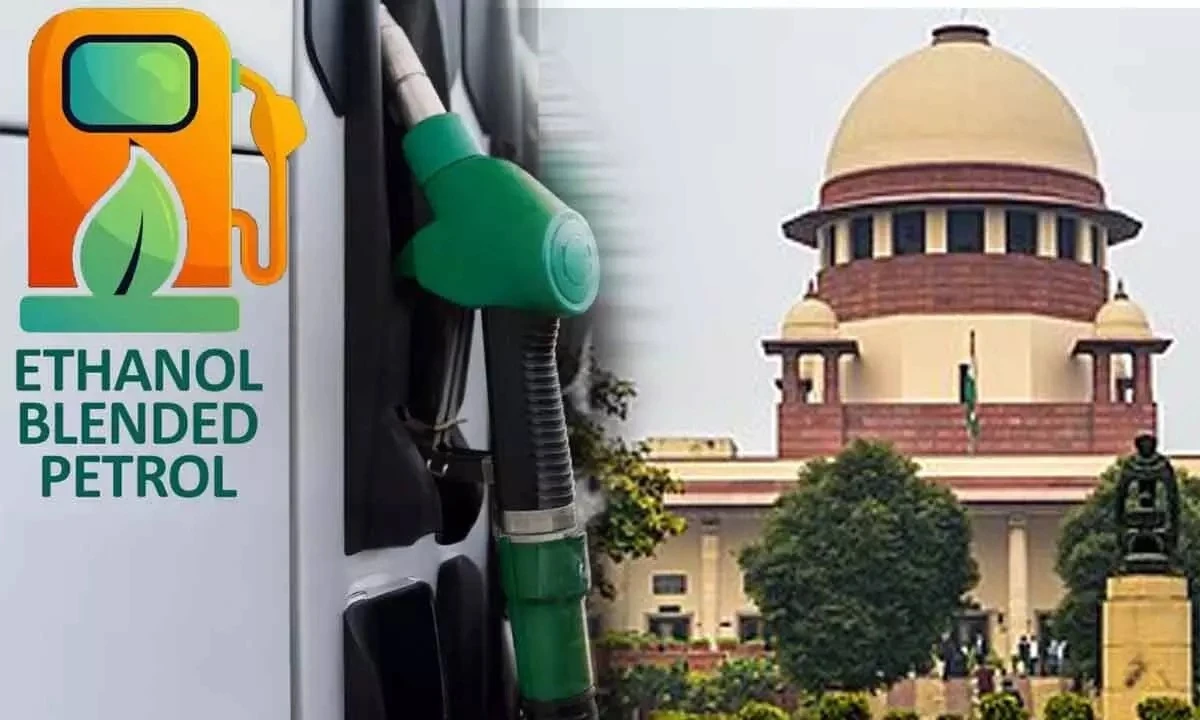
A new Public Interest Litigation (PIL) has been filed in the Supreme Court questioning the government’s move to make E20 petrol fuel mixed with 20 percent ethanol mandatory across the country. The petitioner argues that motorists should have the freedom to choose regular petrol without ethanol, as many vehicles currently on the road were not designed to run on E20 fuel.
Issues Raised Regarding Vehicle Safety and Performance
The PIL points out how cars made prior, including a number of BS-VI models, are not entirely compatible with high ethanol blends. The petitioner refers to widespread problems like engine corrosion, fuel pipes and rubber component damage, loss of fuel efficiency, and a general decline in the lifespan of vehicles. Most owners are also concerned about insurance companies denying claims related to engine damage due to the consumption of ethanol. Coupled with a lack of explicit public awareness campaigns, the policy, the plea submits, is making consumers vulnerable and confused.
What the Petitioner Is Asking the Court to Do
The main request of the PIL is straightforward, consumers must be given the right to make a choice. The petitioner is seeking ethanol-free petrol to be made available alongside E20 at fuel pumps nationwide. He is also requesting plain labels on all pumps so consumers know the ethanol concentration in the fuel they are buying straight away. Another crucial request is for the government to properly study the impact of E20 over time on vehicles, particularly performance and repair costs.
The Government’s Take on the Ethanol Drive
The government has defended its E20 programme, however, and insists it is safe and helpful. Policymakers claim that blending petrol with ethanol makes India less dependent on imported fossil fuels, decreases carbon emissions, and provides farmers with a guaranteed market for their crops. They have also assured the public that E20 does not invalidate automobile insurance, does not decrease mileage substantially, and even accelerates some vehicles. Leaders such as Union Minister Nitin Gadkari and industry associations have maintained that there is no basis for fears of engine damage.
What the Supreme Court’s Judgment Can Mean to You
The Supreme Court’s judgment in this matter will be watched with interest by both vehicle owners and environmental policymakers. On the one hand, India is seeking cleaner fuels and more energy security, but on the other, millions of car drivers believe they are being forced into a fuel option they never consented to. The result could decide whether India adopts a model where greener fuels are phased in with transparent consumer choice, or if mandatory blending takes hold despite resistance. For now, drivers across the country will be waiting to see if the court tilts towards sustainability goals or consumer rights.