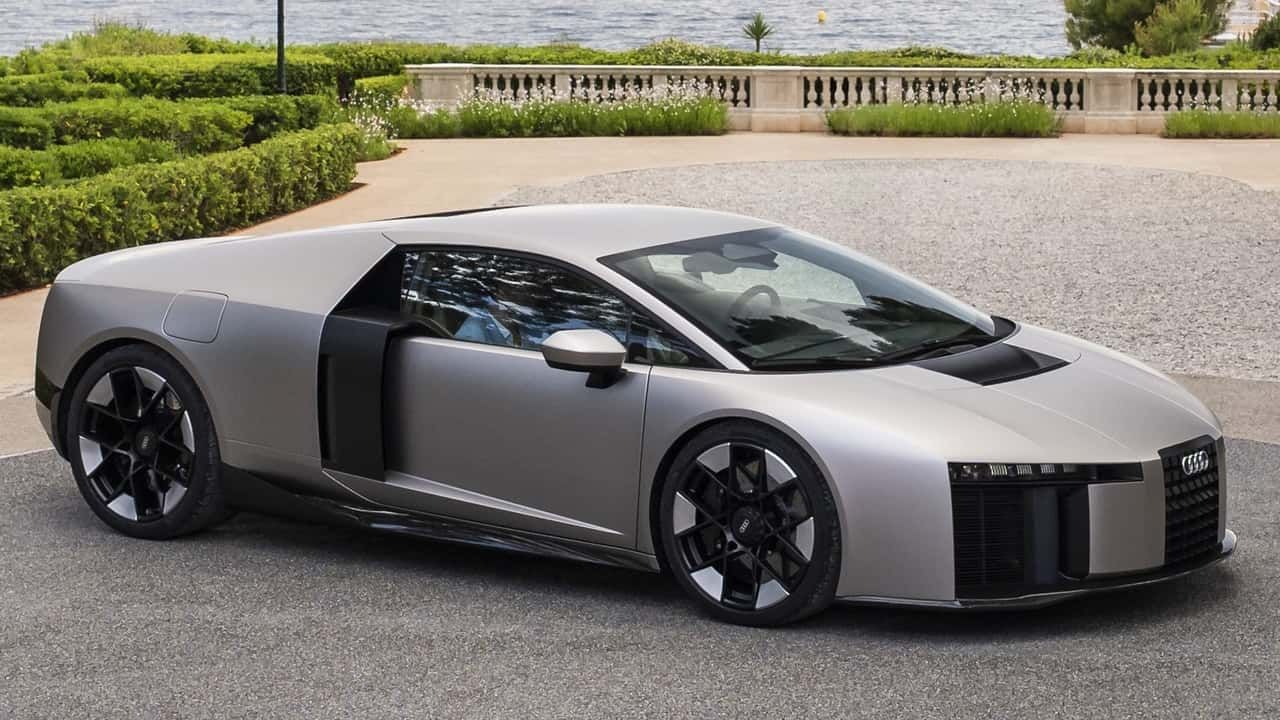
The German manufacturer just revealed its most powerful road vehicle ever. The new Audi Nuvolari arrives as a plug-in hybrid supercar with heavy racing-inspired technology. The company plans to build exactly 499 units for the global market. Deliveries for these exclusive cars will begin during the first half of 2027. The vehicle name honors Tazio Nuvolari. He was an Italian racing driver who began his long career in 1925. He won multiple racing championships during his career. His raw driving style earned him massive respect across Europe. Audi uses his famous name to project raw speed and fearless driving dynamics.
This limited-run two-seater acts as the direct spiritual successor to the iconic R8 model. The engineers decided to drop the mass-production approach completely, they focused on high-end exclusivity instead. The vehicle relies heavily on the underlying architecture of the new Lamborghini Temerario. You look at the final technical specifications, the sheer power numbers demand absolute respect. This machine brings Formula 1 engineering directly to public roads. Audi officially joins the Formula 1 grid in 2026. The company uses this exact timing to launch their most extreme road car. The Nuvolari connects their new racing team directly to their consumer showrooms.
Four Drive Units And Massive Horsepower
Automotive enthusiasts care deeply about raw engine specifications. The Nuvolari features a 4.0-liter twin-turbocharged V8 engine sitting right behind the passenger cabin. This combustion engine alone produces 800 horsepower. It delivers exactly 730 Nm of torque. The engine revs all the way up to 10,000 rpm. Drivers usually only see these extreme engine speeds in professional motorsports. A petrol engine spinning at 10,000 revolutions per minute creates a deafening mechanical scream. Most modern turbocharged engines stop making power around 7,000 rpm. The flat-plane crank design inside the V8 allows these massive engine speeds. The engine valves open and close thousands of times every minute. You hear the engine noise echoing off the concrete walls when you drive through a long tunnel.
The engineering team pair this petrol engine with three separate axial flux electric motors. Axial flux motors differ from standard radial flux motors. They offer a much higher power density in a smaller physical package. This allows the engineers to fit two powerful motors directly on the front axle without widening the car excessively. Two oil-cooled electric motors control the front axle directly. A third electric motor sits comfortably between the V8 engine and the eight-speed dual-clutch transmission. It fills the slight torque gaps during physical gear changes. You press the accelerator, the electric motors push the car forward instantly while the turbochargers build air pressure.
The combined system output reaches a massive 1,001 PS. This translates to exactly 736 kW of total available power. The front electric motors alone can generate up to 2,150 Nm of torque. They act as a core part of the updated quattro all-wheel-drive system. These front motors controls variable torque distribution. They improve the overall agility during tight corners. A compact lithium-ion battery provides the electrical energy for these motors. This battery pack features a gross capacity of 7.3 kWh.
| Performance Metric | Specification |
|---|---|
| Powertrain | 4.0L Twin-Turbo V8 + 3 Axial Flux Electric Motors |
| Combined System Output | 1,001 PS (736 kW) |
| V8 Engine Output | 800 hp |
| V8 Torque | 730 Nm |
| Maximum Engine Speed | 10,000 rpm |
| Front Electric Motor Torque | Up to 2,150 Nm |
| Battery Capacity | 7.3 kWh (Gross) |
| Drivetrain | quattro All-Wheel Drive (AWD) |
| Transmission | 8-Speed Dual-Clutch Automatic |
| 0–100 km/h | 2.6 seconds |
| 0–200 km/h | 6.8 seconds |
| Top Speed | 350+ km/h |
| Driving Modes | E-Hybrid, Balanced, Dynamic, Dynamic+, Track |
| Maximum Downforce | 400+ kg |
| Maximum Electric Deceleration | 0.3g |
| Brake Energy Absorption | 2.8 MW |
| Front Brakes | 420 mm Ceramic Discs, 10-Piston Calipers |
| Rear Brakes | 410 mm Ceramic Discs, 4-Piston Calipers |
| Body Construction | Carbon Fiber Exterior + Audi Space Frame |
Breaking The Track Speed Barrier
A modern supercar must deliver terrifying speed on an empty track. The new Nuvolari accelerates from zero to 100 km/h in exactly 2.6 seconds. The car reaches 200 km/h in just 6.8 seconds. The speedometer continues climbing until it passes the 350 km/h mark. This top speed makes it the fastest road-going production vehicle in Audi history. Rouven Mohr works as the Chief Technology Officer for Audi. He stated the team transferred Formula 1 innovations directly into this production car very quickly.
Drivers can select between four different standard driving modes for various situations. These modes include E-Hybrid, Balanced, Dynamic, and Dynamic+. A dedicated Track Mode also provides adjustable traction control settings for varying surface grip conditions. The suspension uses a new system called quattro predictive ride. The car reads the road surface ahead, it prepares the shock absorbers for impacts before the tires even hit the bump. The energy management system controls the battery boost strategies automatically. It links the electrical recuperation directly to the current torque distribution across the four wheels.
Managing Wind Drag And Downforce
High speed requires heavy structural stability. Audi uses their Space Frame architecture combined with a full carbon-fiber exterior for the very first time on a production car. Workers build nearly all the exterior body panels from carbon-fiber reinforced polymer. This material drops the total vehicle weight, it increases the overall torsional rigidity.
The aerodynamic package actively manages the rushing air around the body panels. Drag slows a car down immensely at speeds above 300 km/h. The air acts like a solid wall of water against the front bumper. The active aerodynamic flaps open and close to let air pass through the body safely. The rear wing deploys automatically based on your current driving speed. It features three specific settings: Closed, Low Downforce, and High Downforce.
The most aggressive setting pushes the car into the tarmac with over 400 kilograms of downforce. The rear wing includes a Drag Reduction System. This DRS technology comes directly from Formula 1 racing. The driver pushes a button to flatten the wing angle, the car gains maximum straight-line speed immediately. The rear wing tilts up, the downforce increases instantly. The wing catches the air, it pushes the rear tires down hard into the pavement. This mechanical grip stops the car from sliding sideways off the wet track.
Slowing Down With Megawatts Of Energy
Going fast requires massive stopping hardware. The Nuvolari uses an advanced brake-by-wire system. This system blends regenerative electrical braking and traditional hydraulic braking seamlessly. The electric motors can achieve a deceleration force of 0.3g entirely on their own under the right conditions. The mechanical brakes engage when the driver pushes the pedal harder. Traditional steel brakes melt under extreme track temperatures. Ceramic composite material survives the massive heat generated when slowing down from 350 km/h.
The factory installs the Audi Ceramic Pro braking system on every single unit. The front wheels hide massive 420mm ceramic discs. These discs are larger than the wheels on a standard city hatchback. Ten-piston calipers bite down on these front discs violently. This spreads the massive clamping force evenly across the entire brake pad. The rear wheels use 410mm discs paired with four-piston calipers. The manufacturer claims this exact braking setup absorbs up to 2.8 megawatts of energy during heavy track braking. This stopping power matches the capability of modern Formula 1 machinery. You step on the left pedal, your seatbelt restrains your body forcefully.
Table 1: Audi Nuvolari Brake System Specifications
| Brake Component | Physical Dimension | Piston Count |
| Front Brake Discs | 420mm Ceramic Pro | 10-Piston Caliper |
| Rear Brake Discs | 410mm Ceramic Pro | 4-Piston Caliper |
| Max Energy Absorption | 2.8 Megawatts | N/A |
| Max Electric Decel | 0.3g | N/A |
A Monolithic Body Without A Rear Window
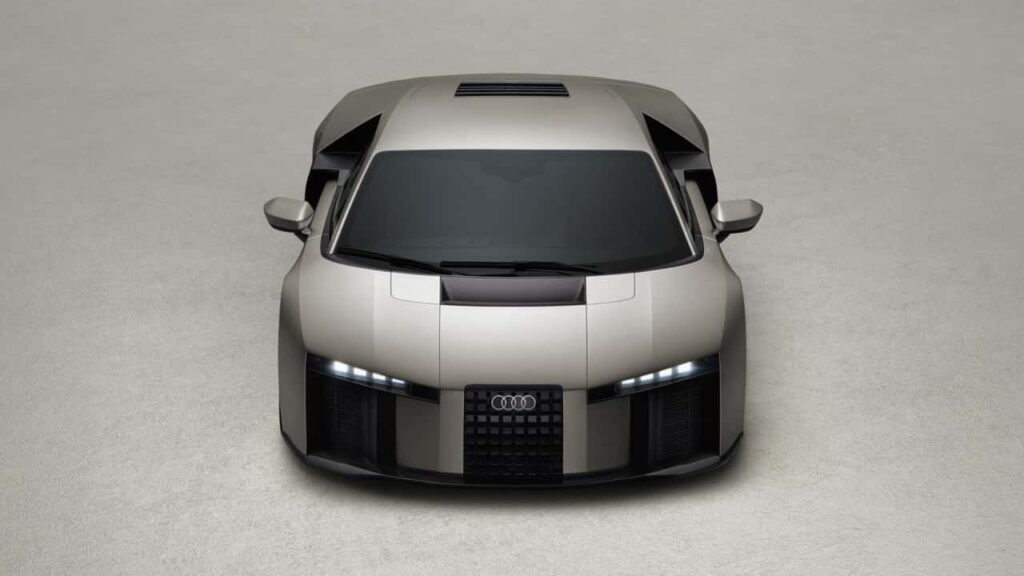
Massimo Frascella designed the exterior shape of the Nuvolari. The car introduces an entirely new design philosophy for the German brand. The mid-engine layout creates a very monolithic volume with taut surface lines. The vehicle features Audi’s new signature exterior color called Titanium. The company also paints their Formula 1 race cars with this exact same shade. Bare carbon fiber elements contrast heavily against the bright Titanium paint. All the exterior mesh grilles are manufactured from solid aluminum. The overall size heavily mirrors the proportions found on various Lamborghini sports cars.
The lighting elements look completely different from older Audi models. Both the front and the rear of the car feature four horizontally-arranged lighting structures. The designers made a very bold choice at the back of the passenger cabin. They removed the traditional rear glass window completely. Removing the rear window serves a very practical engineering purpose. The twin-turbo V8 produces immense amounts of physical heat. This heat must escape the engine bay quickly to prevent catastrophic mechanical failure. They replaced this window space with large air intakes on both sides of the engine cover. A carbon-fiber reinforced polymer cover helps vent the extreme heat away from the V8 engine. The driver uses a digital rearview camera to see the traffic behind the car. A high-definition screen sits where the traditional glass mirror usually goes.
Virtual Displays And Autonomous Driving
The interior focuses entirely on the physical act of driving. The steering wheel features a flat bottom shape. You look through the wheel, you see the digital LCD Audi Virtual Cockpit. The passenger cannot see this main data screen because thick side panels block their view completely. The center console flows upwards into a portrait-mode touchscreen infotainment system. This large screen replaces the traditional button stacks found on older vehicles.
The design team created a specific color scheme inside the cabin. This scheme pays direct tribute to the Auto Union Type C Grand Prix cars from the 1930s. The Auto Union Type C dominated Grand Prix racing back then. Audi honors this long heritage with the new cabin materials. The anodized aluminum parts look like vintage racing components. The bare carbon fiber details remind you of modern aerospace construction. The seats weigh very little, they hold your body tight during heavy cornering.
- The vehicle incorporates a network of external radar sensors and high-definition cameras.
- These electronic sensors grant the car clean SAE Level 2 autonomous driving capabilities.
- The autonomous system communicates directly with the active aerodynamics and the torque vectoring hardware.
- The human driver must remain in full control of the steering wheel at all times.
Sharing Architecture With Lamborghini
Audi and Lamborghini operate under the same corporate umbrella. They share parts to keep massive development costs under control. The Nuvolari uses the underlying physical structure of the Lamborghini Temerario. Both cars feature a mid-mounted twin-turbo V8 engine and a plug-in hybrid system. The engineers modify the software and the suspension tuning to give each car a distinct personality. The suspension absorb large deep potholes easily. The Lamborghini feels wild and untamed on the road. The Audi aims for cold, calculated Formula 1 precision.
The previous Audi R8 shared its V10 engine with the Lamborghini Huracan. That corporate partnership lasted for over a decade. The automotive market shifts toward smaller engines and heavy electrification right now. The V10 engine belongs to the past. The new V8 hybrid setup produces much more power than the old V10 ever did. The electric motors provide massive low-end torque that a naturally aspirated engine simply cannot match. The battery stores energy, the motors drain it quickly.
Preparing For The 2027 Deliveries
The Nuvolari completely separates itself from the old R8 production lines. Audi built thousands of R8 models over the years, they wanted to create an accessible daily supercar. The Nuvolari rejects this everyday usability concept entirely. It exists purely to push extreme mechanical boundaries on closed racing circuits. The 499 wealthy buyers will receive an F1 car hidden inside a road-legal carbon fiber body. The twin-turbo V8 engine provides the loud mechanical noise, the three electric motors provide the instant brutal acceleration.
Buyers will wait patiently until the first half of 2027 to receive their physical keys. The assembly process requires massive amounts of hand-built labor due to the complex carbon fiber structures. The German manufacturer proves they can build a hypercar that challenges the absolute best machines from Italy and England. The engineers finish their long development cycles soon. The automotive market prepares for this 1,001 PS monster to finally hit the open streets.