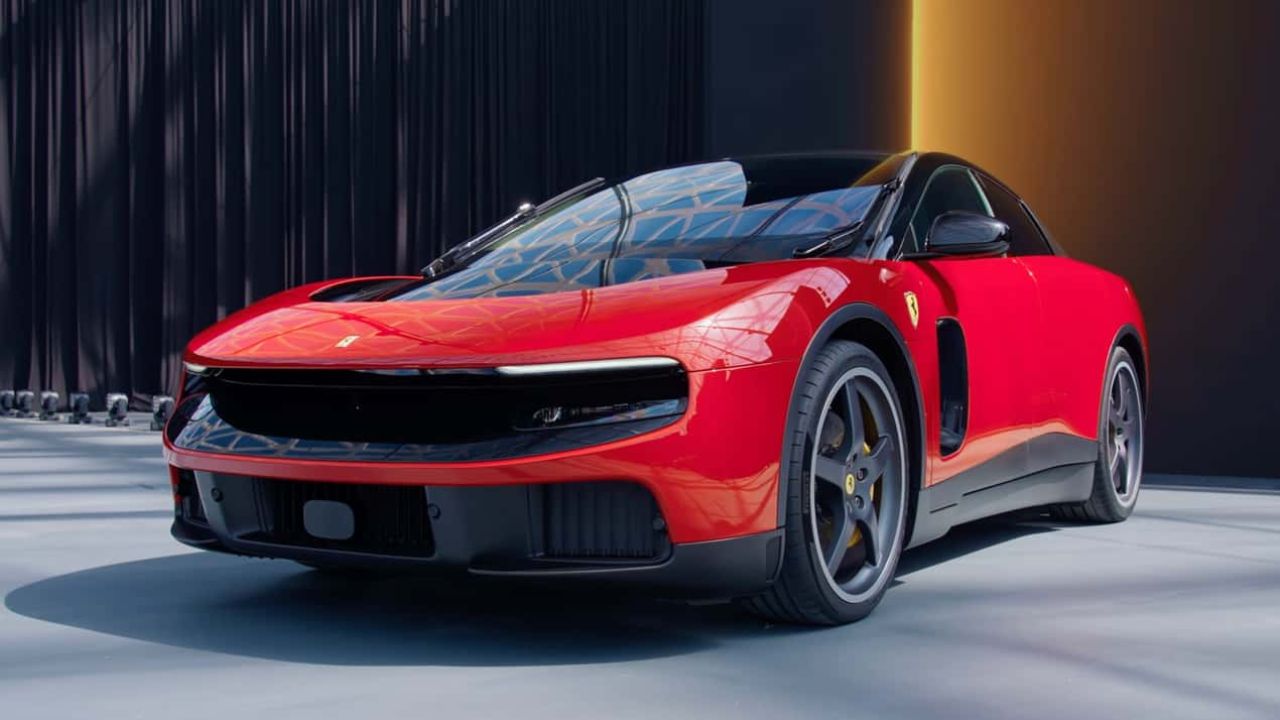
Ferrari officially enters the electric vehicle market with the Luce. Meaning light in Italian, the Luce represents a significant shift for the Maranello manufacturer. It introduces a battery electric powertrain, five seats, and a five door liftback sedan layout. You get a claimed driving range of over 530 kilometers alongside a total output exceeding 1035 horsepower. Ferrari priced the Luce at €550,000 in Europe. Customer deliveries will begin in the fourth quarter of 2026. The vehicle weighs 2260 kilograms, making it the heaviest model in the brand’s history. This article details the specific engineering choices, battery specifications, and interior changes you can expect from the Ferrari Luce.
A Complete Departure in Exterior Design
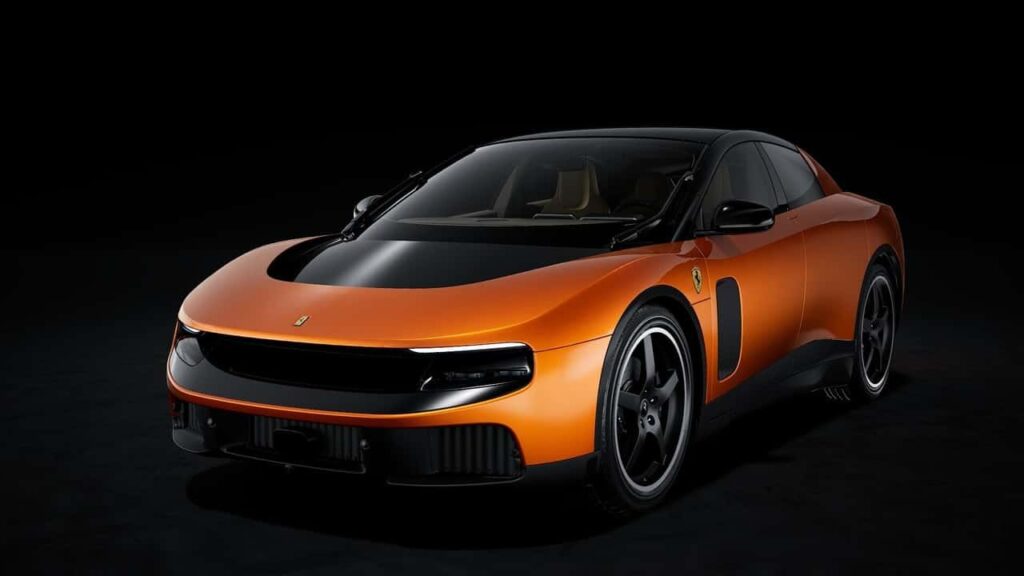
Ferrari partnered with LoveFrom, a creative collective led by former Apple design chief Jony Ive and designer Marc Newson. Together with the in house engineering teams, they created an exterior that abandons the classic mid engined proportions. The Luce features a smooth glasshouse integrated into a sculpted aluminum outer body.
You will immediately notice the shift in vehicle packaging. Because the engineers did not need to accommodate a V8 or V12 engine, they moved the cabin forward. The car incorporates center opening doors and a rear liftgate. These additions provide easier access to the rear seats and the cargo area. The exterior features dark body panels that conceal the lighting elements. The rear includes circular tail lamps inspired by older models like the 360 Modena and the 458 Italia.
To support the vehicle’s immense power and weight, Ferrari equipped the Luce with the largest wheels ever fitted to one of their production cars. The front axle uses 23 inch wheels, while the rear axle requires massive 24 inch wheels. Aerodynamic efficiency plays a critical role in an electric vehicle. The designers included floating aerodynamic front and rear wings to manage airflow and reduce drag.
Quad Motor Powertrain and Performance Metrics
The Luce utilizes four permanent magnet electric motors. Ferrari placed one motor at each wheel to create a highly sophisticated all wheel drive system. This setup generates a combined output of 1035 horsepower. The system operates with a heavy rear bias to simulate the driving dynamics of a traditional rear wheel drive sports car. The front motors produce a combined 282 horsepower. The rear motors deliver 831 horsepower.
When you demand full power, the Luce accelerates from 0 to 100 kmph in just 2.5 seconds. The vehicle reaches 200 kmph in 6.8 seconds. Ferrari claims a top speed exceeding 310 kmph. The front electric motors operate at a maximum rotational speed of 30,000 RPM. The rear motors operate at 25,500 RPM. When you drive under normal conditions, the system can disconnect the front motors completely. This function maximizes efficiency and extends your driving range by operating solely in rear wheel drive.
The rotor inside the electric motors uses a Halbach array configuration. Ferrari adapted this technology directly from Formula 1. This specific magnetic arrangement maximizes torque density while keeping the motor weight low. You can control the power delivery and regenerative braking using dedicated paddles mounted directly on the steering wheel.
Powertrain and Performance Specifications
| Specification | Detail |
| Powertrain Layout | Quad Motor All Wheel Drive |
| Total System Power | 1035 Hp |
| Front Motor Output | 282 Hp |
| Rear Motor Output | 831 Hp |
| Acceleration 0 to 100 km/h | 2.5 Seconds |
| Top Speed | 310+ km/h |
| Front Motor Max RPM | 30,000 RPM |
| Rear Motor Max RPM | 25,500 RPM |
Battery Architecture and Structural Integration
Ferrari built the Luce on a bespoke 800 volt electrical architecture. The core of this system is a 122 kWh battery pack. The engineers assembled the battery pack entirely in Maranello. The battery provides an energy density of 195 Wh/kg. You get an estimated driving range of 530 kilometers on a single charge. While some competitors offer ranges exceeding 800 kilometers, Ferrari deliberately chose a smaller battery to limit the overall weight and maintain handling agility.
The battery housing acts as a structural element of the chassis. Ferrari integrated 85 percent of the battery modules into the floor between the front and rear axles. They placed the remaining 15 percent under the rear seats. This specific placement ensures optimal side impact protection and a very low center of gravity. A dedicated cooling plate protects the battery cells from vertical impacts from below while keeping the temperature uniform during aggressive driving.
When you need to recharge, the 800 volt system supports DC fast charging at speeds up to 350 kW. This charging capability allows you to replenish the battery quickly during long trips. Ferrari also designed the battery pack to be removable. Technicians can remove and repair the battery without damaging any structural elements of the car. This repairability provides long term peace of mind for owners concerned about battery degradation over time.
Battery and Charging Details
| Component | Specification |
| Electrical Architecture | 800 Volts |
| Battery Capacity | 122 kWh |
| Energy Density | 195 Wh/kg |
| Estimated Range | 530 Kilometers |
| Maximum DC Fast Charging | 350 kW |
| Battery Placement | Floor (85 Percent), Rear Seats (15 Percent) |
Suspension Dynamics and Authentic Audio
Moving a 2260 kilogram vehicle requires specialized suspension and handling technology. Ferrari equipped the Luce with its third generation active suspension system. The suspension utilizes lower active forces to balance cornering loads across all four wheels.
The Luce includes four wheel steering and independent torque vectoring at every wheel. A new Vehicle Control Unit processes dynamic data 200 times per second. This computer precisely controls the traction, steering angle, regeneration, and vertical suspension movement for each specific wheel. When you take a corner, the rear axle responds instantly to direct the electric torque exactly where it needs to go.
Electric vehicles naturally lack the exhaust note of a V8 or V12 engine. Ferrari chose not to pipe fake combustion engine noises into the cabin. Instead, the company developed an external amplification system. This system uses accelerometers mounted around the powertrain to capture the actual mechanical noise generated by the electric motors. The system then processes and amplifies this authentic sound based on your selected driving mode. You hear the true mechanical operation of the electric drivetrain both inside and outside the vehicle.
Interior Layout and Cabin Technology
The Luce is the first Ferrari to offer a true five seat cabin layout. The flat floor electric platform and the removal of the traditional transmission tunnel make this passenger space possible. When you sit inside, you will notice the interior avoids massive touchscreens that cover the entire dashboard. Ferrari combined physical controls with modern OLED digital displays to keep the driver focused.
The driver looks at a 12.5 inch OLED instrument cluster. The designers styled the graphics to resemble classic analogue dials. The steering wheel uses conventional physical switches rather than the capacitive touchpads found on recent Ferrari models. The steering wheel features two physical manettino controls. You use one dial to select vehicle dynamics and the other to adjust the electric powertrain settings.
The center of the cabin features a floating leather and glass console. A 10 inch central touchscreen mounts on an adjustable ball and socket mechanism. You can physically reposition this screen between the driver and the front passenger. The gear selector uses a glass mechanism. The ignition features a color changing key slot.
Here are the primary features you will find in the cabin:
- A 12.5 inch OLED driver display with analogue style graphics.
- An adjustable 10 inch floating infotainment touchscreen.
- A traditional lightweight aluminum steering wheel with physical switches.
- A 21 speaker 3000 watt audio system.
- A 597 liter rear cargo area with split folding rear seats.
- Center opening doors for clear access to the second row.
Chassis Construction and Material Choices
Ferrari engineered a completely new frame specifically for the Luce. This sculpted frame represents the first Ferrari chassis to utilize 75 percent recycled aluminum. The engineers focused heavily on uncompromising efficiency and structural precision to offset the heavy battery pack. They assembled the entire chassis at the Maranello production facility.
The rear axle features a separate sub frame. This marks the first time Ferrari has used this specific rear axle design. The sub frame cuts noise, vibration, and harshness while matching the required chassis rigidity. To achieve this, the company utilizes the largest single piece hollow casting currently used in their entire vehicle range. The rear axle bushings undergo strict tuning to meet specific noise targets. They still preserve the stiff cornering rigidity you expect from a high performance sports car.
By using high grade recycled aluminum and advanced casting techniques, Ferrari manages to keep the vehicle structurally sound under the massive acceleration forces generated by the quad motor system. You get a rigid platform that refuses to flex during aggressive driving maneuvers.
Market Position, Pricing, and Consumer Reception
Ferrari set the starting price for the Luce at €550,000 in Europe. The company plans to begin customer deliveries in the fourth quarter of 2026. Rather than replacing their combustion engines, Ferrari offers the Luce alongside their existing V8, V12, and hybrid models.
The market response following the reveal was mixed. Traditional fans and automotive analysts expressed concern about the vehicle’s departure from classic sports car aesthetics. The day after Ferrari presented the Luce, the company’s shares fell by 8.4 percent on the stock market. Financial analysts noted that the five door form and heavy curb weight contradict the brand’s historic racing identity. Despite the initial hesitation from the stock market, the specifications prove Ferrari engineered a highly capable machine. If you plan to order one, you should understand the timeline and exact costs.
Keep these purchasing details in mind:
- The base price begins at €550,000 before any custom options or local taxes.
- Initial customer deliveries target the European market in late 2026.
- The vehicle requires a high capacity home charger to maximize daily convenience.
- Production numbers will remain restricted to preserve overall brand exclusivity.