India’s roads are witnessing a profound shift as long-distance travelers weigh their options between traditional powertrains and the promise of electric mobility. For those who frequently drive between cities like Delhi to Shimla, Bangalore to Hyderabad, or Mumbai to Pune, the question is no longer just about style or features. It is about reliability on the highway, managing range anxiety, and keeping costs predictable when you are hundreds of kilometres from home.
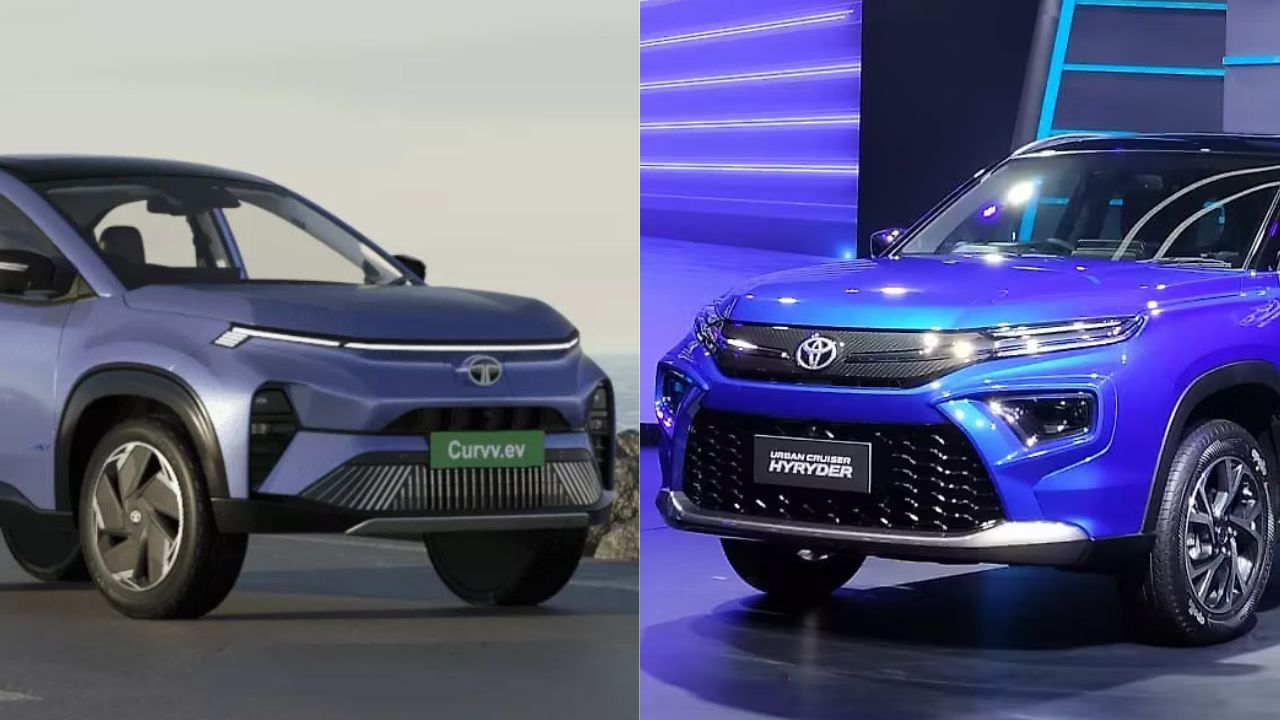
The Toyota Urban Cruiser Hyryder strong hybrid and the Tata Curvv.ev represent two smart but fundamentally different approaches to this challenge. The Hyryder offers a self-charging strong hybrid system that combines petrol efficiency with electric assistance, while the Curvv.ev bets on a larger battery and modern EV architecture for zero tailpipe emissions. This comparison focuses on highway performance, where sustained speeds around 100 kmph test real-world efficiency, charging or refuelling practicality, and overall ownership peace of mind.
Technical Deep Dive: Powertrains Built for Different Philosophies
The Toyota Hyryder’s strong hybrid system pairs a 1.5-litre Atkinson cycle petrol engine with a powerful electric motor and a compact battery pack. Total system output delivers smooth performance suitable for highway overtakes, while the e-CVT transmission ensures seamless power delivery. ARAI-rated mileage stands at an impressive 27.97 kmpl for the hybrid variants, a figure that real-world owners often approach or exceed on highways.
In contrast, the Tata Curvv.ev uses a permanent magnet synchronous motor paired with a 55 kWh battery pack in the long-range version. It produces around 165 bhp and offers strong instantaneous acceleration. ARAI-rated range reaches up to 502 km, but real-world highway performance is more modest.
Real-World Usage: Range, Efficiency, and the Long-Drive Reality
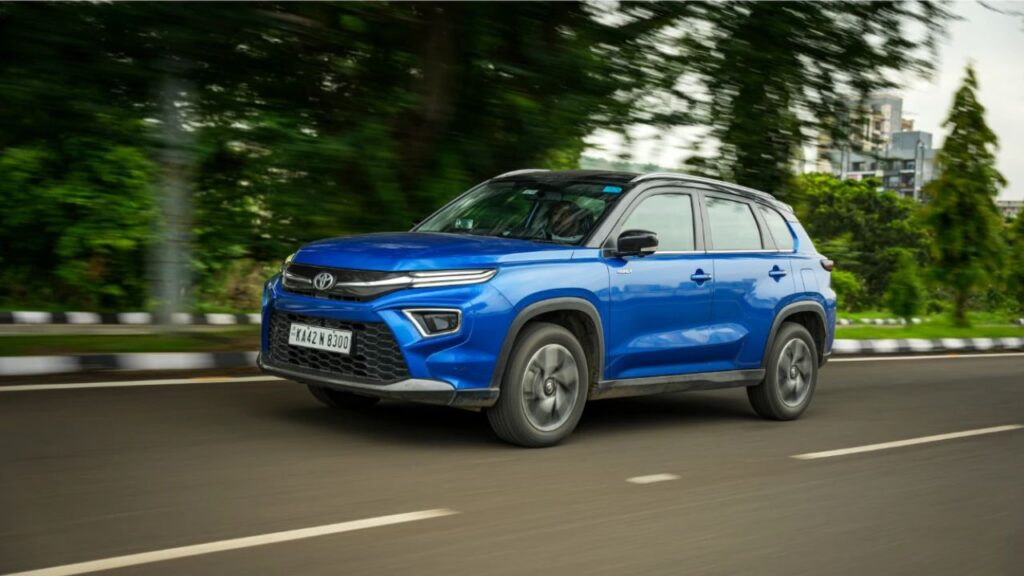
For commuters and weekend warriors navigating Indian highways, steady cruising at 90-110 kmph is the norm. The Hyryder shines here with predictable efficiency. Owners report 23-25 kmpl on long stretches, meaning a full 45-litre tank provides excellent range. You stop only when nature or food calls, not because of energy depletion.
The Curvv.ev demands more planning. A realistic highway range of 350-380 km at 100 kmph means planning stops every 250-300 km to maintain a safe buffer. Fast charging from 10 to 80 percent takes about 40 minutes on a 70 kW DC charger.
350 km Highway Road Trip Cost and Time Comparison
| Parameter | Toyota Hyryder Strong Hybrid | Tata Curvv.ev (55 kWh) |
|---|---|---|
| Highway Efficiency | 24 kmpl | 6.5 km per kWh |
| Energy/Fuel Required | 14.6 litres petrol | 54 kWh |
| Cost (approx.) | 1390 rupees (petrol at 95 rupees/litre) | 1080 rupees (DC fast charging at 20 rupees/kWh) |
| Refuel/Recharge Time | 5-8 minutes | 35-45 minutes (10-80%) |
| Total Trip Time Impact | Minimal | +40-60 minutes |
| Range Anxiety | None | Moderate to High |
| Infrastructure Dependency | Any petrol pump | Reliable fast chargers only |
This table clearly shows that while the Curvv.ev offers lower energy cost on paper, the hybrid wins significantly on time and convenience for long highway journeys.
Both vehicles are ARAI-certified and benefit from government initiatives like the PLI scheme and FAME policies. Toyota’s widespread service network gives the Hyryder a clear advantage on intercity routes, while Tata is rapidly expanding its EV service infrastructure.
Market Position: Price Comparison and Value for Money
Ex-showroom prices position the Hyryder hybrid variants from around 16.77 lakh to 19.99 lakh rupees, while the Tata Curvv.ev long-range models sit between 16.99 lakh and 19.49 lakh rupees. On-road prices in major cities push both into the 20-24 lakh bracket.
The Hyryder often feels like better immediate value for highway-focused buyers due to lower stress, negligible depreciation, and no dependency on charging networks. The Curvv.ev counters with lower per-kilometre energy costs for those who can charge at home, modern features, and future-proofing.
Our Take
After weighing technical specifications, real-world data from owners and tests, and the practicalities of Indian highways, our clear recommendation is this: If you regularly undertake long-distance drives and value zero planning around energy, buy the Toyota Hyryder strong hybrid now. It remains the highway king for most Indian conditions, delivering peace of mind, strong efficiency, and proven reliability without compromises.
The Tata Curvv.ev is an excellent choice for buyers whose driving is predominantly city or short highway runs with reliable home or workplace charging. It excels in refinement, performance, and running costs under ideal conditions, but range anxiety and charging infrastructure still limit its appeal for pure long-distance warriors in 2026.
The Road Ahead
India’s mobility future will likely feature a mix of strong hybrids and EVs, with each serving different needs. The Hyryder proves that thoughtful hybrid technology can deliver EV-like efficiency with ICE convenience today. The Curvv.ev showcases how far EVs have come in design and performance, pointing toward a cleaner tomorrow once infrastructure matures.
For now, on the open highway connecting cities like Bhopal, Delhi, or Bangalore, the Toyota Hyryder strong hybrid wears the crown as the more practical Highway King for the average long-distance traveler. Choose based on your specific driving patterns, charging access, and tolerance for planning. Both vehicles represent impressive engineering tailored to Indian realities.