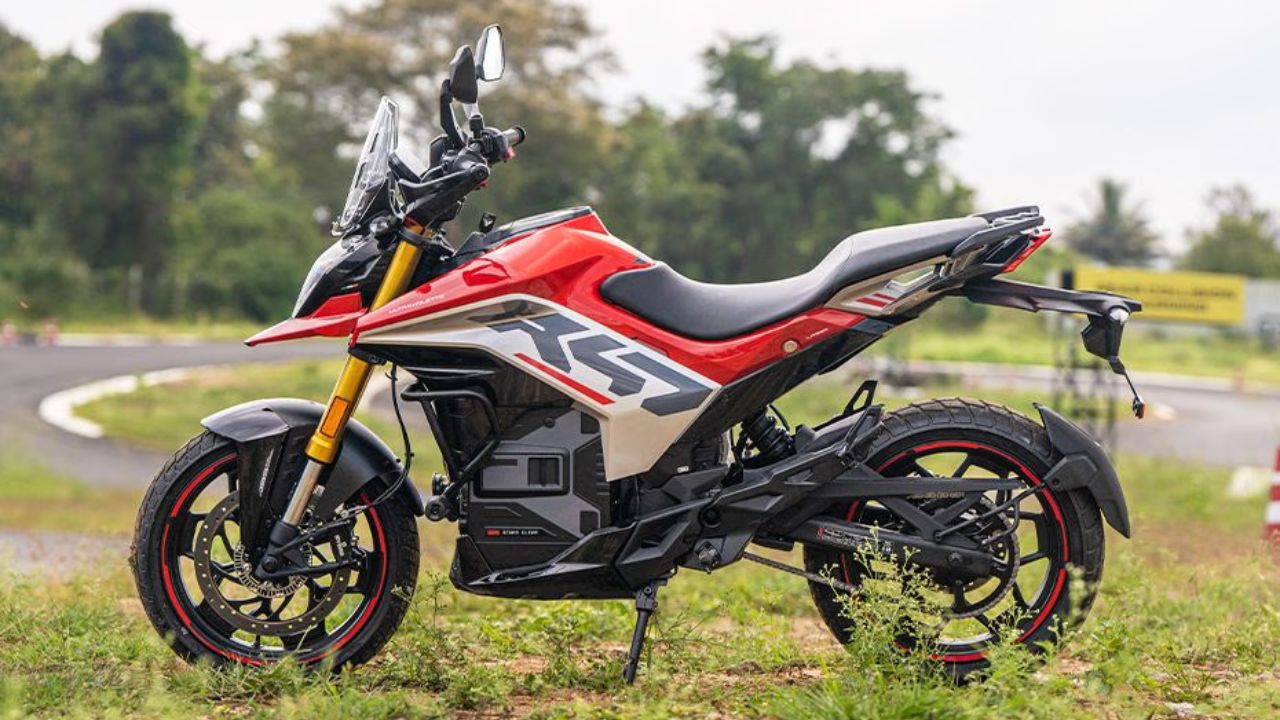
India’s electric two-wheeler segment is maturing rapidly in 2026, moving beyond basic urban scooters into exciting performance-oriented and versatile machines. With continued support from government policies like PM E-DRIVE and PLI schemes encouraging local manufacturing, premium electric motorcycles are gaining serious attention from enthusiasts and practical commuters alike. We at 21motoring spent considerable time riding the Ultraviolette X47 Crossover across city traffic in Bangalore and Pune, monsoon-affected roads in Mumbai, and highway stretches leading to Lonavala. This radar-equipped electric crossover promises to blend performance, practicality, and advanced safety technology in one package. Here is our detailed assessment after real-world testing.
The X47 Crossover stands out as Ultraviolette’s attempt to create a do-it-all electric motorcycle. It bridges the gap between sporty street bikes and adventure tourers with upright ergonomics, decent ground clearance, and long-travel suspension. For riders in bustling metros who want thrilling acceleration without the noise and maintenance of traditional motorcycles, while also handling occasional weekend getaways, this bike aims to deliver on multiple fronts. Its world-first radar integration adds a layer of safety that feels particularly relevant on chaotic Indian roads.
Technical Deep Dive into the Ultraviolette X47 Crossover
The Ultraviolette X47 Crossover comes with two battery options. The base variants use a 7.1 kilowatt-hour Lithium-ion pack delivering an ARAI-certified IDC range of 211 km, while higher variants get a larger 10.3 kilowatt-hour pack promising up to 323 km on a single charge. These figures come from laboratory testing, and real-world results vary based on riding style and conditions.
The electric motor produces up to 30 kilowatts (around 40.2 horsepower) in the larger battery variants, paired with massive wheel torque reaching 610 Newton metres. This translates to explosive acceleration, with 0 to 60 kmph coming in just 2.7 seconds and 0 to 100 kmph in around 8.1 seconds. Top speed is electronically limited to 145 kmph, which is more than sufficient for Indian highways. Lower battery variants offer slightly reduced power at 27 kilowatts with 550 Newton metres of wheel torque. The direct-drive system with chain final drive ensures smooth and linear power delivery, characteristic of electric motors.
We tested multiple ride modes, including Glide for maximum efficiency, Combat for balanced performance, and Ballistic for full thrills. The bike also offers multiple levels of regenerative braking that help recapture energy during city riding. Suspension consists of upside-down front forks and a rear monoshock with good travel, complemented by a ground clearance of around 200 millimetres. This setup helps tackle potholes and mild off-road sections common on Indian roads. Braking is handled by disc brakes on both ends with dual-channel ABS, providing strong and predictable stopping power. The bike features advanced UV HyperSense radar technology, offering features like blind spot detection, lane change assist, forward collision warning, and more, making it one of the most technologically advanced two-wheelers in India.
| Parameter | 7.1 kWh Variants (Original) | 10.3 kWh Variants (Recon) |
|---|---|---|
| Battery Capacity | 7.1 kWh | 10.3 kWh |
| ARAI IDC Range | 211 km | 323 km |
| Peak Power | 27 kW (36.2 HP) | 30 kW (40.2 HP) |
| Peak Wheel Torque | 550 Nm | 610 Nm |
| 0-60 kmph Acceleration | 2.8 seconds | 2.7 seconds |
| 0-100 kmph Acceleration | 8.2 seconds | 8.1 seconds |
| Top Speed | 145 kmph | 145 kmph |
| Charging (Home AC) | Approx 4-5 hours (20-80%) | Approx 5-6 hours (20-80%) |
| Onboard Charger | Available in + variants | 1.6 kW (with parallel boost option) |
| Ground Clearance | 200 mm | 200 mm |
| Seat Height | 820 mm | 820 mm |
| Kerb Weight | Approx 197-208 kg | Approx 208 kg |
| Suspension | USD Front Forks + Rear Monoshock | USD Front Forks + Rear Monoshock |
| Brakes | Dual Disc with Dual-Channel ABS | Dual Disc with Dual-Channel ABS |
| Tyres | 110/70 R17 (F) & 150/60 R17 (R) | 110/70 R17 (F) & 150/60 R17 (R) |
| Ride Modes | Glide, Combat, Ballistic | Glide, Combat, Ballistic |
| Safety Tech | UV HyperSense Radar ADAS | UV HyperSense Radar ADAS |
| Price (Ex-Showroom, Intro) | ₹2.49 – 2.99 Lakh | ₹3.49 – 3.99 Lakh |
Range, Charging, and Daily Practicality
During our extensive testing in real Indian conditions, the X47 Crossover performed admirably for both daily commuting and longer rides. In heavy Bangalore traffic with frequent stops and starts, the 10.3 kilowatt-hour version delivered around 220 to 250 km of usable range depending on use of regenerative braking and ride modes. Highway runs at 80 to 100 kmph saw efficiency drop but still allowed comfortable 180 to 220 km trips before needing a charge, making weekend escapes from Mumbai or Pune entirely feasible with planning.
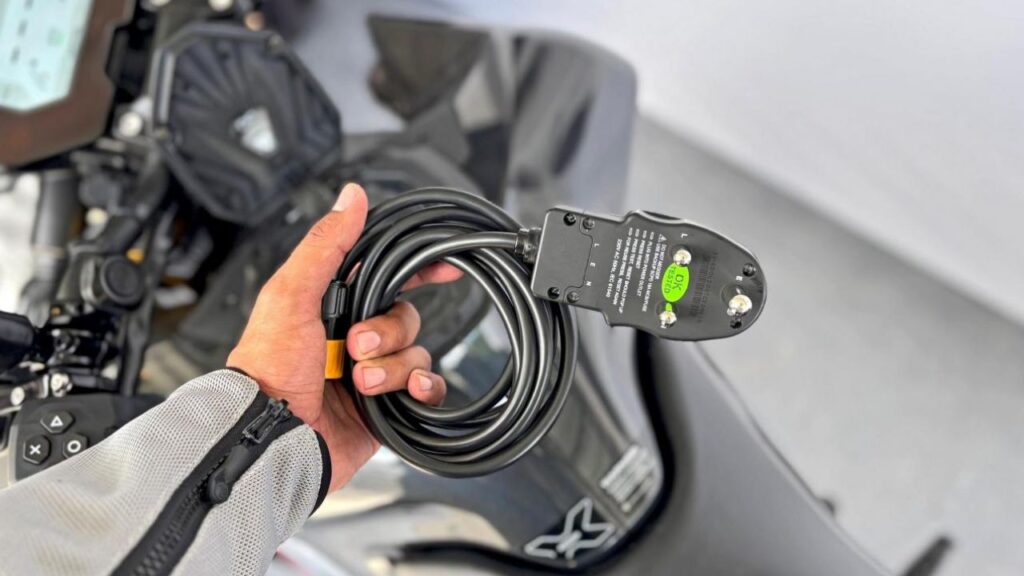
Charging is a strong point thanks to the onboard charger in higher variants. A standard home 15 Amp socket can charge the larger battery from 20 to 80 percent in roughly 3 to 4 hours, while faster DC options can significantly reduce times. Electricity costs remain very low. At average home rates of 6 to 8 rupees per unit, a full charge costs between 60 and 80 rupees, translating to running costs well under 1 rupee per kilometre. Public fast charging, though improving under various initiatives, still carries higher costs and occasional reliability issues, especially outside major cities.
Range anxiety remains a consideration for those without home charging or planning long unplanned trips. However, the bike’s strong performance and comfortable upright ergonomics reduce fatigue on longer rides. Service infrastructure for Ultraviolette is expanding but still lags behind traditional manufacturers in smaller cities, which is an important factor for potential buyers.
Total Cost of Ownership Analysis
We ran detailed calculations for a typical rider covering 12,000 km annually in a city like Pune. For the 10.3 kilowatt-hour Recon variant priced around 3.5 lakh rupees ex-showroom after introductory offers, annual electricity costs at home charging average under 5,000 rupees. Maintenance remains minimal with no oil changes or clutch replacements, typically 2,500 to 4,000 rupees per year. Over five years, factoring in insurance, minor depreciation, and potential battery warranty coverage of up to 8 years or more, the Total Cost of Ownership often works out 30 to 45 percent lower than comparable performance petrol motorcycles in the 300 to 400cc segment. This makes the X47 particularly attractive for high-usage commuters willing to invest upfront for long-term savings.
Price Comparison and Value for Money Verdict
The Ultraviolette X47 Crossover is priced from approximately 2.49 lakh rupees introductory for base variants to around 4.5 lakh rupees for fully loaded top models, ex-showroom. This positions it in the premium electric motorcycle space, competing with other high-performance EVs and some established ICE adventure and street motorcycles.
Here is a detailed comparison table with key rivals (approximate ex-showroom prices in major cities as of 2026):
| Model | Battery / Engine | Power (approx) | Range (claimed) | Price Range (Lakh) | Key Strength |
|---|---|---|---|---|---|
| Ultraviolette X47 Crossover | 7.1 – 10.3 kWh | 40 HP | 211 – 323 km | 2.49 – 4.59 | Radar ADAS, versatility |
| Ultraviolette F77 Mach 2 | Similar options | 40+ HP | Up to 300+ km | 3.0 – 4.0+ | Sportier performance |
| Ola Roadster / Similar | Various | 30-40 HP | 200-300 km | 1.8 – 3.5 | Aggressive pricing |
| Royal Enfield Himalayan | 450cc ICE | 40 HP | N/A (petrol) | 2.8 – 3.2 | Proven off-road capability |
| Bajaj Dominar 400 | 400cc ICE | 40 HP | N/A | 2.3 – 2.5 | Refined highway cruiser |
The X47 offers unique value through its radar safety suite and crossover versatility at a price that undercuts some expectations for such advanced technology. It delivers strong performance and modern features that justify the premium for tech-savvy buyers.
After putting the Ultraviolette X47 Crossover through rigorous real-world testing across varied Indian conditions, we believe it is one of the most compelling premium electric motorcycles available today. It successfully combines thrilling performance, practical touring ability, and cutting-edge safety technology. Buy it now if you have access to home charging, cover mostly predictable distances under 200 km daily or on weekends, and value advanced rider aids and low running costs. The technology has matured sufficiently for enthusiastic commuters in Pune, Mumbai, Delhi, or Bangalore. Wait only if you need extensive service support in remote areas or prefer sticking with proven internal combustion engines for absolute flexibility. For the right buyer, the X47 represents an exciting step into the future of motorcycling.
The Road Ahead for the Ultraviolette X47 and Premium EVs
The Ultraviolette X47 Crossover signals the growing ambition of Indian EV manufacturers to move beyond basic mobility into desirable, feature-rich machines. With radar technology, strong performance, and improving infrastructure supported by government policies, such motorcycles are making electric ownership increasingly appealing. As battery technology advances and charging networks expand further, models like the X47 will help bridge the gap for riders transitioning from traditional bikes. In our view, this crossover sets a promising benchmark for versatile, enjoyable, and forward-looking electric two-wheelers in India. For riders ready to embrace the electric shift with style and confidence, the X47 Crossover deserves serious consideration.