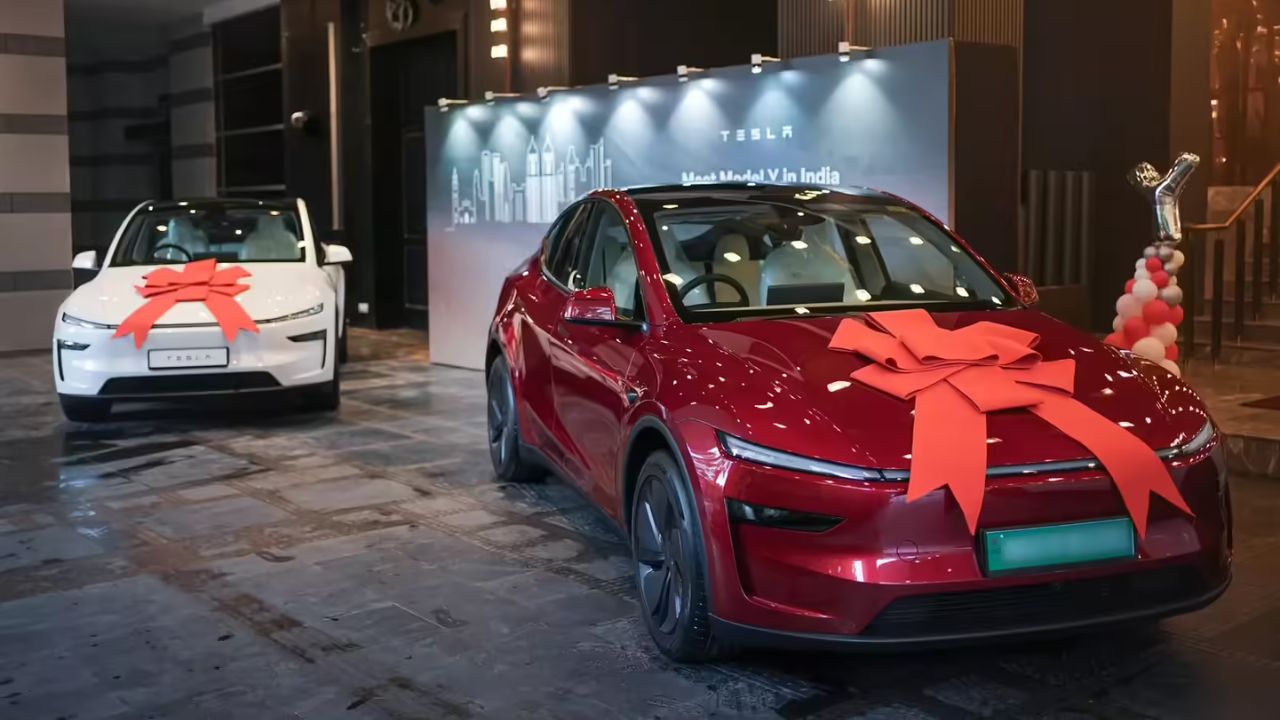
Tesla’s long-awaited entry into India has finally happened, and the Model Y is leading the charge. It is not just another electric SUV but a statement piece that blends impressive range, cutting-edge tech, and that unmistakable Tesla driving feel. But with three main variants now on offer, priced from around ₹59.89 lakh to ₹67.89 lakh (ex-showroom), figuring out which one fits your life is not straightforward. Prices can climb further with options like premium paint, white interiors, or the Full Self-Driving package.
The Three Variants at a Glance
Tesla keeps things relatively simple in India with these core choices, all fully imported from China:
Premium RWD (Standard Wheelbase, 5-seater)
This is the entry point at ₹59.89 lakh. It uses a roughly 60 kWh battery and a single rear motor making about 235 bhp. Claimed WLTP range sits at 500 km. Acceleration to 100 km/h takes around 5.9 seconds, with a top speed of 201 km/h.
In everyday terms, this variant feels plenty quick for Indian highways and city traffic. The ride is composed over most surfaces, though the firmer suspension setup means you’ll notice bigger potholes. Boot space is generous (around 854 litres behind the rear seats, expanding significantly with seats folded), plus there’s a useful frunk. It’s ideal if your daily drives are mostly under 300 to 350 km and you value lower running costs over maximum range or extra space. Real-world mixed driving often delivers 400+ km, depending on conditions, AC use, and speed.
L Premium AWD (Long Wheelbase, 6-seater)
Priced at ₹61.99 lakh, this recently launched variant changes the game for families. The wheelbase stretches by about 150 mm (total length around 4,969 mm), height increases slightly, and it offers a 2+2+2 seating layout with captain seats in the second row. It packs a larger ~88 kWh battery with dual motors for all-wheel drive, delivering strong performance (0 to 100 km/h in about 5 seconds) and the highest claimed WLTP range of 681 km.
The extra length shines in the rear: second-row passengers get proper luxury with ventilation, heating, powered adjustments, and even a dedicated touchscreen. The third row suits kids or shorter trips for adults. Access isn’t the easiest, but it’s there when needed. Boot space balloons to over 2,500 litres with seats folded. Adaptive suspension helps with comfort, and it feels more planted in varied conditions thanks to AWD. This one stands out if you regularly carry family or need that occasional extra row without jumping to a full-size MPV.
Long Range Premium RWD (Standard Wheelbase, 5-seater)
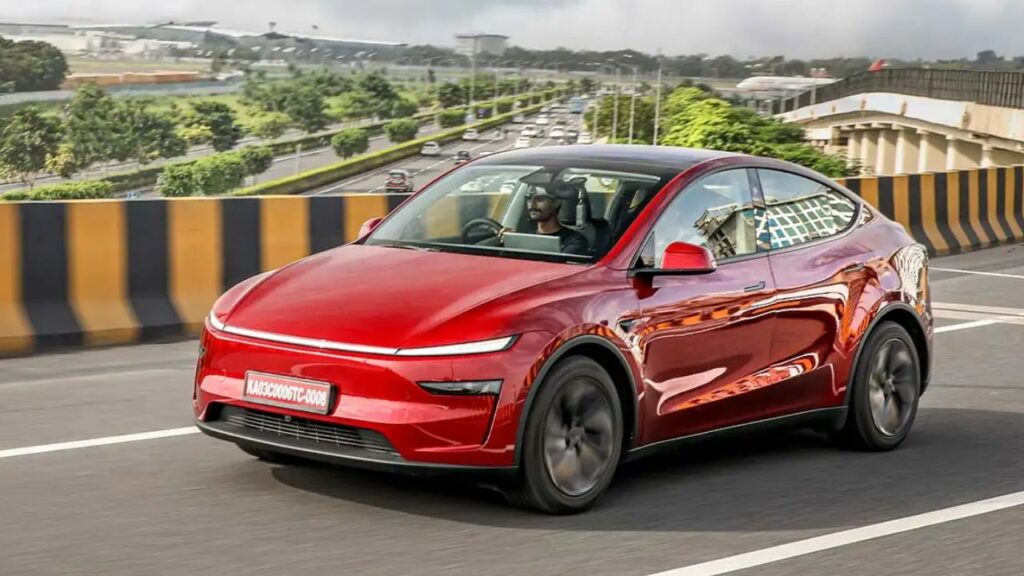
At ₹67.89 lakh, this tops the lineup with a ~75 kWh battery (some reports note effective capacity around 78 to 84 kWh in updates) and a more powerful single rear motor (around 335 bhp). WLTP range hits 661 km, with 0 to 100 km/h in roughly 5.6 seconds.
It strikes a sweet spot for solo drivers or couples who want maximum single-motor efficiency and range without the AWD complexity or extra length. The cabin remains the same minimalist 5-seater setup, spacious up front and comfortable in the rear for two adults. Expect real-world ranges in the 500 to 550 km ballpark on highways with careful driving. It’s the one for those prioritizing effortless long-distance capability and that signature Tesla surge.
Quick Specs Comparison Table
| Variant | Price (ex-showroom) | Battery (approx.) | Drive | Power (bhp) | Range (WLTP) | 0-100 km/h | Seating | Key Strength |
|---|---|---|---|---|---|---|---|---|
| Premium RWD | ₹59.89 lakh | 60 kWh | RWD | 235 | 500 km | ~5.9s | 5 | Value & Efficiency |
| L Premium AWD | ₹61.99 lakh | 88 kWh | AWD | ~514 (est.) | 681 km | ~5.0s | 6 (2+2+2) | Family Space & Range |
| Long Range Premium RWD | ₹67.89 lakh | 75 kWh | RWD | 335 | 661 km | ~5.6s | 5 | Long-Distance Balance |
Note: Exact power and battery figures can vary slightly by source; real-world performance depends on driving style, terrain, and load.
What Sets Each Apart in Real Use
Beyond numbers, these variants feel distinct on the road. All share Tesla’s minimalist cabin with that massive 16-inch central touchscreen handling almost everything. There are no traditional stalks or clusters, which takes a day or two to get used to but becomes second nature. Build quality is solid, with good materials, though some note it’s not quite as plush as certain German rivals in finer details.
The glass roof gives an airy feel, great in cooler months but warm in peak summer without proper tint management. Features like ventilated and heated seats, premium audio (up to 19 speakers in the L variant), 360-degree cameras, and over-the-air updates are highlights. Autopilot is standard in basic form, with the full package available as a costly add-on. Regulatory hurdles mean some features aren’t fully active yet.
Edge cases to consider: Monsoon flooding or rough rural roads might challenge the relatively low ground clearance (around 167 to 169 mm). Highway overtaking is effortless in all variants, but AWD gives peace of mind in slippery conditions. Charging relies heavily on Tesla’s growing but still limited Supercharger network, so plan routes carefully outside major cities.
Variant Comparison: Which One Should You Pick?
- Budget-conscious or solo/young family: Go for the base Premium RWD. It delivers the core Tesla experience without overkill. Savings can go toward a home charging setup or accessories.
- Family hauler needing versatility: The L Premium AWD is the smart middle choice. For just ₹2 lakh more than the base, you get vastly more space, better range, AWD grip, and six-seat flexibility. It’s the one most Indian buyers with larger families might lean toward.
- Maximum range and performance seeker: The Long Range RWD suits those who do frequent long trips and prefer the standard footprint. It’s the enthusiast’s pick for that extra power and efficiency focus.
Factor in on-road prices (which can add 10 to 15 percent depending on the state), insurance, and options. The service network is still expanding, so city buyers have an edge.
How the Model Y Stacks Up Against Indian Competitors
In the premium electric SUV space (₹50 to 80 lakh ex-showroom), the Tesla Model Y (priced ₹59.89 lakh to ₹67.89 lakh) faces competition from both mass-market value players and established luxury brands. Below is a detailed, side-by-side comparison focusing on price, performance, range & efficiency, features, design & practicality, and real-world suitability for Indian conditions.
BYD Sealion 7 (₹48.9 – 54.9 lakh ex-showroom)
- Price Advantage: Significantly cheaper (₹5-15 lakh less than comparable Model Y variants), making it a strong value proposition.
- Performance:
- Premium RWD: Single motor, ~313 PS / 380 Nm, 0-100 km/h in ~6.7 seconds.
- Performance AWD: Dual motors, ~530 PS / 630-690 Nm, 0-100 km/h in ~4.5 seconds (quicker than most Model Y variants in outright acceleration).
- Range & Battery: 82.56 kWh battery. Claimed range 542-567 km (ARAI/NEDC). Real-world mixed driving often delivers 400-480 km depending on conditions.
- Design & Practicality: Slightly larger dimensions (4830 mm length, longer wheelbase) than standard Model Y. More conventional SUV styling with a traditional interior layout (physical buttons, rotating 15.6-inch touchscreen in some trims, HUD). Boot space ~500 litres (less than Model Y’s ~854 litres + frunk). Better ground clearance for Indian roads in some reviews.
- Features: Richly loaded with ventilated/heated seats, premium audio, 360° cameras, ADAS, and a more button-heavy cabin that many Indian buyers prefer over Tesla’s minimalist approach. Strong dealer network and after-sales support.
- Vs Model Y: Better value and faster top variant, more traditional feel. Loses on Tesla’s software ecosystem, efficiency in some tests, OTA updates, and resale value. Ideal for buyers wanting lower entry price and conventional luxury.
Kia EV6 / Hyundai Ioniq 5 (EV6 ~₹65-66 lakh, Ioniq 5 ~₹55.7 lakh ex-showroom)
- Price: Ioniq 5 offers better value entry; EV6 sits closer to top Model Y.
- Performance:
- Ioniq 5 (2026 facelift, 84 kWh): RWD ~229 hp, strong mid-range pull.
- EV6 GT Line AWD (84 kWh): Dual motors, ~320–321 bhp / 605 Nm, quicker and more engaging drive. 0-100 km/h competitive with Model Y.
- Range & Battery: 84 kWh battery. Ioniq 5 claims up to 690 km ARAI; EV6 ~663 km. Excellent 800V architecture enables ultra-fast charging (10-80% in ~18 minutes with 350 kW). Real-world highway range often strong.
- Design & Practicality: Futuristic, bold parametric pixel design (especially Ioniq 5). Vehicle-to-Load (V2L) capability, spacious and comfortable cabins with more conventional controls. EV6 feels sportier; Ioniq 5 more relaxed. Good ride quality tuned for Indian roads.
- Features: Panoramic sunroof, premium audio (Dynaudio in some), head-up display, advanced ADAS, ventilated seats, and user-friendly interfaces. Strong dealer/service network across India.
- Vs Model Y: Superior ride comfort, faster charging in many scenarios, and more “car-like” ergonomics. Tesla wins on software polish, efficiency, acceleration feel, and over-the-air improvements. These are excellent for buyers who prioritize comfort and service accessibility.
Mahindra XEV 9e / Tata Harrier.ev (₹21-32 lakh ex-showroom range)
These are more affordable alternatives in the broader EV SUV space, though positioned slightly lower than Model Y.
- Price: Significantly lower (almost half in base forms), offering strong value for money.
- Performance:
- XEV 9e (79 kWh top): Up to 282–286 bhp, good acceleration.
- Harrier.ev AWD (75 kWh): Up to ~390 bhp combined (dual motor), 0-100 km/h ~6.3 seconds. Strong torque for overtaking.
- Range & Battery: XEV 9e up to 656 km claimed (79 kWh); Harrier.ev up to 622 km (75 kWh). Real-world 450-550 km possible.
- Design & Practicality: Indian-tuned suspension and higher ground clearance for potholes, monsoons, and rough roads. Harrier.ev offers commanding road presence; XEV 9e modern and spacious. Good boot space and family-friendly features. Local manufacturing means better parts availability and service.
- Features: Level 2 ADAS, panoramic sunroof, 360° cameras, premium audio, ventilated seats, and connected tech. Harrier.ev and XEV 9e emphasize practicality over pure tech wow-factor.
- Vs Model Y: Win on price, service network, road adaptability, and lower running costs for many Indian users. Lose on software refinement, build finesse, efficiency, and premium appeal. Best for value-conscious buyers who drive on varied Indian roads.
Luxury Options: BMW iX1, Volvo EX40 (EC40), Mercedes CLA EV (₹51-67 lakh+)
- Price: Overlap with Model Y; some variants cheaper on paper but can climb with options.
- Performance:
- BMW iX1: ~308 bhp, strong dynamics, 0-100 km/h competitive.
- Volvo EX40: Up to ~408 bhp in higher trims, safety-focused.
- Mercedes CLA EV: Refined, ~221+ bhp base, smooth and quiet.
- Range & Battery: Varies (iX1 ~417-531 km claimed; others 475-792 km in different trims). Generally shorter real-world range than Model Y Long Range in highway tests.
- Design & Practicality: Premium cabins with high-quality materials, superior fit-finish, and luxurious ambiance. More conventional luxury feel (physical controls, premium leather). Better ride refinement in some cases. Smaller boot/cargo in some compared to Model Y.
- Features: Advanced driver assists, premium Burmester/Harmon Kardon audio, panoramic roofs, and brand-specific tech. Strong safety ratings and prestige.
- Vs Model Y: Superior interior luxury, brand cachet, and ride plushness. Tesla leads in range, efficiency, software/OTA, acceleration thrill, and future-proofing via updates. These suit buyers who value traditional luxury and dealer experience.
Tesla Model Y vs. the Competition: At a Glance
| Model | Price Range (ex-showroom) | Battery | Range (claimed) | Power (bhp) | Drive | Seating | Charging Network | Best For |
|---|---|---|---|---|---|---|---|---|
| Tesla Model Y (base) | ₹59.89 lakh | 60 kWh | 500 km | 235 | RWD | 5 | Supercharger + AC | Tech-first buyers |
| Tesla Model Y L AWD | ₹61.99 lakh | 88 kWh | 681 km | ~514 | AWD | 6 | Supercharger + AC | Families |
| BYD Sealion 7 | ~₹53 to 62 lakh | 71 to 83 kWh | 500 to 570 km | 313 to 523 | RWD / AWD | 5 | DC Fast + AC | Value seekers |
| Kia EV6 | ~₹61 to 66 lakh | 77 kWh | 528 km | 226 to 320 | RWD / AWD | 5 | DC Fast + AC | Ride comfort lovers |
| Hyundai Ioniq 5 | ~₹46 to 60 lakh | 72 kWh | 481 km | 215 to 306 | RWD / AWD | 5 | DC Fast + AC | Design and practicality |
| Mahindra XEV 9e | ~₹22 to 37 lakh | 59 to 79 kWh | 450 to 656 km | 228 to 282 | RWD | 5 | Charge network + AC | Budget-conscious buyers |
| Tata Harrier.ev | ~₹22 to 26 lakh | 65 kWh | ~500 km (est.) | ~167 | AWD | 5 | Tata Power + AC | Trusted local brand |
| BMW iX1 | ~₹67 to 72 lakh | 64 kWh | 440 km | 313 | AWD | 5 | DC Fast + AC | Luxury brand loyalists |
| Volvo EX40 | ~₹55 to 65 lakh | 69 kWh | 480 km | 231 to 408 | RWD / AWD | 5 | DC Fast + AC | Scandinavian comfort |
| Mercedes CLA EV | ~₹70 lakh+ | 85 kWh | ~750 km (est.) | 268 | RWD | 5 | DC Fast + AC | Premium badge buyers |
Note: Prices and specs are approximate and subject to change. Always verify with the respective dealer or official website before making a purchase decision.
Tesla Model Y’s Key Advantages & Drawbacks
Advantages:
- Class-leading real-world efficiency and range (especially Long Range variants, 500-550+ km highway).
- Superior minimalist software, OTA updates that improve the car over time, and the addictive instant torque/acceleration.
- Large cargo space (including frunk), strong resale potential, and expanding Supercharger network.
- 6-seater L variant for family versatility.
Drawbacks:
- Higher import-driven pricing.
- Firmer ride (notable on poor roads).
- Limited service network (though expanding).
- Minimalist cabin lacks physical buttons (learning curve).
- Lower ground clearance (~167-169 mm) vs local rivals.
The Tesla Model Y isn’t perfect for every Indian buyer. Charging infrastructure, price sensitivity, and road conditions are real factors. But if you’re sold on the EV lifestyle, tech-forward driving, and want something that genuinely feels from the future, it’s hard to beat. The L Premium AWD emerges as the most compelling all-rounder for many families right now, offering the best balance of space, range, and capability at a surprisingly accessible price point in the lineup.
Test drive them back to back if possible, calculate your typical routes, and think about charging access. The right variant depends on your priorities: efficiency and value, family practicality, or pure long-haul confidence. Whichever you choose, you’re stepping into one of the most advanced electric vehicles available in India today. Drive safe, and enjoy the quiet revolution.