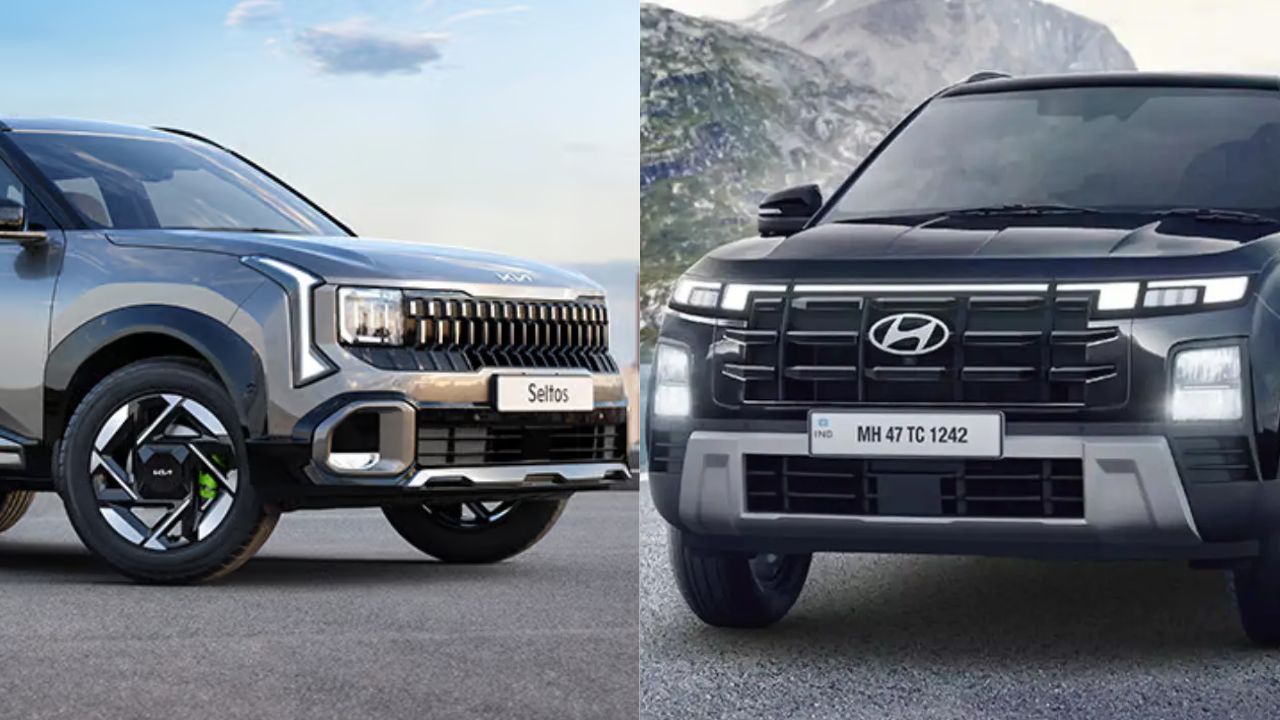
The Indian mid-size sport utility vehicle (SUV) segment has undergone a profound metamorphosis over the past decade, transitioning from a niche category to the definitive choice for the modern Indian family. By the year 2026, the automotive landscape has reached unprecedented levels of competitiveness, technological integration, and safety awareness. At the absolute epicenter of this evolution are two deeply interconnected yet philosophically distinct vehicles: the Hyundai Creta and the Kia Seltos. While both vehicles share underlying engineering architectures, powertrain configurations, and parent company heritage, they have charted deliberately divergent paths to capture distinct psychographic segments of the Indian demographic.
The year 2026 marks a significant inflection point for both of these automotive stalwarts. Hyundai Motor India has strategically overhauled the variant lineup of the Creta, engaging in a rigorous rationalization process to streamline its offerings, reduce consumer confusion, and elevate the premium appeal of its top-tier models. Concurrently, Kia has introduced the highly anticipated second-generation Seltos, utilizing an entirely new structural platform designed to disrupt the segment through superior dimensional packaging, empirical safety paradigms, and cutting-edge digital integration. For Indian families, the selection process between these two vehicles transcends basic transportation needs. The modern family SUV must operate as a versatile, multi-role asset: it must serve as an effortless urban commuter in heavily congested metropolitan areas, a reliable and stable highway cruiser for interstate journeys, an economical daily driver amidst fluctuating fuel prices, and, above all, a secure protective shell capable of shielding occupants from the unpredictabilities of Indian roads. This comprehensive analysis exhaustively evaluates the 2026 iterations of the Hyundai Creta and the Kia Seltos across multiple critical parameters including spatial architecture, powertrain efficacy, structural safety ratings, and long-term ownership economics to provide a highly nuanced and empirically grounded framework for prospective buyers.
The 2026 Hyundai Creta: Strategic Refinement and Variant Rationalization
The Hyundai Creta has long been regarded as the benchmark and the default choice for the mid-size SUV segment in India, owing to its historically balanced ride quality, extensive and easily accessible feature list, and a robust after-sales network that permeates both urban centers and rural peripheries. For the 2026 model year, Hyundai has opted against a complete generational change, instead implementing a highly strategic structural revision to the Creta’s portfolio. In a calculated move aimed at simplifying the purchasing journey and eliminating intra-brand cannibalization, the manufacturer has discontinued several overlapping variants. Most notably, Hyundai has removed the SX Tech and SX(O) trims, alongside the S petrol manual, the S diesel manual, and the E diesel manual configurations.
The revised lineup now consists of seven distinct and logically spaced variants: E, EX, EX(O), S(O), SX, SX Premium, and the newly introduced, flagship “King” trim. Prices for the updated Creta range from a highly accessible Rs 10.79 lakh for the entry-level E configurations up to Rs 20.05 lakh (ex-showroom) for the fully loaded King Turbo DCT Dual Tone variants. A critical operational implication of this restructuring is the reallocation of Advanced Driver Assistance Systems (ADAS). With the deliberate elimination of the SX Tech trim, Level 2 ADAS features, which include autonomous emergency braking, lane-keeping assist, and adaptive cruise control are now exclusively reserved for the range-topping King variant. This positioning strategy compels buyers who seek active safety technologies to stretch their financial budgets to the uppermost end of the spectrum, thereby driving up the average transaction price for the manufacturer.
To maintain product momentum and inject a sense of exclusivity throughout the calendar year, Hyundai has also introduced strategic seasonal and special editions. The “Summer Edition,” for instance, has been made available across mid-level trims such as the EX(O) and S(O). This edition injects high-value, everyday utility features into the middle of the pack, offering prospective buyers equipment such as an integrated dashboard camera, rear window sunshades, a smart key system equipped with a motion sensor, and a rear camera featuring dynamic guidelines. Furthermore, higher applications of the Summer Edition on the SX Premium trim bring advanced technological suites, including a 10.25-inch multi-display digital instrument cluster, a surround-view monitor (SVM) for 360-degree parking assistance, and blind-spot view monitors (BVM).
Simultaneously, Hyundai has courted the demographic seeking aggressive aesthetics through the Creta King Limited Edition. Based on the robust King Knight trim, this edition enhances the vehicle’s visual and psychological presence on the road. Available in exclusive exterior finishes such as Abyss Black, Atlas White, and a highly distinctive Black Matte color, the King Limited Edition commands authority. The interior of this specific model features an all-black upholstery theme accented with unique brass-colored stitching, piping, and inserts, perfectly complemented by black alloy wheels housing red brake calipers, and sporty metal pedals. These granular aesthetic touches underscore Hyundai’s understanding that Indian consumers increasingly view their vehicles as extensions of their personal brand and identity.
2026 Hyundai Creta Comprehensive Specifications
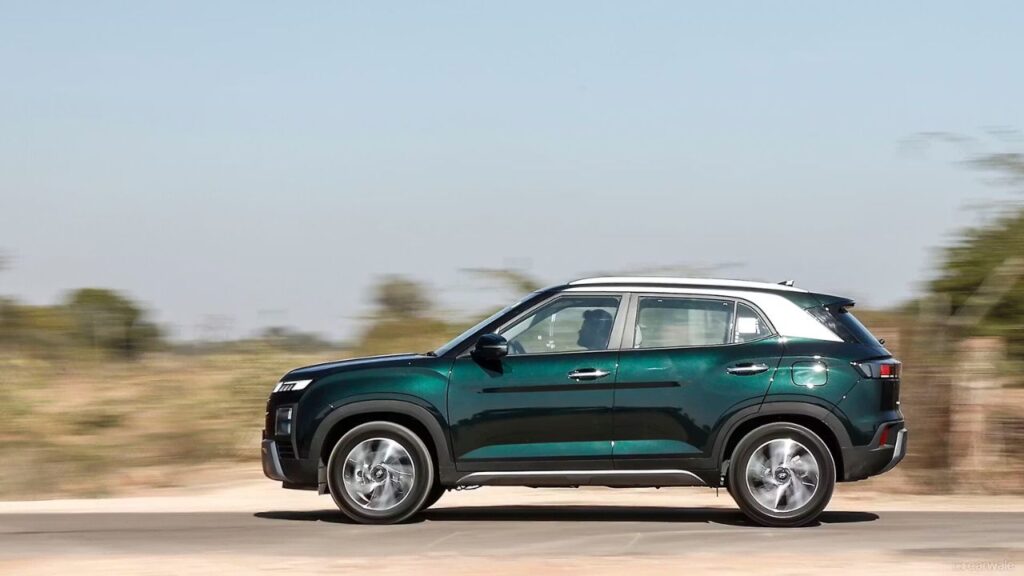
The mechanical underpinnings of the Hyundai Creta remain heavily reliant on a tried and tested platform, offering a highly versatile range of powertrains engineered to suit vastly different driving profiles, from the conservative city commuter to the spirited highway enthusiast. The table provided below explicitly outlines the core dimensional and technical specifications of the 2026 Hyundai Creta.
| Specification Parameter | Technical Details |
| Architectural Platform | Evolving K2 Platform |
| Overall Length | 4330 mm |
| Overall Width (Without Mirrors) | 1790 mm |
| Overall Height | 1635 mm |
| Wheelbase | 2610 mm |
| Reported Ground Clearance (Unladen) | 190 mm |
| Reported Boot Space Volume | 433 Litres |
| Fuel Tank Capacity | 50 Litres |
| Naturally Aspirated Engine | 1.5L MPi Petrol generating 115 PS of power and 144 Nm of torque |
| Turbocharged Engine | 1.5L Turbo GDi Petrol generating 160 PS of power and 260 Nm of torque |
| Diesel Engine | 1.5L U2 CRDi Diesel generating 116 PS of power and 250 Nm of torque |
| Transmission Configurations | 6-speed Manual, Intelligent Variable Transmission (iVT), 6-speed Automatic (Torque Converter), 7-speed Dual Clutch Transmission (DCT) |
| ARAI Claimed Mileage (Petrol) | Manual: ~17.4 kmpl, Automatic (iVT): 17.7 – 18.4 kmpl, Turbo DCT: 18.4 kmpl |
| ARAI Claimed Mileage (Diesel) | Manual: 21.8 kmpl, Automatic (TC): 19.1 kmpl |
| Maximum Seating Capacity | 5 Persons |
The 2026 Kia Seltos: A Generational Leap on the K3 Platform
While Hyundai opted for a strategy of rigorous variant rationalization and aesthetic enhancement, Kia elected to introduce a complete, ground-up generational overhaul for the Seltos, officially launching the new model in India on January 2, 2026. The Seltos has historically been a foundational brand-builder for Kia in the Indian market, and the introduction of the second-generation model represents a massive financial and engineering commitment to maintaining category leadership. This new iteration transitions away from the older architecture and utilizes an entirely new K3 platform, which fundamentally alters the vehicle’s dimensional footprint, structural rigidity, and interior packaging.
The visual identity of the 2026 Seltos has been substantially updated, adhering strictly to Kia’s overarching global design philosophy known as ‘Opposites United’. The exterior design has been sculpted to project a wider, more imposing stance. The front fascia is dominated by an enlarged and more aggressive interpretation of the signature “Tiger Nose” grille, flanked by newly integrated LED headlamps that are paired with striking vertical LED daytime running lights (DRLs). Along the profile, the Seltos now features flush-fitting door handles that improve aerodynamic efficiency, redesigned outside rearview mirrors (ORVMs), and extensive body cladding that wraps around the entire lower perimeter of the vehicle to emphasize its rugged SUV credentials. The rear profile is characterized by highly distinctive L-shaped LED taillights that span the width of the tailgate, further accentuating the vehicle’s broadened stance.
The 2026 Kia Seltos is distributed across a broad and highly granular spectrum of trims, classified broadly into three distinct visual and equipment lines: the Tech Line, the GT Line, and the flagship X-Line. The core variant nomenclature includes the HTE, HTK, HTX, GTX, and the X-Line, with pricing aggressively positioned to undercut and overlap its Hyundai sibling, starting from Rs 10.99 lakh and extending up to Rs 19.99 lakh (ex-showroom). The X-Line styling package, which brings stealthy, blacked-out aesthetic bits including exclusive matte paint finishes, caters to buyers looking for a factory-customized appearance and can only be opted for on the top-tier GT Line trims.
Inside the cabin, the Seltos has undergone an absolute technological revolution, pushing the boundaries of what consumers expect in the mid-size segment. The traditional, deeply cowled instrument binnacle has been completely eradicated. In its place, Kia has installed a sprawling, state-of-the-art dual 12.3-inch panoramic display panel that seamlessly combines the digital driver’s instrument cluster and the central infotainment system into a single, continuous pane of glass. This execution mimics the interior architecture found in vehicles that cost twice as much. The premium ambiance is further elevated by the inclusion of a panoramic sunroof that bathes the cabin in natural light, a newly designed three-spoke steering wheel, dual-zone automatic climate control for personalized thermal comfort, a high-fidelity Bose premium sound system, and reclining rear seats that enhance long-distance comfort. Advanced connectivity features such as an AI-powered voice assistant and over-the-air (OTA) update capabilities ensure that the vehicle’s software remains current long after the initial purchase.
Crucially, Kia has adopted a highly democratized approach to passive and active safety technology in this new generation. Moving away from the industry norm of restricting safety equipment to the most expensive trims, the new-generation Seltos features a comprehensive standard safety package across absolutely all variants. This base package includes six airbags, an Anti-lock Braking System (ABS), electronic stability control (ESC), and hill-start assist. Furthermore, the highly coveted Level 2+ Advanced Driver Assistance Systems (ADAS) are offered on a wider range of higher trims, providing an active layer of collision avoidance and driver support that actively mitigates the risk of human error on the road.
2026 Kia Seltos Comprehensive Specifications
Despite the entirely new exterior sheet metal and interior electronic architecture, Kia has smartly carried over its highly successful and proven powertrain configurations, ensuring long-term reliability and familiarity while optimizing the tuning for better thermal efficiency and power delivery. The following table provides the exhaustive specifications for the second-generation Kia Seltos.
| Specification Parameter | Technical Details |
| Architectural Platform | All-New K3 Platform |
| Overall Length | 4460 mm |
| Overall Width | 1830 mm |
| Overall Height | 1635 mm |
| Wheelbase | 2690 mm |
| Reported Boot Space Volume | 447 Litres |
| Naturally Aspirated Engine | 1.5L Smartstream Petrol generating 115 hp |
| Turbocharged Engine | 1.5L Turbo GDi Petrol generating 160 hp |
| Diesel Engine | 1.5L CRDi VGT Diesel generating 116 hp |
| Transmission Configurations | 6-speed Manual, iMT (Intelligent Manual Transmission), Continuously Variable Transmission (CVT), 6-speed Automatic (Torque Converter), 7-speed Dual Clutch Transmission (DCT) |
| ARAI Claimed Mileage (Petrol) | Manual: 17.7 kmpl, Automatic (CVT): 17.9 kmpl |
| ARAI Claimed Mileage (Diesel) | Manual: 20.7 kmpl, Automatic (TC): 20.7 kmpl |
| Maximum Seating Capacity | 5 Persons |
Comparative Dimensional Analysis and Spatial Architecture
The transition of the Kia Seltos to the new K3 platform has profound implications for its spatial dynamics when directly compared to the Hyundai Creta. In automotive design, external dimensions play a critical dual role: they dictate the visual gravitas and road presence of the vehicle, while simultaneously determining the volumetric comfort and cargo flexibility experienced by the passengers within the cabin.
The 2026 Kia Seltos is officially the longest vehicle in its competitive segment, measuring 4460 mm in overall length. This is a highly substantial increase, making it exactly 130 mm longer than the Hyundai Creta, which measures 4330 mm. In the context of a mid-size SUV, a 130 mm delta in length fundamentally alters the profile and proportions of the vehicle, giving the Seltos a more elongated, estate-like presence. Furthermore, the Seltos is wider at 1830 mm compared to the Creta’s 1790 mm. This 40 mm difference in width contributes to greater shoulder room inside the cabin, particularly beneficial when seating three adult passengers abreast in the second row.
However, the most critical metric for interior passenger comfort is the wheelbase the distance between the front and rear axles. The extended exterior length of the Seltos translates directly into a superior wheelbase of 2690 mm, which outstretches the Creta’s 2610 mm wheelbase by a massive 80 mm. In automotive interior packaging, an 80 mm extension in the wheelbase yields significantly more knee room and legroom for rear-seat occupants. For Indian families, where the rear seat is frequently occupied by elders, growing teenagers, or bulky child safety seats, this additional space creates a tangibly more airy, limousine-like environment that drastically reduces fatigue on long cross-country road trips. Additionally, the Seltos edges out the Creta in cargo-carrying capacity, offering a highly practical 447 litres of boot space compared to the Creta’s 433 litres. While a 14-litre difference might seem marginal on paper, in practical terms, it allows for the accommodation of an extra duffel bag, a few additional grocery bags, or slightly more maneuverability when loading an awkwardly shaped child stroller during interstate journeys.
Conversely, the Hyundai Creta’s slightly more compact footprint provides its own unique set of operational advantages, particularly in densely congested, metropolitan urban environments. The shorter overall length (4330 mm) and narrower width make the Creta inherently easier to maneuver through tight, unpredictable alleyways, execute sharp U-turns in heavy traffic, and slot into constrained, parallel parking spaces. For a family buyer residing in a bustling city like Mumbai or Delhi, where parking real estate is at an absolute premium, the slightly smaller footprint of the Creta presents an undeniable daily utility asset.
Powertrain Dynamics, Thermal Efficiency, and Real-World Economics
Both the Hyundai Creta and the Kia Seltos utilize the same overarching family of powertrains developed by their parent conglomerate. However, analyzing the performance profiles, transmission pairings, and resulting fuel economics reveals a complex landscape that prospective buyers must navigate carefully.
The entry-level 1.5-litre naturally aspirated (NA) petrol engine, generating approximately 115 horsepower, provides highly linear and predictable power delivery. When paired with a manual gearbox or the CVT/iVT automatic options, this engine is optimized for the calm, low-speed, stop-and-go nature of urban commuting. The 1.5-litre CRDi diesel engine, generating 116 horsepower and substantial low-end torque, remains the absolute favorite for high-mileage users and rural buyers. Diesel engines inherently offer superior thermal efficiency under heavy loads, making them unassailable for long-distance cruising. The flagship 1.5-litre Turbo GDi petrol engine, which produces a segment-leading 160 horsepower, serves as the performance powerhouse for both vehicles, delivering rapid acceleration and a highly thrilling driving experience, especially when paired with the rapid-shifting 7-speed Dual Clutch Transmission (DCT).
However, a critical factor for Indian families is the recurring operational cost, heavily dictated by fuel efficiency. It is imperative to understand that theoretical ARAI-certified efficiency figures often diverge drastically from real-world Indian driving conditions. On paper, the diesel manual variants are the champions of frugality, boasting ARAI figures of up to 21.8 kmpl for the Creta and 20.7 kmpl for the Seltos. In real-world highway driving, these diesel engines easily achieve 20-22 kmpl, while city mileage typically hovers between a highly respectable 16-18 kmpl.
The critical point of financial divergence occurs with the high-performance turbo-petrol DCT variants. Automotive enthusiast forums and extensive user reports indicate severe fuel economy degradation in dense, stop-and-go urban traffic environments. The mechanical reality of a turbocharged engine paired with a dual-clutch transmission is complex: in bumper-to-bumper traffic, the turbocharger is not sufficiently spooled due to low engine RPMs, and because turbo engines operate at a lower base compression ratio, the electronic control unit must inject significantly more fuel to maintain momentum and prevent stalling. Consequently, multiple owners report that city mileage for the turbo-petrol models can plummet to as low as 9-10 kmpl under heavy traffic conditions.
Conversely, the naturally aspirated petrol engines, when paired with manuals or CVTs, offer far more consistent, albeit less exhilarating, real-world efficiency ranging from 13-15 kmpl in the city and up to 18-20 kmpl on the highway. Therefore, family buyers must critically and honestly assess their daily route topologies and driving habits. Heavy urban commuters who rarely exceed 40 km/h will find the NA petrol or the highly efficient diesel options far more financially sustainable than the high-strung, thirsty turbo-petrol engines, despite the latter’s marketing appeal.
The Safety Paradigm: Structural Integrity and Empirical Crash Testing
In the modern Indian automotive market, safety has rapidly evolved from a secondary, often ignored consideration into a primary, non-negotiable purchasing criterion for families. In this specific domain, the trajectory and empirical data of the two vehicles have diverged significantly by 2026. The introduction and strict implementation of the Bharat New Car Assessment Program (BNCAP) has established a localized, highly stringent benchmark for vehicle structural safety and occupant protection.
The 2026 Kia Seltos has achieved a monumental engineering milestone by securing a record-breaking 5-star BNCAP safety rating, definitively emerging as the highest-scoring internal combustion engine (ICE) vehicle tested under the program to date. The Seltos demonstrated absolutely exceptional structural integrity during the crash tests, scoring an impressive 31.70 out of a maximum 32.00 points for Adult Occupant Protection (AOP), which stands as the highest ever recorded for an ICE vehicle. Furthermore, it scored 45.00 out of 49.00 points for Child Occupant Protection (COP), ensuring that infants and toddlers in child seats are shielded from immense kinetic forces. This flawless 5-star rating is universally applicable across the entire variant lineup, driven by a highly robust bodyshell geometry and the democratization of safety equipment, which includes the standardization of six airbags, electronic stability control (ESC), and all-wheel disc brakes across all trims.
In stark contrast, the safety narrative for the Hyundai Creta is burdened by historical underperformance and current ambiguity. The pre-facelift iteration of the Creta was subjected to the older Global NCAP (GNCAP) testing protocols, where it secured a rather disappointing 3-star overall rating. Under those tests, the Creta scored a mere 8.00 out of 17.00 for Adult Protection and 28.29 out of 49.00 for Child Protection, with the testing agency officially rating the vehicle’s bodyshell integrity as unstable and incapable of withstanding further loading. While Hyundai has heavily upgraded the current 2026 Creta by standardizing six airbags and ESC across the range to match the feature list of its rivals, the vehicle is still awaiting its official BNCAP crash test validation. Until the new Creta is crashed and empirically rated by BNCAP, consumers cannot confirm whether the underlying platform weaknesses and unstable bodyshell have been structurally rectified, or if the manufacturer has simply added airbags to mask deeper engineering flaws.
Furthermore, Hyundai’s strategic decision to restrict active safety technology, specifically the Level 2 ADAS suite, exclusively to the top-tier King variant represents a philosophical barrier to safety for budget-conscious buyers. This contrasts sharply with Kia’s approach of offering ADAS features more broadly across its upper-mid trims. For Indian families placing the absolute paramount importance on proven, empirically validated safety to protect their loved ones, the 5-star BNCAP-rated Kia Seltos stands as the indisputable, mathematically proven victor.
Suspension Geometry, NVH Levels, and Cabin Ride Comfort
While dimensional data heavily favors the Seltos, a qualitative assessment of ride comfort, suspension geometry, and Noise, Vibration, and Harshness (NVH) levels reveals the distinct, deeply ingrained engineering philosophies of the two brands.
The Hyundai Creta has been deliberately tuned to prioritize ultimate passenger comfort over high-speed agility. Its suspension setup comprising MacPherson struts at the front and a coupled torsion beam axle at the rear is calibrated on the softer side. This tuning enables the Creta to absorb sharp road imperfections, deep potholes, and harsh concrete expansion joints with a high degree of compliance, preventing kinetic shocks from entering the cabin. The steering rack is tuned to be highly assisted and lighter, requiring minimal physical effort from the driver at low city speeds, making the Creta an absolutely effortless daily driver in congested environments. Furthermore, the rear seat comfort is exceptional, offering slightly better under-thigh support and softer cushioning than its sibling, which prevents lower back fatigue during multi-hour journeys. For a family buyer whose primary requisite is a plush, isolating, non-fatiguing ride that protects occupants from the harsh realities of Indian infrastructure, the Creta remains unparalleled in this segment.
Conversely, the Kia Seltos targets the driving enthusiast and the younger demographic. Its suspension geometry is aggressively tuned on the stiffer side. This rigid setup is designed to minimize lateral body roll during tight cornering, improve aerodynamic stability at triple-digit highway speeds, and prevent the vehicle from wallowing over undulations. The steering rack offers noticeably tighter feedback and weight, providing the driver with a more connected, tactile feel to the road surface. While the new K3 platform has notably improved the Seltos’s overall composure over bad roads compared to the notoriously harsh ride of the first-generation model , the physical reality remains that the rear seats feature firmer foam cushioning, and the ride can feel slightly more rigid and communicative over sharp, low-speed bumps. Additionally, it is important to note that a passenger seated in the middle of the rear bench may notice the intrusion of the transmission tunnel more prominently in the Seltos than in the Creta. Ultimately, the Seltos sacrifices a fraction of low-speed plushness in exchange for vastly superior dynamic handling, making it the highly preferable choice for individuals who actively enjoy taking the wheel on twisty mountain passes and high-speed expressways.
Long-Term Ownership Economics and After-Sales Maintenance
The initial cost of acquisition is only the first financial hurdle in vehicle ownership; the long-term maintenance ecosystem plays a massive, often underestimated role in family budgeting. By 2026, general inflation, escalating service center labor rates (which now frequently start around Rs 2,200 just for basic paid labor), and the mandatory use of expensive, high-grade synthetic oils required by modern turbocharged engines (costing between Rs 1,100 to Rs 1,300 per litre) have driven up the baseline cost of routine servicing across the entire automotive industry.
An exhaustive analysis of routine scheduled service costs over a standard five-year period (assuming an average annual usage of 10,000 km) reveals a distinct, mathematically verifiable economic advantage for Hyundai. The estimated 5-year total routine service cost for a Hyundai vehicle utilizing these powertrains ranges from roughly Rs 34,500 to Rs 43,000. This lower cost is attributed to highly localized spare parts sourcing and slightly lower labor tariffs. Furthermore, Hyundai’s remarkably dense, multi-tiered service network which deeply penetrates tier-2 and tier-3 towns often means that an authorized service center is physically closer to the customer. This proximity significantly minimizes secondary travel costs, time loss, and logistical headaches when dropping off and retrieving the vehicle.
Conversely, maintaining a Kia vehicle generally commands a slight financial premium over the exact same period. The equivalent 5-year total routine service cost for a Kia ranges from Rs 43,300 to Rs 52,200. Additionally, because Kia’s dealership and authorized service footprint, while growing rapidly and aggressively, is not yet as historically omnipresent or deeply rooted as Hyundai’s, owners residing in smaller towns or rural peripheries might incur higher travel distances and logistical costs to reach an authorized center for warranty-compliant servicing. For a deeply cost-conscious family looking to rigorously minimize recurring expenses and ensure absolute peace of mind over a half-decade of ownership, the Hyundai Creta provides a tangibly more frugal and accessible post-purchase ecosystem.
Head-to-Head Comparative Overview
To effectively synthesize the vast array of mechanical, spatial, and economic data presented in this analysis, the following table provides a direct, side-by-side comparative overview of the 2026 Hyundai Creta and the 2026 Kia Seltos across the most critical family-oriented metrics.
| Evaluation Metric | 2026 Hyundai Creta | 2026 Kia Seltos (New Generation) |
| Pricing Spectrum (Ex-Showroom) | Rs 10.79 lakh to Rs 20.05 lakh | Rs 10.99 lakh to Rs 19.99 lakh |
| Core Platform Architecture | Evolving Legacy K2 Platform | All-New Advanced K3 Platform |
| Overall Vehicle Length | 4330 mm | 4460 mm (Class Leading, +130 mm advantage) |
| Wheelbase (Interior Space Indicator) | 2610 mm | 2690 mm (Class Leading, +80 mm advantage) |
| Trunk / Boot Capacity | 433 Litres | 447 Litres (+14 Litres advantage) |
| Primary Digital Interface | 10.25-inch Digital Cluster & Infotainment | Dual 12.3-inch Continuous Panoramic Display |
| Suspension & Ride Quality | Soft, highly compliant, prioritizes comfort | Stiffer, sporty, prioritizes high-speed stability |
| Rear Seat Ergonomics | Plush cushioning, superior under-thigh support | Firmer foam, slight transmission tunnel intrusion |
| Official Crash Safety Rating | 3-Star GNCAP (Pre-facelift), BNCAP results awaited | 5-Star BNCAP (Highest ever ICE Score: 31.70 AOP) |
| Active Safety (ADAS) Distribution | Exclusively restricted to the top “King” variant | Democratized, available more widely on upper trims |
| Estimated 5-Year Maintenance Cost | ~Rs 34,500 to Rs 43,000 (More Economical) | ~Rs 43,300 to Rs 52,200 (Slight Premium) |
Strategic Buying Decision: Which SUV Should Your Family Buy?
The determination of which SUV is objectively “better” is not a unilateral, one-size-fits-all verdict, but rather a complex reflection of a family’s specific priorities, daily driving environments, financial bandwidth, and long-term risk appetites. Both the Hyundai Creta and the Kia Seltos represent the absolute pinnacle of mid-size automotive engineering in India, yet they cater to fundamentally different psychological, ergonomic, and practical needs.
The Hyundai Creta remains the quintessential, unassailable choice for traditional families whose primary mandate is absolute ride comfort, effortless urban usability, and long-term financial prudence. If your daily routine involves navigating heavily degraded city tarmac, traversing pothole-ridden municipal roads, and crawling through endless traffic jams, the Creta’s softer suspension tuning and lighter steering will physically isolate your family from fatigue far better than its stiffer sibling. The slightly shorter 4330 mm length makes navigating and parking in congested, high-density urban centers noticeably less stressful. Furthermore, the plush rear seating with its superior under-thigh support makes it a highly welcoming, luxurious space for elderly family members or children over long distances. Economically, the Creta is the absolute safer harbor. With 5-year maintenance costs sitting significantly lower than Kia’s, and backed by a massive, historically proven after-sales network that prevents logistical headaches during routine servicing, the Creta delivers a low-stress, highly predictable ownership experience. It is the definitive recommendation for the pragmatic, comfort-seeking buyer who values a buttery-smooth ride and minimized maintenance overheads above all else.
Conversely, the new-generation 2026 Kia Seltos is the definitive, forward-looking recommendation for the progressive, tech-savvy family that places an uncompromising premium on structural safety, interior space, and engaging driving dynamics. The single most compelling, overriding argument for the Seltos is its record-breaking 5-star BNCAP safety rating. For parents tasked with transporting young children, the empirical, mathematically proven reassurance of a structurally validated, 5-star safe cabin equipped with standard six airbags across all trims simply cannot be overlooked or compromised upon. Beyond the absolute necessity of safety, the Seltos’s transition to the new K3 platform has unlocked cavernous interior dimensions; the massive 2690 mm wheelbase ensures that growing teenagers or tall adults seated in the second row will never feel claustrophobic. From the driver’s seat, the stiffer suspension and highly precise steering yield a vehicle that is genuinely enjoyable and confidence-inspiring to pilot on winding highways and mountain roads, while the futuristic dual 12.3-inch panoramic screens offer an interior ambiance that feels a full segment above the Creta. If your family prioritizes maximum rear-seat legroom, segment-leading digital technology, engaging driving dynamics, and above all, empirically proven, best-in-class 5-star safety, the Kia Seltos is unequivocally the superior acquisition for 2026.