The premium performance hatchback segment in India occupies a unique position within the broader automotive landscape. While the majority of buyers gravitate toward SUVs with elevated seating and spacious interiors the dedicated enthusiasts who value compact dimensions sharp handling and engaging driving dynamics continue to form a loyal niche. The fourth generation Mini Cooper S enters this market as a significant offering. It stands as the final fully internal combustion engine powered iteration from the brand before its complete shift toward electric platforms.
This model arrives in India through the completely built up import route with no local assembly. Deliveries for standard variants began in September following the initial launch phase. Pricing places the vehicle in the luxury category starting from an ex showroom range of 44.45 lakh to 44.90 lakh for base models. Costs escalate quickly with optional packages and special editions reaching up to 58.90 lakh for the top GP Inspired Edition. The Indian lineup restricts itself to the three door body style emphasizing the classic Mini character over practicality. A separate all electric Cooper S on a dedicated platform from the Spotlight Automotive joint venture will arrive later.
Design Evolution and Exterior Architecture
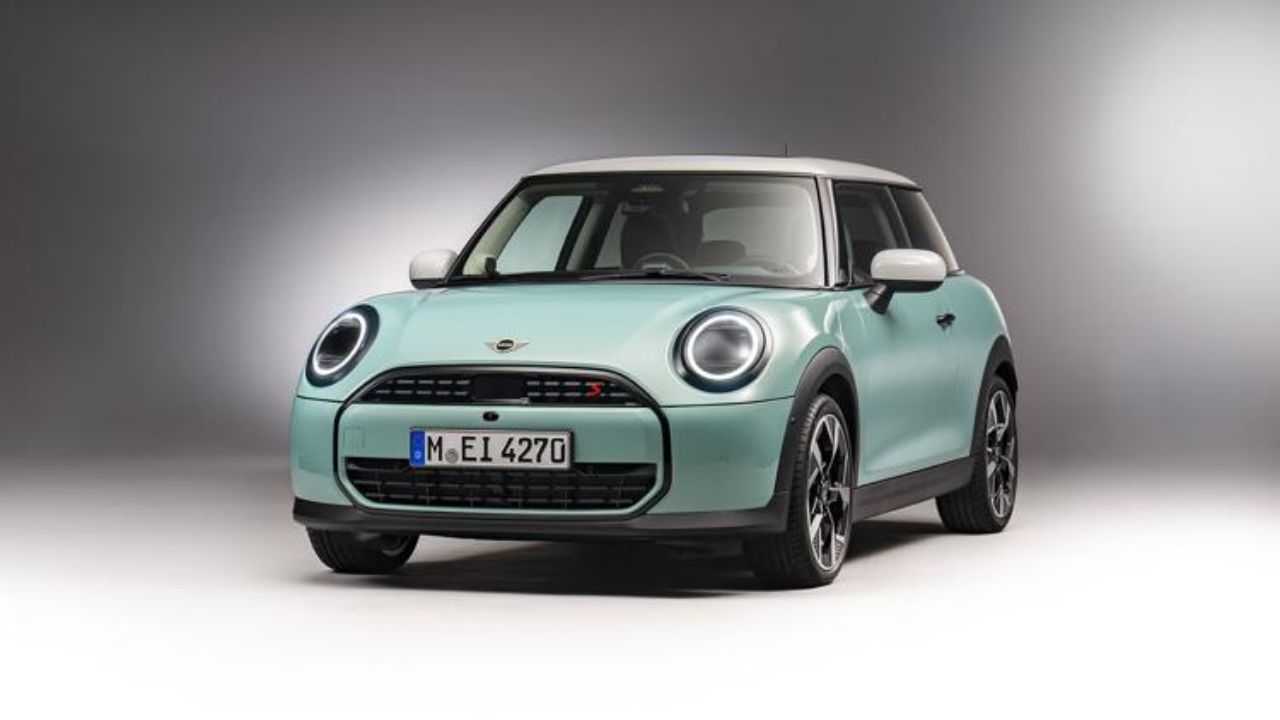
The new Mini Cooper S adopts a design philosophy called Characteristic Simplicity. This approach removes unnecessary decorative elements to highlight fundamental geometric forms. The front fascia features substantial changes. The traditional hexagonal grille gives way to a larger octagonal unit with a blanked out central section that modifies airflow. Traditional lower air intakes and fog lamps disappear creating a cleaner uninterrupted surface.
Headlights maintain the iconic circular shape but lose heavy chrome bezels. They incorporate matrix LED technology with customizable animated signatures for startup and shutdown sequences. The brand has eliminated all exterior chrome as part of a wider design initiative. Side profiles reveal compact dimensions with an overall length of 3876 millimeters width of 1744 millimeters height of 1432 millimeters and wheelbase of 2495 millimeters. Flush door handles reduce drag while removed faux vents on fenders reinforce minimalism. Wheel arches sport dark cladding and options extend to 18 inch alloys. Dark roof pillars create a floating roof visual effect.
At the rear triangular LED tail lamps replace previous designs with programmable patterns including Union Jack motifs. A dark trim band connects the lamps emphasizing width. The exhaust system hides completely behind the rear bumper improving aerodynamics but sparking debate among enthusiasts who miss the visible tips of earlier models.
Interior Cabin Philosophy and Technological Interfaces
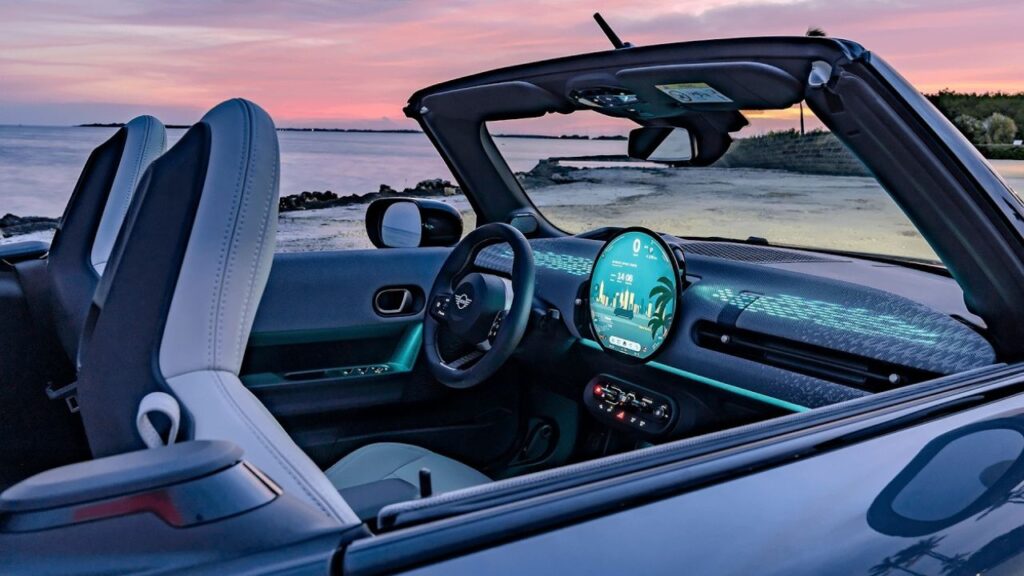
The cabin draws direct inspiration from the 1959 original model resulting in a highly minimalist layout. All controls centralize around a single prominent feature. A 9.4 inch circular OLED touchscreen dominates the dashboard replacing the traditional instrument cluster behind the steering wheel. This marks the first production use of such a fully circular display. Software developed with Samsung runs on the Mini Operating System 9 based on Android. It handles navigation climate media and vehicle data while supporting wireless Apple CarPlay and Android Auto.
Voice commands activate with the phrase Hey MINI. Physical controls persist below the screen in a toggle bar. A small directional switch replaces the gear lever. A rotary ignition knob evokes aircraft styling and an electronic parking brake button completes the cluster. Material choices emphasize sustainability with recycled knitted fabrics on dashboards and doors plus Vescin synthetic leather seats. No natural leather or chrome appears inside.
The front seats offer deep bolstering for cornering support. Rear access proves challenging in the three door layout with limited legroom and headroom suiting short trips better than long journeys. Cargo space starts at 210 litres expanding to 725 litres with seats folded. A panoramic glass roof enhances the sense of openness while a large wireless charging pad occupies the space freed by the simplified console.
Powertrain Mechanics and Engineering Specifications
The Cooper S relies on a 1998 cubic centimeter turbocharged inline four cylinder petrol engine producing 204 horsepower between 5000 and 6500 rpm and 300 Newton metres of torque from 1450 to 4500 rpm. Power routes exclusively to the front wheels through a seven speed dual clutch automatic transmission. Base variants omit paddle shifters forcing reliance on automatic logic with potential delays during kickdown maneuvers.
Performance figures impress for the 1360 kilogram kerb weight. The manufacturer claims zero to 100 kilometres per hour in 6.6 seconds while independent tests recorded 6.48 seconds. Rolling acceleration shows strong mid range response with 20 to 80 kilometres per hour in 3.62 seconds. Top speed reaches 242 kilometres per hour. Drive modes include Core for balance Green for efficiency and Go Kart for sharpened responses with artificial sound enhancement.
Driving Dynamics and Road Performance
Chassis tuning prioritizes agility over comfort. Fixed rate suspension keeps the body flat during cornering but transmits road imperfections directly especially with run flat tyres. Steering feels direct and communicative though torque steer appears under hard acceleration due to the absence of a limited slip differential. Braking performance proves strong with an 80 kilometres per hour to zero stop in approximately 25.76 metres.
Track testing at CoASTT with professional driver Narain Karthikeyan in a John Cooper Works equipped car yielded a lap time of two minutes 5.20 seconds and a maximum straight line speed of 162.82 kilometres per hour. The chassis performed admirably but factory tyres and intrusive stability control limited ultimate potential. Upgrading tyres could unlock more capability from the platform.
Variants Pricing and Equipment Levels
The model range offers multiple tiers allowing customization of aesthetics technology and comfort.
- STD base variant starts at 44.45 lakh ex showroom.
- Classic Pack reaches 50.45 lakh adding premium audio head up display and cabin camera.
- Favoured Pack priced between 52.75 lakh and 53.40 lakh introduces electric seat adjustments.
- John Cooper Works Pack at 55.15 lakh to 55.90 lakh adds paddle shifters aggressive styling and sport seats.
Special editions include the Victory Edition at 57.50 lakh honoring the 1965 Monte Carlo winner and the ultra exclusive GP Inspired Edition at 58.90 lakh limited to just 30 units in India.
The following table summarizes the variant pricing hierarchy (ex showroom in lakh INR):
| Variant | Price Range (Lakh INR) | Key Highlights |
|---|---|---|
| STD | 44.45 | Base model essential features |
| Classic Pack | 50.45 | Premium audio HUD cabin camera |
| Favoured Pack | 52.75 – 53.40 | Electric seats enhanced materials |
| JCW Pack | 55.15 – 55.90 | Paddle shifters sport styling |
| Victory Edition | 57.50 | Rally tribute cosmetics JCW elements |
| GP Inspired Edition | 58.90 | Limited to 30 units aero kit |
Competitor Analysis and Market Context
The primary rival remains the Volkswagen Golf GTI priced from 50.91 lakh to 53.00 lakh. The Golf offers greater size five doors more power at 265 horsepower and 370 Newton metres plus a limited slip differential for superior traction. It accelerates quicker and feels more stable at high speeds while providing better practicality. The Mini counters with more immediate nervous character and brand heritage.
Other alternatives in the 40 to 60 lakh range include internal options like the electric Aceman or larger Countryman SUV as well as crossovers such as the Audi Q3 electric sedans like the BYD Seal and practical choices like the Skoda Kodiaq or Toyota Camry hybrid.
The following table contrasts key specifications with the main competitor:
| Parameter | Mini Cooper S | Volkswagen Golf GTI |
|---|---|---|
| Engine | 2.0L Turbo 204 hp | 2.0L Turbo 265 hp |
| Torque | 300 Nm | 370 Nm |
| Transmission | 7DCT | 7DSG |
| 0-100 km/h | 6.48 seconds | 5.9 seconds |
| Body Style | 3 Door | 5 Door |
| Price Range (Lakh) | 44.45 – 58.90 | 50.91 – 53.00 |
Safety Features Operational Costs and Ownership Considerations
Six airbags Level 1 advanced driver assistance with autonomous emergency braking stability control and tyre pressure monitoring come standard. The two year unlimited kilometre warranty pairs with roadside assistance and optional extensions up to ten years. On road prices vary by state with Delhi around 50.63 lakh for base models rising notably in southern cities like Chennai.
Fuel efficiency tests show around 14.5 kilometres per litre in real world mixed conditions. The interior fabrics require gentler cleaning methods than traditional materials. Buyers must weigh the engaging drive against limited rear space firm ride and touchscreen centric interface that demands adaptation time.
Last Petrol Mini
The 2026 Mini Cooper S delivers a focused experience for enthusiasts who prioritize fun and heritage over versatility. Its compact size immediate responses and distinctive character set it apart in a market dominated by larger vehicles. While compromises exist in comfort practicality and some equipment levels the John Cooper Works equipped versions or special editions maximize appeal. As the brand moves fully electric this model serves as a compelling farewell to pure combustion engineering preserving the go kart like spirit that defined Mini for decades. Potential buyers should test drive thoroughly to assess fit with their daily needs and driving style before committing in this premium segment.