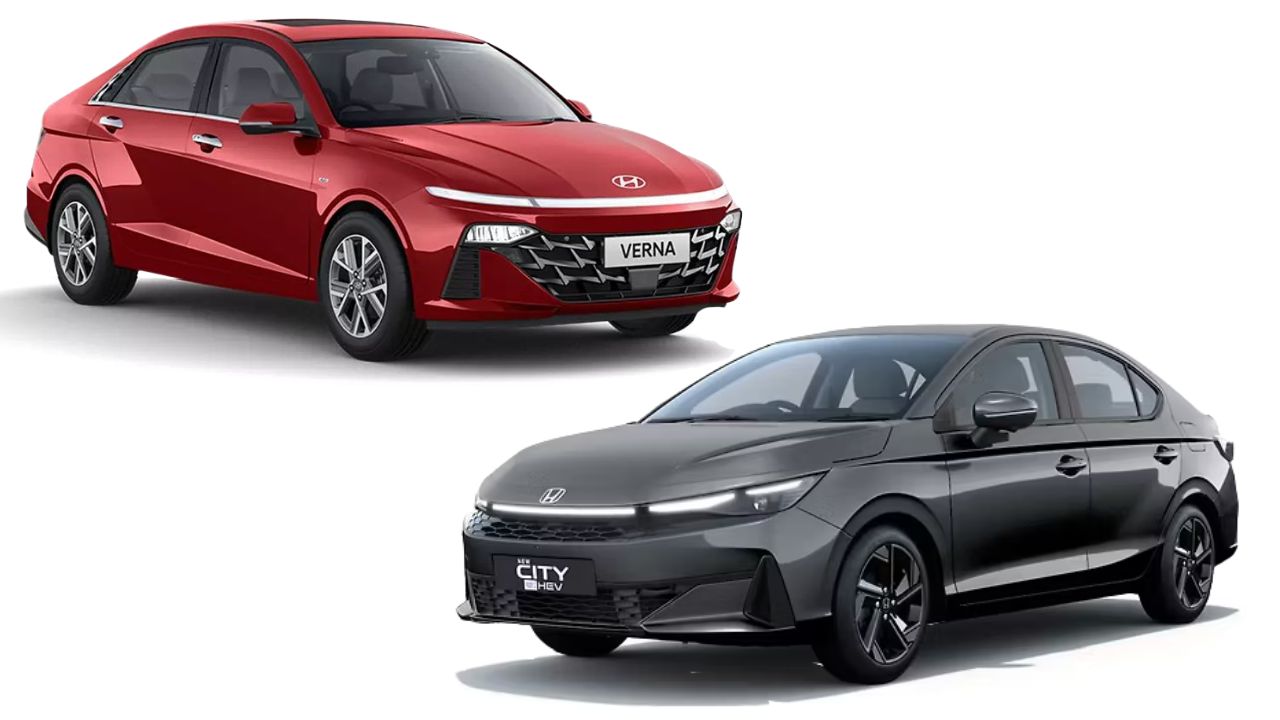
The midsize sedan market gives buyers excellent alternatives to standard sport utility vehicles. When you want comfort, generous passenger space, and a refined driving experience, you naturally look at the Hyundai Verna and the 2026 Honda City. Both manufacturers recently updated their flagship sedans to attract buyers who appreciate sharp handling and premium cabin materials. You face a tough choice because both cars offer distinct advantages depending on your driving style and daily commute requirements. Hyundai focuses heavily on outright engine performance and bold exterior design. Honda prioritizes passenger comfort, proven reliability, and maximum fuel efficiency with its hybrid powertrain option. This comparison examines every technical specification, interior feature, and real world performance metric to help you choose the correct sedan for your garage.
Exterior Design Language and Physical Dimensions
The exterior styling of these two cars appeals to completely different tastes. Hyundai gave the Verna a highly futuristic appearance. You see a continuous LED light bar running across the entire width of the hood. The main headlamps sit lower in the bumper next to a dark chrome grille. The side profile features sharp creases intersecting across the doors.
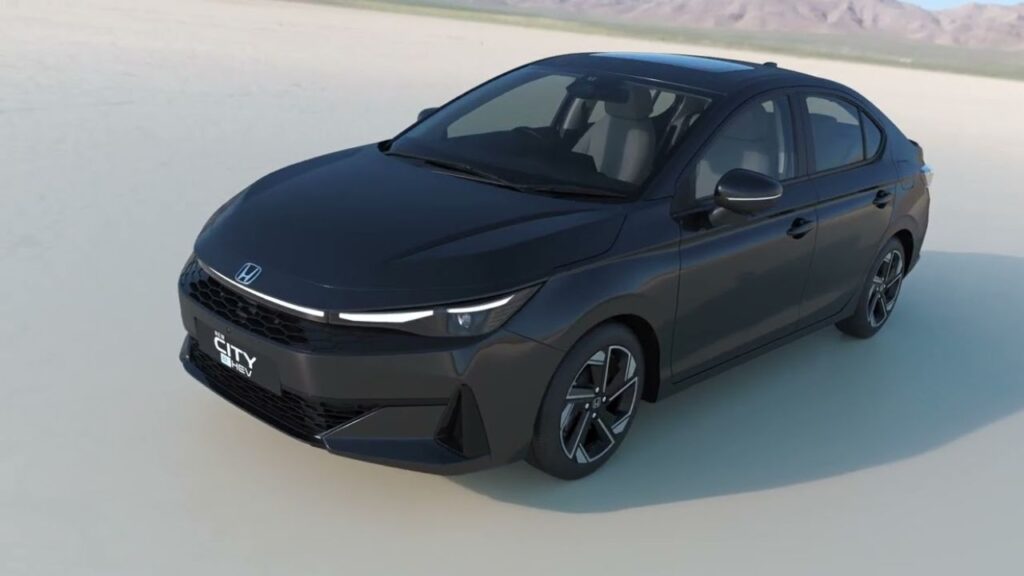
Honda took a conservative and elegant approach with the 2026 City. The recent update introduces a slimmer front grille featuring a revised mesh pattern. The City features standard LED projector headlights providing excellent visibility. The side profile remains clean with a single prominent shoulder line.
The Honda City measures longer than the Hyundai Verna. However, the Verna offers a longer distance between the front and rear wheels, directly impacting interior passenger space. The City stands taller, making getting in and out slightly easier for taller passengers. The Verna sits wider, giving it a planted stance on the highway.
Engine Options and Powertrain Performance
You will experience entirely different driving characteristics depending on the engine you select. Hyundai offers two distinct petrol engines for the Verna. The standard option is a 1.5 liter naturally aspirated four cylinder engine producing 113 brake horsepower. You can pair this engine with a six speed manual transmission or an intelligent variable transmission. If you want serious acceleration, you should choose the 1.5 liter turbocharged engine. When you press the accelerator pedal in the turbo variant, the seven speed dual clutch automatic transmission shifts gears instantly, pushing you firmly into your seat.
Honda provides two powertrain paths for the 2026 City. You can buy the traditional 1.5 liter naturally aspirated petrol engine producing 119 brake horsepower. This engine delivers smooth power through either a six speed manual or a continuously variable transmission. The second option is the highly efficient strong hybrid system using a petrol engine alongside two electric motors. The hybrid City starts moving using pure electric power. The petrol engine activates automatically to charge the battery or assist during heavy acceleration.
| Specification | Hyundai Verna 1.5 NA | Hyundai Verna 1.5 Turbo | Honda City 1.5 NA | Honda City 1.5 Hybrid |
| Engine Type | 1.5 Liter Petrol | 1.5 Liter Turbo Petrol | 1.5 Liter Petrol | 1.5 Liter Petrol Hybrid |
| Maximum Power | 113 bhp | 158 bhp | 119 bhp | 124 bhp Combined |
| Maximum Torque | 144 Nm | 253 Nm | 145 Nm | 253 Nm Motor Torque |
| Transmission | Manual or Automatic | Manual or Dual Clutch | Manual or CVT | eCVT Automatic |
| 0 to 100 km/h | 11.2 Seconds | 8.1 Seconds | 10.5 Seconds | 9.8 Seconds |
Fuel Efficiency and Daily Running Costs
Your daily commute distance should dictate which car makes the most financial sense. The naturally aspirated engines in both the Verna and the City deliver similar fuel economy. You can expect a solid return in heavy city traffic with these standard petrol engines. On open highways, both cars will achieve much higher figures when driven smoothly. The fuel efficiency narrative changes completely when you look at the specialized powertrains. The Verna turbo consumes more fuel when you drive it aggressively. The Honda City hybrid dominates this category entirely.
Review these specific real world fuel efficiency expectations:
- Honda City 1.5 Petrol Manual: 14 kilometers per liter in city traffic and 18 on highways.
- Honda City Hybrid: 22 to 24 kilometers per liter in city traffic and 26 on highways.
- Hyundai Verna 1.5 Petrol Manual: 13 kilometers per liter in city traffic and 17 on highways.
- Hyundai Verna 1.5 Turbo Petrol Automatic: 10 to 11 kilometers per liter in city traffic and 16 on highways.
Interior Cabin Comfort and Space
You spend all your time inside the car, making interior comfort a critical deciding factor. Both sedans offer spacious cabins finished with premium materials. Hyundai designed the Verna interior to focus heavily on the driver. The dashboard angles slightly toward the steering wheel. If you buy the turbo variant, you get an all black interior with red stitching that creates a sporty atmosphere.
Honda designed the City interior to prioritize an airy and open feeling. The cabin features a dual tone beige and black color scheme making the interior feel exceptionally large. The seats in the Honda City remain some of the most comfortable in this segment. The cushioning strikes a perfect balance between soft support for city driving and firm padding for long highway journeys.
The Verna wins the battle for rear legroom. The longer wheelbase provides an extra 70 millimeters of space between the wheels, giving massive knee room for rear passengers. The City offers superior under thigh support on the rear bench. The seats angle perfectly to keep passengers comfortable during long trips.
Technology and Infotainment Systems
Car buyers expect high quality digital interfaces, and both manufacturers deliver strong technology packages. The Hyundai Verna features a single glass panel housing two distinct 10.25 inch screens. One screen functions as the digital instrument cluster, displaying your speed and vehicle information. The second screen handles the infotainment system. Hyundai includes an eight speaker Bose premium audio system that delivers crisp highs and heavy bass.
The 2026 Honda City uses a practical approach. The center console holds an eight inch touchscreen infotainment system. The City instrument cluster uses an analog speedometer paired with a seven inch digital display showing your hybrid system power flow.
Key technology features include:
- Wireless Apple CarPlay and Android Auto connectivity.
- Electric sunroofs with anti pinch safety mechanisms.
- Automatic climate control systems with rear air conditioning vents.
- Wireless smartphone charging pads located in the center console.
Hyundai includes heated and ventilated front seats in the top variants of the Verna. You can cool your back instantly after getting into a car parked under the sun. The Honda City lacks ventilated seats entirely.
Pricing Structure and Variant Breakdown
You must carefully evaluate the pricing and feature distribution to determine which car offers better value for your budget. Both manufacturers spread their features across several variants, with automatic transmissions, dual tone paint colors, and turbocharged or hybrid engine options carrying a premium. Review the exact variants and the features they add over the preceding models below.
| Honda City Variant | Engine & Transmission | Price (Ex Showroom) | Added Features Over Previous Variant | Hyundai Verna Variant | Engine & Transmission | Price (Ex Showroom) | Added Features Over Previous Variant |
|---|---|---|---|---|---|---|---|
| Honda City SV | 1498 cc Manual | Rs 12.00 Lakh | Base model. Includes eight inch touchscreen, four airbags, and projector headlamps. | Hyundai Verna HX2 | 1497 cc Manual | Rs 10.98 Lakh | Base model. Includes six airbags, anti lock braking system, manual air conditioning. |
| Honda City V | 1498 cc Manual | Rs 13.30 Lakh | Adds advanced driver assistance systems and 15 inch alloy wheels. | Hyundai Verna HX4 | 1497 cc Manual | Rs 12.25 Lakh | Adds eight inch touchscreen and steering mounted controls. |
| Honda City V CVT | 1498 cc Automatic | Rs 14.30 Lakh | Adds continuously variable automatic transmission. | Hyundai Verna HX6 | 1497 cc Manual | Rs 13.19 Lakh | Adds automatic climate control and 16 inch alloy wheels. |
| Honda City ZX | 1498 cc Manual | Rs 15.26 Lakh | Adds electric sunroof and wireless phone charger. | Hyundai Verna HX6 DT | 1497 cc Manual | Rs 13.34 Lakh | Adds dual tone exterior paint. |
| Honda City ZX Plus | 1498 cc Manual | Rs 16.15 Lakh | Adds full LED headlamps and leather seat upholstery. | Hyundai Verna HX6 Plus | 1497 cc Manual | Rs 13.81 Lakh | Adds electric sunroof and wireless charging. |
| Honda City ZX CVT | 1498 cc Automatic | Rs 16.26 Lakh | Adds continuously variable automatic transmission. | Hyundai Verna HX6 Plus DT | 1497 cc Manual | Rs 13.96 Lakh | Adds dual tone exterior paint. |
| Honda City ZX Plus CVT | 1498 cc Automatic | Rs 17.15 Lakh | Adds continuously variable automatic transmission. | Hyundai Verna HX6 iVT | 1497 cc Automatic | Rs 14.40 Lakh | Adds intelligent variable automatic transmission. |
| Honda City ZX Plus Hybrid | 1498 cc Automatic | Rs 21.00 Lakh | Adds strong hybrid powertrain with electric motors. | Hyundai Verna HX6 iVT DT | 1497 cc Automatic | Rs 14.55 Lakh | Adds dual tone exterior paint. |
| – | – | – | – | Hyundai Verna HX8 | 1497 cc Manual | Rs 14.88 Lakh | Adds LED headlamps and 10.25 inch touchscreen. |
| – | – | – | – | Hyundai Verna HX6 Plus iVT | 1497 cc Automatic | Rs 15.02 Lakh | Adds automatic transmission. |
| – | – | – | – | Hyundai Verna HX8 DT | 1497 cc Manual | Rs 15.03 Lakh | Adds dual tone exterior paint. |
| – | – | – | – | Hyundai Verna HX6 Plus iVT DT | 1497 cc Automatic | Rs 15.17 Lakh | Adds dual tone exterior paint. |
| – | – | – | – | Hyundai Verna HX8 iVT | 1497 cc Automatic | Rs 16.09 Lakh | Adds automatic transmission. |
| – | – | – | – | Hyundai Verna HX8 iVT DT | 1497 cc Automatic | Rs 16.24 Lakh | Adds dual tone exterior paint. |
| – | – | – | – | Hyundai Verna HX8 Turbo | 1482 cc Manual | Rs 16.28 Lakh | Adds 1.5 liter turbocharged engine and rear disc brakes. |
| – | – | – | – | Hyundai Verna HX8 Turbo DT | 1482 cc Manual | Rs 16.43 Lakh | Adds dual tone exterior paint. |
| – | – | – | – | Hyundai Verna HX10 iVT | 1497 cc Automatic | Rs 17.15 Lakh | Adds advanced driver assistance systems and ventilated seats. |
| – | – | – | – | Hyundai Verna HX10 iVT DT | 1497 cc Automatic | Rs 17.30 Lakh | Adds dual tone exterior paint. |
| – | – | – | – | Hyundai Verna HX8 Turbo DCT | 1482 cc Automatic | Rs 17.62 Lakh | Adds dual clutch automatic transmission. |
| – | – | – | – | Hyundai Verna HX8 Turbo DCT DT | 1482 cc Automatic | Rs 17.77 Lakh | Adds dual tone exterior paint. |
| – | – | – | – | Hyundai Verna HX10 Turbo DCT | 1482 cc Automatic | Rs 18.25 Lakh | Adds advanced driver assistance systems and ventilated seats. |
| – | – | – | – | Hyundai Verna HX10 Turbo DCT DT | 1482 cc Automatic | Rs 18.40 Lakh | Adds dual tone exterior paint. |