When Jaguar first revealed the design direction of its new all-electric Type 01, the reaction was far from universally positive. Many automotive enthusiasts questioned the car’s unusual proportions, bold exterior and departure from the elegant styling traditionally associated with the British luxury brand. For decades, people had connected Jaguar with the character of its internal combustion engine (ICE) cars, which were known for their classic proportions, refined appearance and distinctive British identity. Naturally, a design that looked so different from the Jaguars people had grown up admiring was bound to attract criticism.
However, the conversation around the new Jaguar began to change within days of its unveiling. As people spent more time looking at the Type 01, discussing its design and understanding the thinking behind its unconventional appearance, some of the initial criticism started turning into appreciation. What first seemed too radical for a Jaguar gradually began to look like a bold attempt to create something genuinely different. The car’s futuristic styling, dramatic proportions and modern design language started winning over people who had initially struggled to accept it.
This change in perception highlights an important point about automotive design: sometimes, a new car needs time before people can appreciate what its creators are trying to achieve. The Type 01 is not simply another electric vehicle wearing a familiar badge. It represents a different vision for Jaguar, one that moves away from its traditional ICE-era identity and embraces a new electric future. Unlike some controversial electric luxury cars that continue to divide opinions, the Type 01 has begun attracting attention from people who initially disliked its appearance but are now finding its design increasingly appealing.
Inspired by the dramatic Type 00 concept, the production version retains much of the concept’s unconventional styling while combining it with advanced electric technology, impressive performance and a premium cabin. Jaguar describes its new design philosophy as “exuberant modernism,” a direction intended to attract a new generation of luxury car buyers. With a three-motor electric powertrain producing a claimed 1,030hp, a large battery pack and a potential driving range of up to 720km, the Type 01 aims to establish a completely new identity for the brand.
Jaguar Type 01 Design and Features
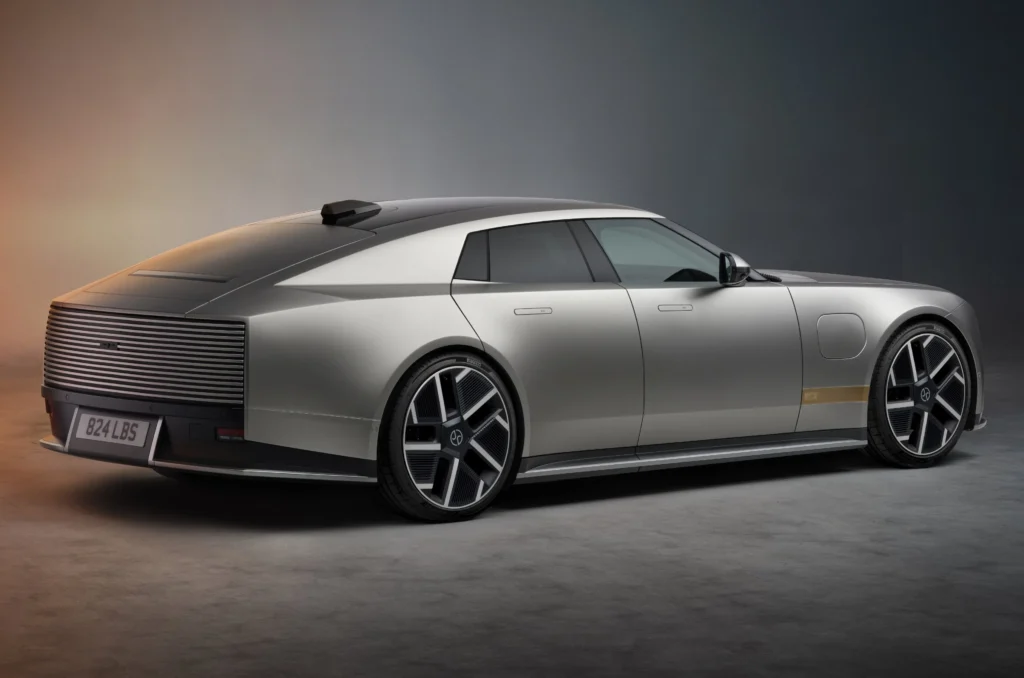
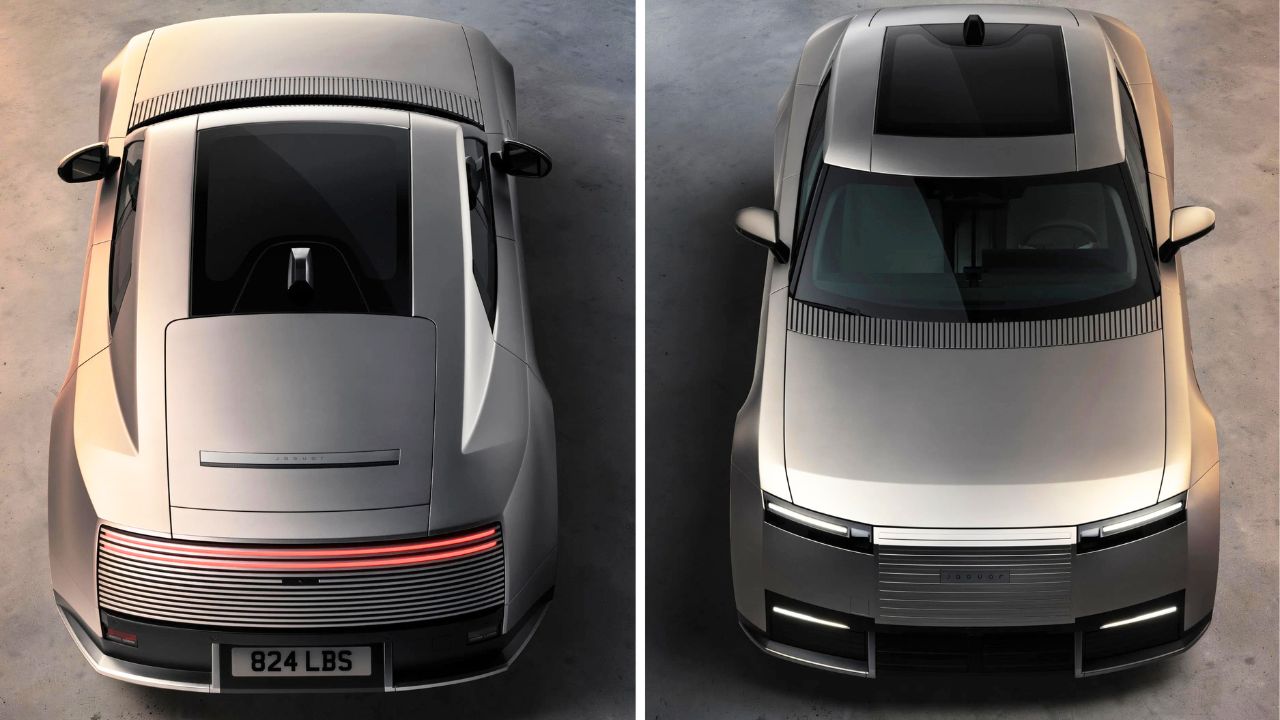
The exterior of the Jaguar Type 01 is a dramatic departure from the brand’s previous models. Its broad front end, long bonnet and muscular bodywork give it a distinctive road presence. The front fascia features Jaguar’s new strikethrough design, which creates the appearance of a grille despite the car’s fully electric powertrain. Active air shutters positioned lower down regulate airflow when additional cooling is required.
Another notable styling feature is the four-line daytime running light arrangement, which could become a defining element of future Jaguar models. The slim headlights contribute to the car’s futuristic appearance, while the absence of the traditional leaping Jaguar emblem on the bonnet creates a cleaner look. Instead, the familiar mascot appears on a brass-like panel positioned on the front fenders.
Despite its upright front section and imposing dimensions, the Type 01 has a claimed drag coefficient of just 0.23. Jaguar has achieved this figure through extensive aerodynamic development, smooth body surfaces and active aerodynamic components. Its long wheelbase of 3.2 metres and overall height of approximately 1,400mm give it a low-slung stance. The massive 23-inch wheels further enhance its proportions, making the car look closer to a dramatic concept vehicle than a conventional four-door luxury GT.
One of the most interesting exterior features is the rear body panel, which Jaguar calls the “impossible panel.” This large aluminium component extends forward along the car’s side and forms the prominent shoulders above the rear wheels. Creating such a deep and complex shape from a single piece of aluminium presented significant manufacturing challenges, but Jaguar developed specialised tooling to make the design possible.
The rear section continues the strikethrough theme across almost the entire width of the car. The tail-lights remain concealed within this surface when the vehicle is switched off, giving the rear a clean appearance. Jaguar has also removed the conventional rear windscreen because the sloping roofline would otherwise provide limited visibility. Instead, a rear-facing camera supplies the view displayed through the digital rearview mirror. An adjustable rear spoiler with three positions changes according to driving speed to help improve aerodynamic efficiency and stability.
The Type 01 features charging ports on both sides, making it easier to connect to charging stations regardless of how the car is parked. At the back, the boot provides approximately 450 litres of luggage capacity, along with additional storage beneath the main boot floor.
Jaguar Type 01 Interior and Features
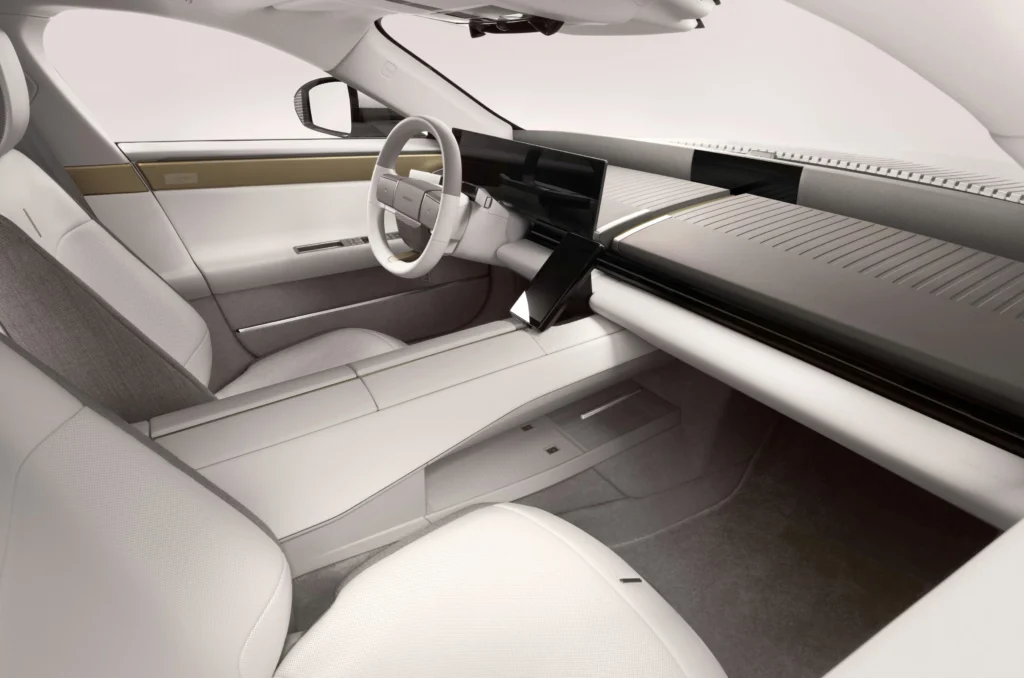
The interior of the Jaguar Type 01 follows a minimalist design philosophy, with premium materials and a layout that emphasises visual simplicity. A prominent central spine divides the cabin into four distinct areas while incorporating storage spaces and controls for rear passengers. The dashboard carries the exterior’s signature strikethrough pattern, while brass-finished elements on the doors add a luxurious touch.
A large 24-inch display combines the instrument cluster and infotainment functions into one continuous screen. Information for the driver is positioned on the right, while functions intended for the front passenger occupy the left side. The central touchscreen manages several vehicle functions, including climate control. However, the limited number of physical buttons means drivers will need to rely more heavily on the touchscreen for everyday adjustments.
The front seats come with heating, ventilation and massage functions, adding to the car’s luxury credentials. Nevertheless, the Type 01’s low roofline affects the driving position and available headroom. Taller occupants may find the space relatively tight, while the shallow windscreen contributes to the car’s distinctive cockpit-like atmosphere.
Rear-seat passengers face more noticeable compromises. The low roof and small side windows restrict the sense of openness, and entering or exiting the rear seats requires some effort because of the unusual body structure. Although the glass roof allows additional light into the cabin, it cannot completely overcome the feeling of limited space. The rear seating arrangement may therefore appeal more to passengers who value privacy and distinctive styling than those seeking generous headroom and an airy cabin.
Jaguar Type 01 Performance and Battery Specifications
The Jaguar Type 01 features a high-performance electric powertrain with three motors, including two mounted at the rear and one at the front. Together, these motors deliver a claimed 1,030hp and 1,365Nm of torque, placing the electric GT among the most powerful luxury EVs in its segment.
Despite weighing approximately 2.7 tonnes, the Type 01 can accelerate from 0 to 100kph in a claimed 3.2 seconds. While some electric performance cars promise even quicker acceleration, Jaguar has focused on delivering strong power throughout the speed range. The company highlights its claimed 100kph to 180kph acceleration time of four seconds as an indication of the car’s high-speed performance.
Power comes from a split battery pack featuring five separate modules and NMC battery chemistry. The battery has a total capacity of 120kWh, of which 118kWh is usable. According to Jaguar, the Type 01 offers a maximum WLTP driving range of up to 720km, although the actual distance will depend on driving conditions, speed, temperature and other factors.
The car uses an 850-volt electrical architecture to support rapid charging. When connected to a compatible 350kW DC fast charger, it can reportedly gain up to 321km of driving range in 13 minutes. Jaguar also claims that charging from 10 percent to 80 percent takes approximately 22 minutes under suitable conditions.
Beyond straight-line performance, the Type 01 incorporates several technologies intended to improve handling and ride comfort. Multiple driving modes allow the driver to adjust the vehicle’s behaviour, while torque vectoring helps distribute power to improve control through corners. Switchable air springs and twin-valve active dampers are designed to balance ride quality with dynamic performance. Rear-wheel steering further improves manoeuvrability, with a claimed wall-to-wall turning circle of 11.5 metres.
Conclusion
The Jaguar Type 01 demonstrates how a radical design can challenge established expectations and gradually change perceptions. Its initial reception reflected the strong connection many enthusiasts have with Jaguar’s traditional ICE cars, but its futuristic appearance has also encouraged people to reconsider what the brand could become in the electric era. As more people examine its proportions, distinctive details and engineering, the car’s unconventional styling may become one of its greatest strengths.
Nevertheless, the Type 01 still faces practical challenges, particularly regarding rear-seat space, visibility and its expected price of around Rs 2 crore in India. Its long-term success will depend on whether the driving experience, technology and build quality live up to the expectations created by its dramatic design. For Jaguar, this is more than a new product launch; it is an attempt to establish a new identity. If the growing appreciation for its design continues, the Type 01 could become an example of how a car that initially divides opinion can eventually win over some of its strongest critics.