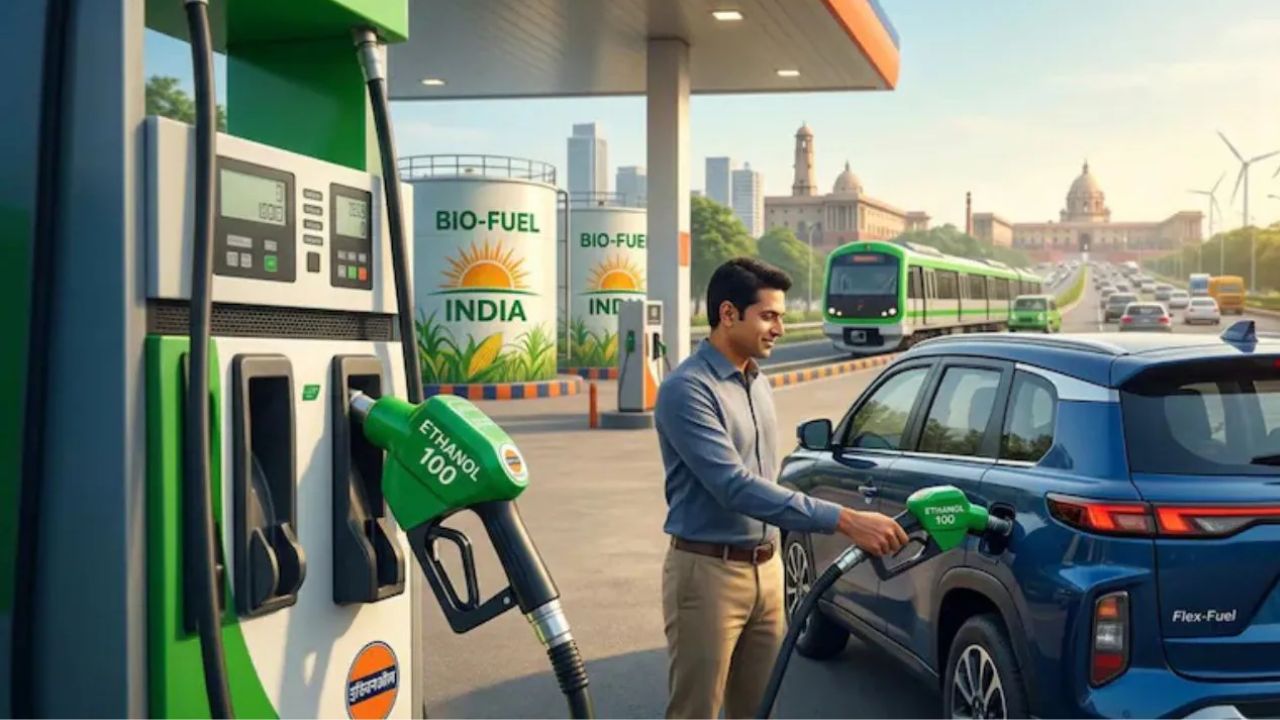
One step closer to cutting fuel imports, India now allows cars to use pure ethanol after new rules cleared on a Thursday evening. Not long ago, just before dinner time, the transport minister put pen to paper on the paperwork needed. That move unlocks the path for drivers to fill up with E100 – straight ethanol, nothing mixed in. The news came out during a speech down in Nagpur, where talk turned to green energy made from sugarcane leftovers. Instead of waiting years, decisions shifted fast once the order was sealed late on June 13, 2026.
India’s push into flex fuel grows from its working ethanol program, opening paths for cars that run on mixes between E20 and pure alcohol. Right now, Maruti Suzuki shows off a new WagonR model built for flexible blends, revealed beside Oil Minister Hardeep Singh Puri – proof things are shifting on the ground. Backing this shift could ease how much crude oil flows into the country, cut fumes from engines, give farmers stronger markets.
India’s Path with Ethanol
For years India has looked to biofuels as a way to ease its energy worries while helping the environment. Starting back in 2003, the Ethanol Blending Programme gained fresh push through the National Policy on Biofuels first set in 2018, then updated in 2022. At first planners aimed for mixing 20% ethanol into fuel by 2030. Because of stronger government actions that goal now fits into the window of 2025–2026 instead.
By late 2025 into early 2026, blended rose hit roughly 19 to 20%, jumping from just 1.5% back in 2014 – reached faster than expected. Because of this shift, India saved heavily; reports point to more than ₹1.7 lakh crore kept from going abroad, along with less carbon released. Most ethanol comes out of molasses tied to sugarcane, though supplies now also tap grains such as rice and maize so production runs without pause all year. Out here, E100 rules clear the path, cars built just for ethanol start rolling, sidestepping the hiccups weaker mixes cause in standard motors.
E100 Definition and Function?
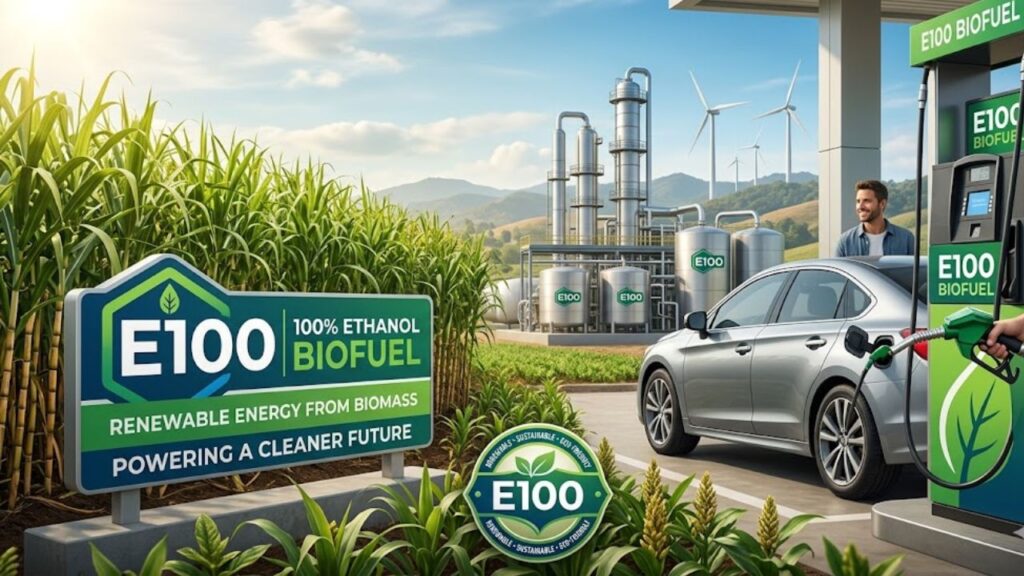
Pure ethanol, known as E100, works best in vehicles built for it. While regular cars run on petrol blends like E20, machines using E100 need special adjustments inside their motors. High octane levels help the fuel burn cleanly. Yet each liter delivers less power compared to gasoline. Because of this difference, drivers may notice more frequent refills even under normal driving conditions.
Because ethanol attracts water and struggles to vaporize when it is cold, flex-fuel cars need special changes. These include tougher parts that resist rust, updated fuel injectors, and tweaks so engines start easily in winter. Instead of standard setups, they rely on altered fuel pathways built for such demands. Meeting India’s clean air rules means each change also has to follow BS6 standards. Real-world driving tests add another layer, making sure emissions stay within legal limits even outside labs.
Approval Key Details
One signature by Gadkari opens doors for car makers, gas stations, and labs. And now they have clear rules to follow when using pure ethanol. Rules cover clean fuel specs, how cars get approved, plus where and how fuel moves through pipes and pumps. Some machines run only on E100, others shift between blends – the system fits them all. From engine checks to pump labels, details are mapped out without guesswork.
Right after the news broke, Maruti Suzuki put forward their WagonR flex-fuel version, designed to operate on fuel mixes as high as E100. Meanwhile, firms such as Toyota, Hyundai, MG, Hero MotoCorp, Bajaj, and TVS are getting ready with matching two- and four-wheeled models. Benefits for India
Most of India’s crude oil comes from abroad – about 85 to 87 percent. That spending adds up near ₹22 lakh crore every year. As local ethanol output grows, using more E100 or stronger mixes may sharply lower import needs. Savings could reach several billion dollars over time.
Smoke from cars gets thinner when ethanol powers engines instead of regular fuel. Because of that, less carbon monoxide slips out the back end. Hydrocarbons take a dip too. Tiny pollution bits floating in the air drop lower. When made from sugarcane, the full journey of ethanol cuts climate-warming gases way down. India aims to balance its emissions by 2070, this helps point toward that target.
Out past harvests find new life through ethanol making. When crops go unused or sugarcane piles up, they still earn money now. Workers gain roles far from cities, where chances often run thin. Money flows into villages – more than 1.4 lakh crore rupees reached farms lately. This shift turns what once sat idle into something that moves.
Price-wise, E100 might come out lower than petrol across several areas, sometimes by around ₹15 to ₹25 a litre, that gap shaped by tax rules and how close you are to where it’s made. Because of this, using it could reduce what people spend to keep moving.
Challenges and Considerations
Despite the positives, several hurdles remain:
- Infrastructure: Widespread E100 dispensing requires dedicated pumps and storage facilities. Initial rollout will likely focus on pilot cities and high-ethanol production states like Maharashtra, Uttar Pradesh, and Karnataka.
- Vehicle Compatibility: Existing petrol vehicles are not suited for E100 without modifications or retrofits. Older engines risk corrosion and performance issues. Widespread adoption depends on new vehicle sales and potential retrofit kits.
- Energy Density and Efficiency: Ethanol’s lower calorific value means vehicles may achieve 20-30% lower mileage, necessitating larger fuel tanks or more frequent refueling.
- Water and Land Use: Expanded sugarcane cultivation raises concerns about water-intensive farming and potential competition with food crops, though policy emphasizes second-generation (2G) ethanol from agricultural waste.
- Cold Start and Emissions: Engineering solutions are needed for reliable performance in diverse Indian climates, particularly in northern winters.
India can draw lessons from Brazil, where flex-fuel vehicles have thrived since the 1970s, with E100 forming a major part of the fuel mix and delivering strong environmental and economic benefits.
Industry Reactions and What Comes Next
Some car makers seem happy with the changes. Flex-fuel progress led by Maruti Suzuki gives it an edge, whereas big scooter brands are testing models that run on pure ethanol. Availability of high-ethanol fuels like E85 and E100 is expected to grow under a plan reaching many fuel stations ahead. Years will tell how far it goes.
One step beyond today, the plan leans into bigger ethanol mixes – maybe even E27 before 2030 – while linking up with options such as hydrogen and electric transport. Running alongside, a test run of hydrogen buses in Nagpur adds another piece to the puzzle.
Broader Implications
Backed by fresh greenlighting, the move highlights a broader push behind self-reliance in India’s power landscape. With sharper support flowing into sugarcane growers, city air may start clearing up more steadily. A tighter web of homegrown fuel sources begins taking shape through these shifts. Growth numbers could rise noticeably thanks to activity blooming across country-level output and factory work tied to alcohol-based fuels and updated transport gear.
Still, getting there means different government parts must work together. Feedstock needs to keep flowing without letup, while people learn more through steady outreach. Pricing shown clearly helps trust grow over time. Checking product standards matters just as much. Rewards for FFV users could tip the slowly.
Key Takeways
A green milestone emerges as Nitin Gadkari clears the way for E100 fuel rules across India. With full-strength ethanol now permitted by law, automakers gain fresh ground to rethink vehicle designs. Farm crops find new purpose beyond fields, linking harvests directly to fuel tanks. Soon, drivers may fill up on spirit distilled from sugarcane instead of crude oil. When Maruti Suzuki prepares its engines for pure ethanol, others follow close behind. Stations must adapt, yet the path forward grows clearer each month. Mobility powered entirely by homegrown chemistry shifts from idea to reality. Change arrives quietly, drop by drop at the pump.
Still, gains like fewer fuel shipments abroad, clearer skies, stronger farming communities, These hint at real promise. Moving ahead, India’s push for E100 sets an example worldwide on blending green progress with financial strength.
Change is near. This stretch ahead matters most – not just for drivers, but for those shaping rules and running fuel operations. If effort holds steady, E100 could anchor how India powers itself years from now. Moments like these don’t come often.