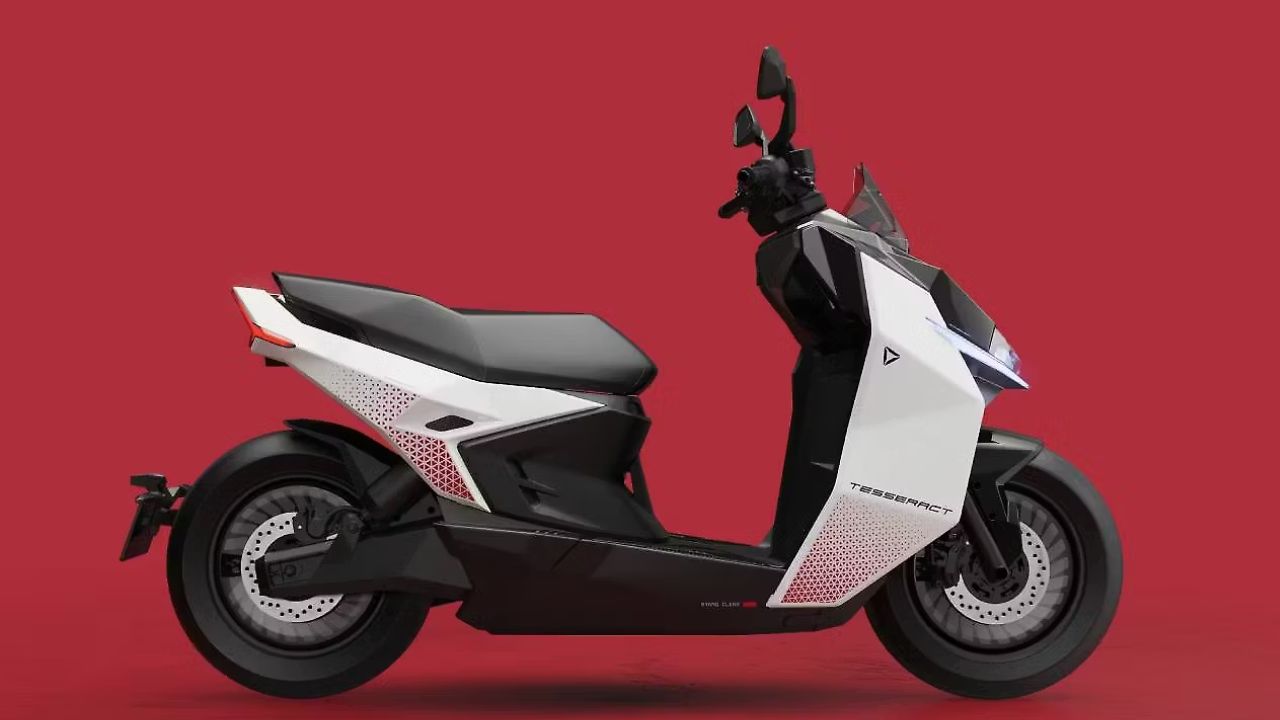
You wanted the ultimate electric scooter. The Ultraviolette Tesseract promised exactly that in March 2025. The company confidently claimed it would be ready by early 2026. That timeline seemed a bit ambitious. The prototype vehicles sat on display platforms. They did not actually ride onto the stage under their own power. Buyers placed over 70,000 bookings based on pure hype. You paid your deposit. You waited patiently for updates. Now, the official launch timeline has completely changed. Ultraviolette officially delayed the Tesseract to January 2027.
This delay frustrated many eager customers. Ultraviolette took a completely different path. They discovered major technical limitations during real world testing. The engineering team originally planned to use the exact powertrain from the popular F77 motorcycle. Using that massive motor inside a scooter chassis caused severe thermal management issues. The heat simply could not escape fast enough. The company refused to sell a compromised product. They scrapped the original powertrain layout entirely. The engineers went back to the drawing board to build something new. This decision caused the delay, but the resulting upgrades are wild.
India’s First 100V Scooter Architecture: Is It Really Worth The Wait?
The primary reason for the delay is a complete architectural overhaul to India’s first 100V high voltage scooter architecture. Conventional electric scooters use simple 48V or 72V systems. The jump to 100V changes the entire performance landscape for two wheelers. This new platform allows Ultraviolette to use significantly smaller and lighter components. The new motor controller sits next to the old F77 unit, looking tiny in comparison. You still get the promised 15kW of peak power. That equals roughly 20 horsepower at your right wrist.
Cooling the battery pack is critical for sustained performance. Engineers switched the cooling method from a basic radial setup to an advanced axial system. This specific change increases thermal conductivity by five times. The battery stays much cooler during hard riding. Faster charging is another massive benefit of this 100V architecture. You can charge the battery from 20 percent to 80 percent in under 30 minutes. This speed eliminates any range anxiety during long weekend rides.
Will The Tesseract Outrun Everything Else On The Road?
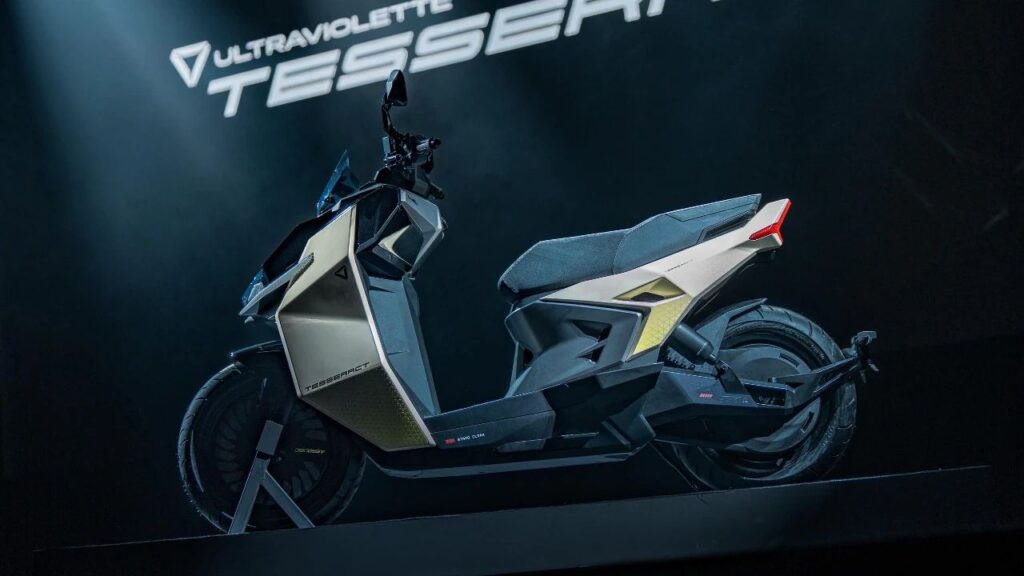
The performance numbers on the final production model are staggering. The belt drive motor pushes the scooter from 0 to 40 km/h in a heart stopping 1.9 seconds. You will reach 60 km/h in just 2.9 seconds. The top speed is capped at 125 km/h, making it highly capable on large expressways. You get four levels of dynamic regenerative braking. You also get two different levels of traction control to keep the rear wheel in check. A dual channel anti lock braking system comes standard across the board.
Ultraviolette will offer three different battery pack sizes to suit your specific budget. The entry level option features a 3.5 kWh battery. You can step up to a 5 kWh battery for longer commutes. The flagship model gets a massive 6 kWh battery pack. This top tier battery provides an astonishing certified range of 261 kilometres on a single charge.
| Battery Pack Size | Expected Range | Key Safety Features |
| 3.5 kWh | 162 km | Dual Channel ABS, Hill Hold Control |
| 5 kWh | 220 km | Front Radar, Front Dashcam, ABS |
| 6 kWh | 261 km | 360 Degree Radar (ARAS), Dual Dashcams |
Finally, A Massive Boot Space You Can Actually Use
The company spent the past year gathering extensive feedback by sending the prototype to multiple dealer showrooms. Riders asked hard questions about daily practicality. Ultraviolette took all that customer feedback very seriously. The design of the final production scooter is now locked in place. The engineers altered the angle of the front body panels. They physically reduced the overall width of the frontal area. Riders felt the original design was far too wide for tight city traffic.
Space and comfort see massive improvements. The new seat is much more spacious for both you and your passenger. The engineering team lengthened the entire subframe to create this extra room. They repositioned the internal bodywork to maximize the floorboard space. The rear section ditches the complicated swingarm mounted hugger. You get a conventional mudguard setup that stops dirt and water spray much more effectively. This changes give riders a cleaner experience during the heavy monsoon season.
The compact high voltage components directly improve the storage capacity. The seat height remains perfectly accessible at 780mm. You pop open the seat to reveal a cavernous 34 litre boot. This storage compartment is genuinely huge.
- The front panels are narrower to slip through dense traffic easily.
- A conventional rear mudguard replaces the messy tire hugger.
- The seat is reprofiled to improve long distance passenger comfort.
- The massive 34 litre boot easily holds your premium full face helmet.
Radar Safety And Integrated Dash Cams Are Built Right In
Safety remains a massive priority. They developed radar safety technology specifically for unpredictable Indian traffic. The flagship 6 kWh variant features a complete 360 degree Advanced Rider Assistance System. This system uses advanced 77 GHz front and rear radar modules. You get blind spot detection, front collision alerts, and rear collision warnings.
The security features go far beyond basic radar warnings. You get factory integrated dash cameras mounted on the front and rear of the scooter. These cameras utilize high quality Sony HDR sensors to record incredibly clear video. The system continuously loops this footage directly into secure on board storage. You never have to worry about buying and mounting aftermarket cameras again.
Are You Going To Pay More For All These Upgrades?
This new platform costs serious money to develop. You probably assume the final price tag will skyrocket. Surprisingly, Ultraviolette promised to honor the original pricing for early supporters. If you already placed a booking for the Tesseract, your starting price remains locked at Rs 1.2 lakh. For new customers, the standard pricing starts at Rs 1.45 lakh for the base 3.5 kWh variant. The fully loaded 6 kWh flagship variant will top out at Rs 2.00 lakh.
Massive demand forced the company to rethink its production strategy. The manufacturer currently builds around 500 to 600 units a month at their existing plant. The Tesseract has over 70,000 pending bookings. Ultraviolette is urgently adding a second production line to increase capacity to 5,000 units a month.
The next few months are absolutely critical. The Tesseract represents a massive leap forward for electric mobility in India. The delay is certainly frustrating for buyers who wanted their scooter this year. However, the switch to a 100V architecture turns this vehicle into a true technological powerhouse. You are getting a much faster, safer, and far more practical machine.