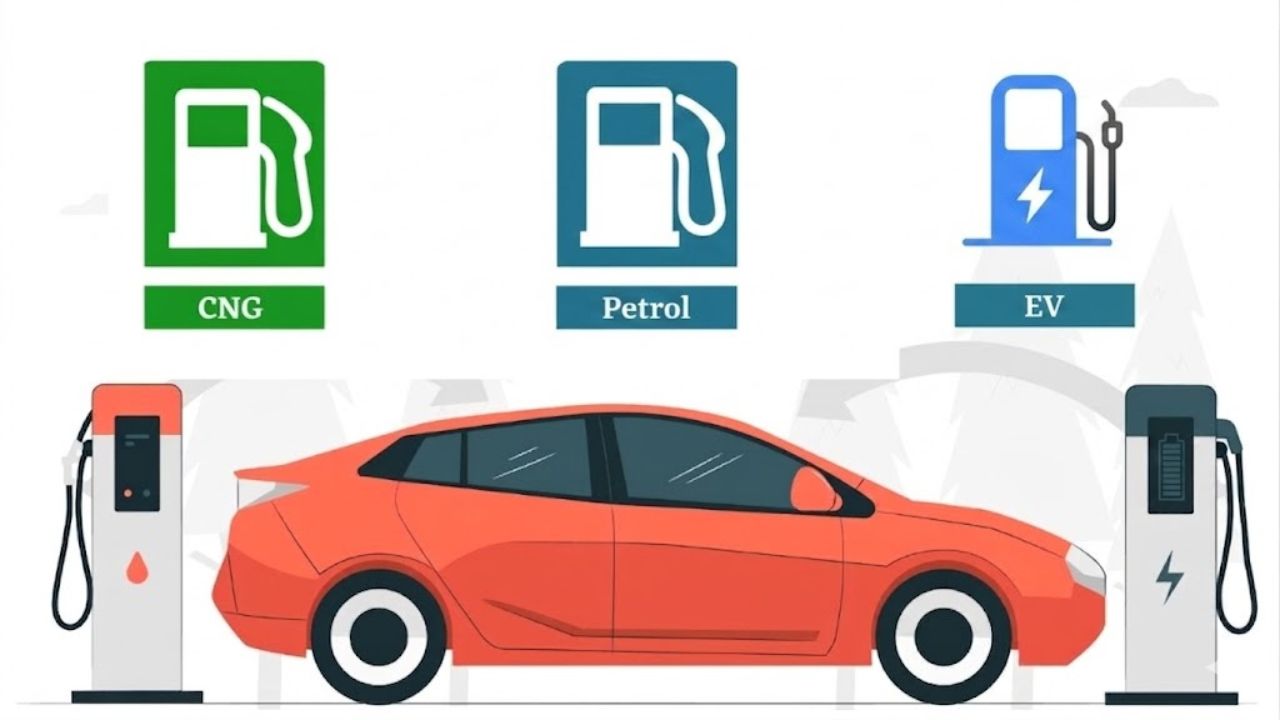
Indian families in 2026 face important decisions when choosing a new car. Rising fuel prices and interest in lower running costs make the comparison between CNG, petrol, and electric vehicles (EV) highly relevant. This detailed analysis examines real five-year ownership costs for popular family cars, drawing data from manufacturers’ official websites and published specifications. Factors include purchase price, fuel or charging expenses, maintenance, insurance, and other ownership elements for typical family usage of around 12,000 to 15,000 kilometers per year.
Understanding Ownership Costs for Family Use
Family cars must balance space, safety, comfort, and economy for daily commutes, school runs, and occasional highway trips. Petrol offers convenience and widespread availability. CNG provides lower fuel costs with factory-fitted options in many models. Electric vehicles promise minimal running expenses and smooth performance but come with higher upfront prices.
Real-world calculations assume average conditions in cities like Delhi or similar locations. Latest fuel prices show petrol around 97 to 100 rupees per litre. CNG stands near 77 to 80 rupees per kg, while home electricity charging averages 6 to 8 rupees per unit. Over five years, these differences accumulate significantly.
Key Factors in 5-Year Ownership Cost
Purchase price forms the largest initial outlay. Petrol variants are usually the most affordable. CNG models add a premium of 70,000 to 1 lakh rupees for the kit and reinforcements. Electric versions carry a higher premium due to battery technology, though government incentives in some cases help narrow the gap.
Fuel or energy costs dominate variable expenses. Petrol cars typically run at 7 to 9 rupees per km with current prices. CNG brings this down to 3.5 to 5 rupees per km. EVs achieve 1 to 2 rupees per km with home charging. Maintenance for petrol and CNG includes regular oil changes and filters, while EVs benefit from fewer moving parts. Insurance tends to be higher for EVs due to battery replacement costs. Depreciation affects resale value, with market preferences evolving toward greener options.
Petrol: Reliable but Costlier to Run
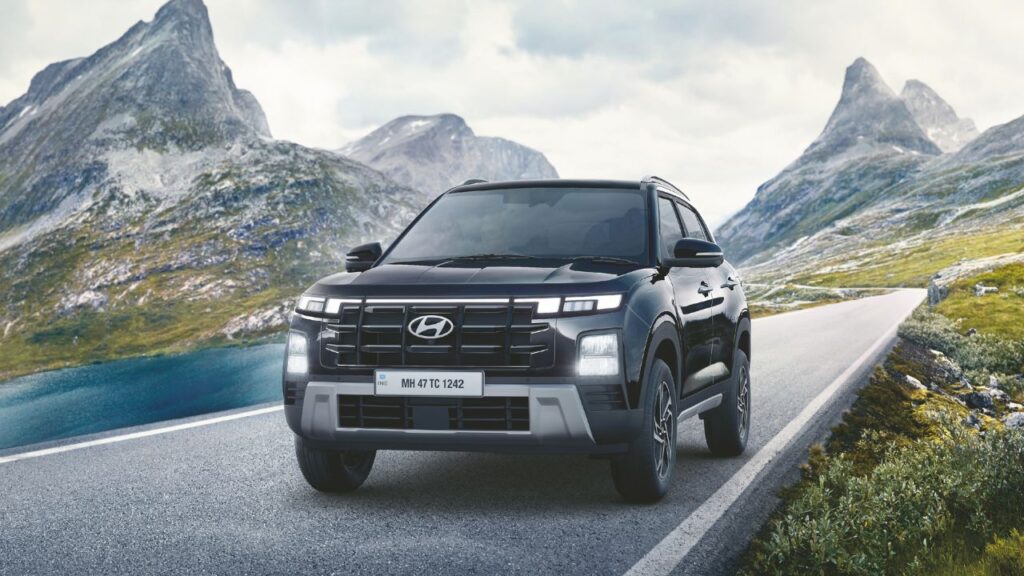
Data from manufacturers’ official websites shows several strong petrol family SUVs.
Tata Nexon Petrol features a 1.2-litre turbocharged engine producing around 120 PS power and 170 Nm torque. It offers real-world mileage of 15 to 17 kmpl and a top speed near 180 kmph. Mid variants start around 8 to 10 lakh rupees ex-showroom.
Maruti Suzuki Brezza Petrol comes with a 1.5-litre engine delivering about 100 to 103 PS and 137 Nm torque. It achieves 17 to 19 kmpl in real-world conditions with a top speed of around 160 kmph. Pricing begins near 8.2 lakh rupees.
Hyundai Creta Petrol uses a 1.5-litre naturally aspirated engine with 115 PS and 144 Nm torque. Real-world mileage hovers between 14 to 16 kmpl and top speed reaches 170 kmph plus. Base and mid variants start from approximately 10.8 lakh rupees.
For these petrol models with 15 to 17 kmpl efficiency, fuel costs over 60,000 km in five years can reach 5.5 to 6.5 lakh rupees or more at current petrol prices near 98 rupees per litre. Maintenance over five years totals approximately 30,000 to 45,000 rupees. Insurance adds another 50,000 to 80,000 rupees cumulatively. Total five-year ownership often exceeds 15 to 19 lakh rupees including depreciation.
CNG: Balanced Economy for High Runners
Factory-fitted CNG variants from brands like Tata and Maruti Suzuki cost 70,000 to 1 lakh rupees more than petrol equivalents.
Tata Nexon CNG uses a 1.2-litre turbo engine producing around 99 to 100 PS in CNG mode with 170 Nm torque. It delivers strong real-world mileage of 17 to 20 km per kg and a top speed near 165 kmph. Prices start from about 8.3 lakh rupees.
Maruti Suzuki Brezza CNG features a 1.5-litre engine offering 87 to 88 PS and 121 Nm torque on CNG. It achieves impressive 22 to 25 km per kg mileage with a top speed of around 159 kmph. It is priced starting near 9 lakh rupees.
These CNG models offer running costs of 3.5 to 5 rupees per km, potentially saving 2 to 3 lakh rupees on fuel over five years compared to petrol for moderate usage. Boot space reduces slightly due to the cylinder, but many families adapt well. Maintenance remains similar to petrol with added CNG-specific checks. Over five years, CNG often emerges as a strong middle ground for families covering 12,000 plus km annually, with total costs competitive after the initial premium recovers within 2 to 3 years.
EV: Lowest Running Costs with Higher Entry
Electric family cars provide instant torque, quiet cabins, and advanced features ideal for family comfort.
Tata Nexon EV comes with 30 kWh and 45 kWh battery options producing up to 142 PS equivalent and strong torque. It offers claimed range of 275 to 489 km with real-world efficiency around 10 to 12 km per kWh. Top speed reaches 160 kmph plus. Prices start from 12.49 lakh rupees ex-showroom as per Tata Motors official data.
Tata Punch EV or similar entry EVs and other models like upcoming options follow similar patterns with efficient motors and ranges suited for family use.
Home charging keeps costs at 1 to 2 rupees per km, leading to energy expenses under 1 lakh rupees for 60,000 km at typical domestic rates. Maintenance drops significantly to 15,000 to 30,000 rupees over five years. Battery warranties often cover 8 years or 1.6 lakh km. While insurance is higher, overall five-year costs can undercut petrol significantly for families with home charging access and daily usage. Public fast charging raises expenses closer to CNG levels.
Advantages of Each Fuel Type
- Petrol delivers unmatched refueling convenience and broad model availability for family needs.
- CNG balances upfront cost with strong fuel savings and lower emissions than petrol.
- EV provides the smoothest drive, near-silent operation, and minimal ongoing expenses.
Considerations for Indian Families
- Home charging infrastructure greatly favors EV ownership economics.
- CNG station availability and wait times matter for daily users.
- Petrol suits those with unpredictable routes or low annual mileage.
- Resale value trends and local incentives should influence the final choice.
Real 5-Year Cost Comparison for Popular Family SUVs
Using mid-variant examples with latest May 2026 fuel prices, here is an approximate breakdown based on company published data and typical real-world figures. Assumptions include 12,000 km annual driving.
| Parameter | Petrol | CNG | EV |
|---|---|---|---|
| Approx. Ex-Showroom Price (₹ Lakh) | 8-11 | 9-12 | 12.5-16 |
| Fuel/Energy Cost (5 Years, ₹) | 5,50,000-6,50,000 | 2,20,000-3,00,000 | 60,000-1,20,000 |
| Maintenance (5 Years, ₹) | 30,000-45,000 | 35,000-50,000 | 15,000-30,000 |
| Insurance (5 Years, ₹) | 50,000-75,000 | 55,000-80,000 | 70,000-1,00,000 |
| Total Est. 5-Year Cost (₹ Lakh) | 15.5-19 | 13.5-16.5 | 14.5-18 |
(Data taken from respective company official websites and published specifications.)
This comparison highlights that EVs often deliver the lowest total cost of ownership for families with access to home charging and moderate to high usage. CNG follows closely, while petrol remains viable for occasional drivers.
Other Ownership Aspects to Evaluate
Beyond numbers, families should consider driving experience. EVs accelerate smoothly and handle well in city traffic. CNG may feel slightly less powerful but offers peace of mind with dual fuel modes in some models. Petrol provides familiar performance.
Charging infrastructure continues expanding, reducing range anxiety for EVs. CNG networks are mature in many states. Service networks for all three are robust from major manufacturers. Resale markets are maturing, with EVs gaining acceptance as technology proves reliable.
Making the Right Choice for Your Family
The best option depends on your specific situation. Families driving over 15,000 km yearly with home charging benefit most from EV. Those in CNG-rich areas with high mileage find excellent value in CNG cars. Low-mileage users may prefer petrol for lower initial investment.
Test drive multiple options and calculate personal numbers using local fuel and electricity rates. Visit authorized dealerships for latest offers, warranties, and variant details from the manufacturers. Government policies and incentives may further influence long-term costs.
In 2026, CNG, petrol, and EV each serve different family priorities effectively. Informed buyers can achieve significant savings while enjoying safe, comfortable, and practical transportation for years ahead. Consider your lifestyle, budget, and future plans carefully before deciding.
Disclaimer: Prices and fuel rates are subject to regional variations and dealer-level updates. Readers are advised to check local dealership quotes before making a purchase.