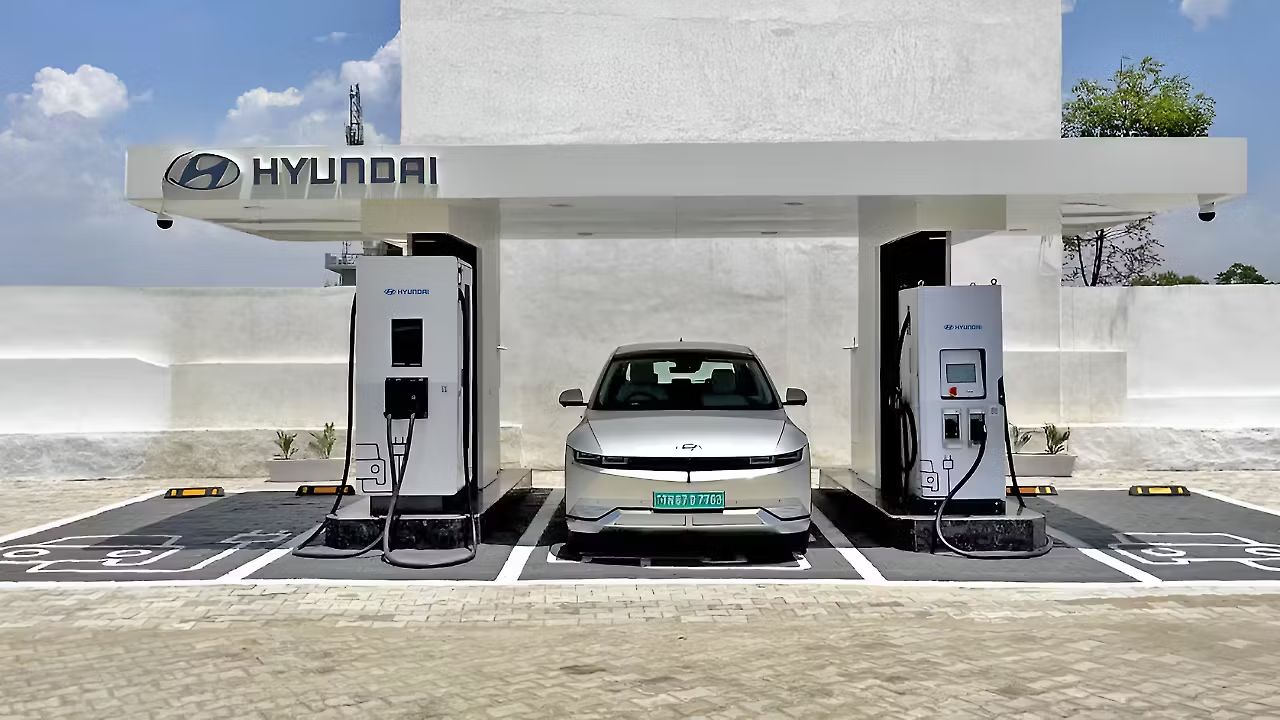
The EV charging station business in India presents a promising opportunity amid the rapid growth of electric vehicles. With increasing EV adoption, rising demand for reliable charging infrastructure, and strong government support, starting an EV charging station can be a profitable venture for entrepreneurs, businesses, and investors. This sector offers recurring revenue with relatively low operational costs once established.
Data presented in this article is taken from government sources and companies’ own published information. Proper planning, location selection, and compliance with standards are essential for long-term success in this emerging industry.
Why Start an EV Charging Station Business Now
India aims for significant EV penetration by 2030, creating massive demand for charging points. The government is actively promoting public charging infrastructure through schemes like PM E-DRIVE. This creates favorable conditions with subsidies, simplified regulations, and growing customer base.
The business model offers multiple revenue streams including charging fees, advertising, partnerships with fleet operators, and potential battery swapping services. With low license requirements and supportive policies, entry barriers are manageable for serious players.
Market Potential and Opportunities
The EV market in India is expanding rapidly across two-wheelers, three-wheelers, passenger vehicles, and commercial fleets. Highways, residential societies, commercial complexes, malls, petrol pumps, and fleet depots are high-potential locations. Tier-2 and tier-3 cities often have high demand but limited infrastructure, offering early-mover advantages. Profitability depends on utilization rates, electricity tariffs, and location footfall. Well-placed stations in high-traffic areas can achieve good returns within a few years.
Types of EV Chargers and Technical Standards
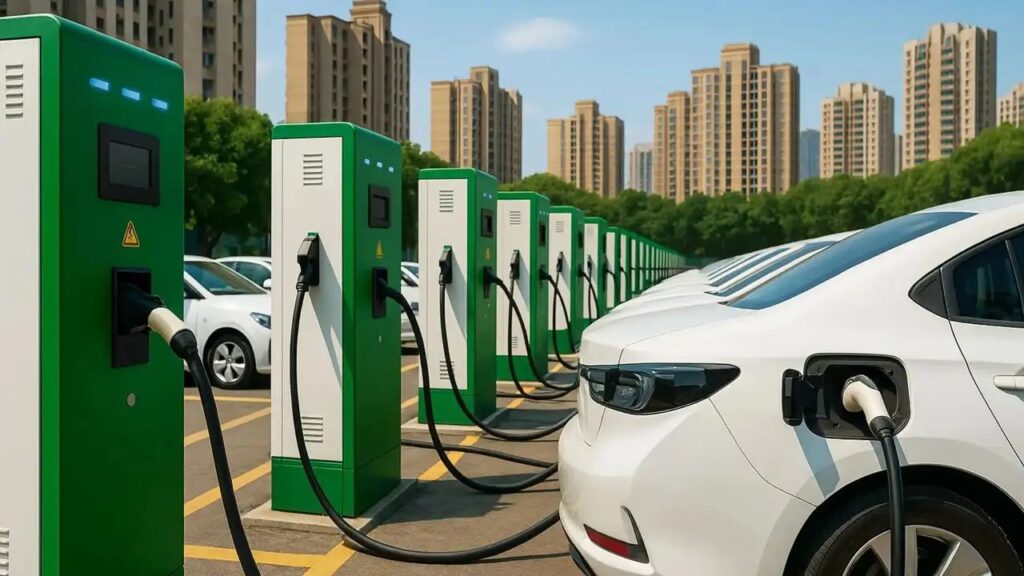
EV chargers in India are broadly classified into AC (slow) and DC (fast) types. According to data from companies’ official sources and government guidelines, common options include:
- Bharat AC-001 and Type 2 AC chargers for slower charging.
- Bharat DC-001 and CCS/CHAdeMO compatible DC fast chargers for quicker top-ups.
All chargers must comply with Bureau of Indian Standards (BIS) and Central Electricity Authority (CEA) guidelines for safety and performance. Using certified equipment ensures reliability and eligibility for government incentives.
Charger Types and Approximate Costs (Data from companies’ published information):
| Charger Type | Power Level | Suitable For | Approx. Cost (per unit) |
|---|---|---|---|
| Bharat AC-001 | Up to 7 kW | 2W, 3W, small 4W | ₹65,000 – 1.2 lakh |
| Type 2 AC | Up to 22 kW | Cars and scooters | ₹1.2 lakh – 2 lakh |
| Bharat DC-001 | Up to 15 kW | Light vehicles | ₹2.5 lakh – 3 lakh |
| DC Fast Charger | 30 kW to 360 kW | Cars, buses, fleets | ₹3 lakh to 20+ lakh |
Step-by-Step Guide to Starting Your EV Charging Station
1. Market Research and Location Selection Identify high-demand areas with sufficient EV traffic but limited charging options. Ideal spots include highways, malls, residential societies, office complexes, petrol pumps, and fleet parking areas. Assess electricity availability, parking space, and footfall before finalizing the site.
2. Business Plan and Financial Projections Prepare a detailed plan covering investment, expected utilization, revenue, and break-even period. Factor in electricity costs, maintenance, and marketing expenses. Many operators start small with AC chargers and scale up to DC fast chargers based on demand.
3. Company Registration and Legal Requirements Register your business as a sole proprietorship, partnership, or private limited company. Obtain GST registration for billing. No special license is required for setting up EV charging stations as per Ministry of Power guidelines, but compliance with local electricity board (DISCOM) rules is mandatory.
4. Power Connection and Infrastructure Setup Apply for adequate sanctioned load from the local DISCOM. Install proper earthing, safety systems, and civil works. For higher capacity stations, transformer upgrades may be needed. Ensure compliance with CEA safety regulations.
5. Procure and Install Chargers Choose BIS-certified chargers from reputed manufacturers. Partner with established networks for software integration, payment systems, and remote monitoring. Professional installation with proper signage and safety measures is essential.
6. Apply for Government Subsidies Utilize schemes like PM E-DRIVE for capital subsidies on equipment and infrastructure. Subsidies can cover a significant portion depending on location and entity type. Check state EV policies for additional incentives like lower electricity tariffs.
Investment Required
Setup costs vary widely based on scale and charger types. According to industry published data:
- Small AC charger setup: ₹1 lakh to ₹5 lakh
- Basic public station with DC chargers: ₹10 lakh to ₹50 lakh
- Large highway or fleet station: ₹1 crore and above
Costs include chargers, civil and electrical works, power infrastructure, permits, and initial marketing. Government subsidies can substantially reduce the effective investment.
Revenue Model and Profitability
Primary revenue comes from charging fees, typically charged per kWh or per session. Additional income can be generated through partnerships, advertising on the station, and value-added services. Utilization rate is the key factor for profitability. Stations with 20-30% utilization can achieve healthy returns. Operational expenses mainly include electricity, maintenance, rent (if any), and software fees. Many operators report payback periods of 2 to 4 years in good locations.
Challenges and Key Considerations
- High initial capital for fast chargers
- Dependency on EV adoption growth in the area
- Electricity tariff variations and demand charges
- Competition from established players
- Maintenance and downtime management
Mitigate risks by starting with a pilot station, choosing strategic locations, and partnering with experienced operators or franchise models.
Pros and Cons
Advantages of EV Charging Station Business:
- Growing demand with government push
- Recurring revenue with low daily operations
- Multiple subsidy and incentive options
- Scalable business model
- Contribution to green mobility
Points to Consider:
- Location is critical for success
- High dependency on reliable power supply
- Initial capital requirements can be substantial
- Need for technical knowledge or reliable partners
Comparison with Similar Green Energy Businesses in India
The EV charging station business falls under the broader green energy and sustainable mobility sector. It competes for investment with solar power installations, battery swapping stations, and EV dealerships in the same investment range.
Key Comparison Table (Data from industry and government published sources):
| Parameter | EV Charging Station | Solar Power Plant | Battery Swapping Station |
|---|---|---|---|
| Investment Range | ₹1 lakh – 1 crore+ | ₹5 lakh – 1 crore+ | ₹50 lakh – few crore |
| Revenue Model | Per kWh charging | Energy sales/feed-in | Subscription/swaps |
| Government Support | High subsidies | Strong incentives | Growing support |
| Operational Complexity | Moderate | Low | Higher |
| Payback Period | 2-4 years | 4-6 years | 3-5 years |
EV charging stations offer good balance of investment and returns for entrepreneurs focused on mobility infrastructure, while solar provides more passive income.
Starting an EV charging station business in India requires careful planning, strategic location selection, and adherence to technical standards. With strong government backing and rising EV numbers, the sector holds excellent potential for sustainable profits. Begin with thorough research, consult local DISCOM officials, and explore subsidy options before investing. Success depends on execution quality and adapting to evolving market needs. For personalized guidance, connect with established charging network operators or government nodal agencies.