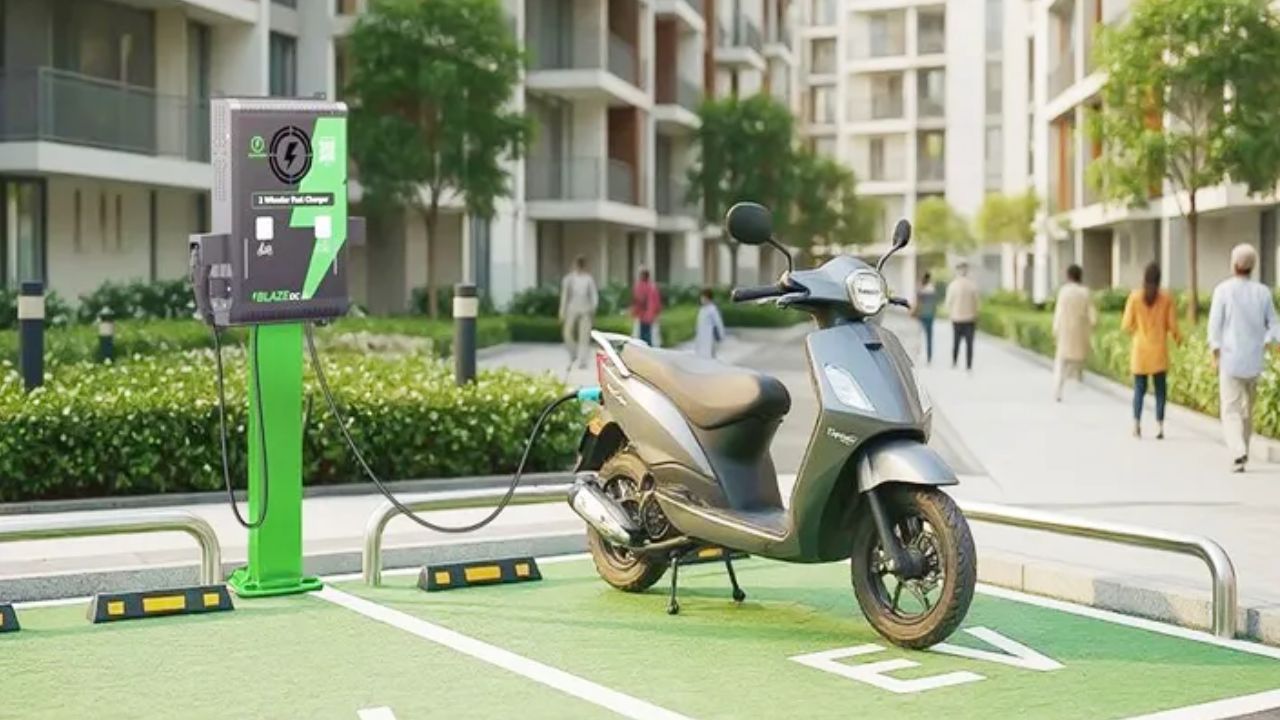
Haryana’s Town and Country Planning Department has proposed amendments to the state’s Building Code 2017 that would make EV-ready parking infrastructure mandatory across all new residential and commercial construction projects. The draft, currently open for public consultation, also extends its scope to renovated buildings, group housing societies, IT parks, and large commercial complexes. If approved, the rules would require developers to plan for EV charging infrastructure at the design and planning stage itself, rather than retrofitting it as an afterthought. The move signals a meaningful shift in India’s EV policy approach, from vehicle-side incentives toward building charging access into the built environment from the ground up.
Key Proposed Requirements at a Glance
| Building Type | Minimum EV Charging Requirement |
|---|---|
| Commercial Buildings (offices, malls, hotels) | 1 charging point for every 3 parking spaces |
| Residential and Group Housing Projects | 1 charging point for every 5 parking spaces |
| Basement and Stilt Parking | EV chargers permitted if fire safety norms are met |
| Floor Area Ratio | EV charging infrastructure excluded from FAR calculations |
| Scope | New buildings and renovated buildings |
What the Draft Proposes
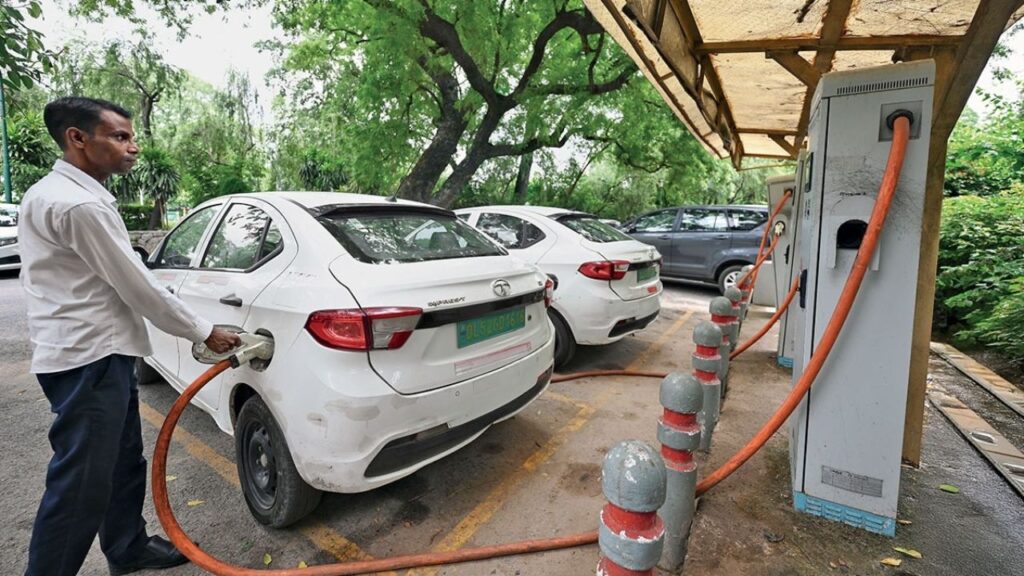
The draft goes beyond basic EV readiness. Rather than simply requiring conduit and wiring to be laid for future use, it sets specific ratios of charging points to parking spaces that developers must comply with across different building categories.
For commercial buildings such as offices, shopping malls, and hotels, at least one functional EV charging point must be provided for every three parking spaces. This is a notably high requirement that would make EV charging genuinely accessible across commercial destinations rather than token installations.
For residential and group housing projects, the requirement is one charging point for every five parking spaces, recognising that home charging is one of the most important enablers of EV adoption for private vehicle owners.
For basement and stilt parking areas, the draft permits EV charger installation provided fire safety norms are satisfied, removing a common barrier that has historically limited charging infrastructure in multi-storey residential and commercial complexes.
To reduce the financial and compliance burden on developers, EV charging infrastructure will be excluded from floor area ratio calculations, meaning developers will not be penalised with reduced saleable space for including charging infrastructure in their projects.
Why This Matters for EV Adoption
The proposed amendments represent a structural shift in how India approaches EV infrastructure policy. Most EV incentives to date have focused on the vehicle purchase side through subsidies, reduced GST, and registration benefits. The Haryana proposal targets the other side of the equation: ensuring that buyers of electric vehicles have reliable access to charging at home, at work, and at the destinations they visit regularly.
Research consistently shows that home and workplace charging availability is one of the most significant factors in a buyer’s decision to switch to an electric vehicle. By mandating charging-ready infrastructure in new buildings, the policy removes one of the most common objections to EV ownership before it even arises.
Industry Response
Akshit Bansal, Founder and CEO of Statiq, one of India’s prominent EV charging network operators, welcomed the proposed amendments. He noted that enabling EV charging stations in basements and across residential and commercial projects statewide would be a significant step forward for EV infrastructure accessibility in Haryana.
Pros and Cons of the Proposed Policy
| Pros | Cons |
|---|---|
| Builds EV charging into new construction from the planning stage | Currently a draft proposal, not yet approved or enforceable |
| High commercial ratio of 1 charger per 3 spots ensures genuine accessibility | Compliance costs may be passed on to buyers and tenants |
| FAR exclusion reduces financial burden on developers | Fire safety compliance for basement chargers may slow adoption in older layouts |
| Covers both new and renovated buildings for broader impact | Implementation and enforcement mechanisms not yet detailed |
| Supports long-term EV adoption without ongoing government subsidies | Applies only to Haryana, not a national mandate |
The Haryana Building Code amendment proposal is one of the more forward-thinking EV infrastructure policy moves seen at the state level in India. By mandating charging points at defined ratios across both residential and commercial developments, and by including renovated buildings in the scope, it creates a compounding effect where charging access grows organically as new construction continues across the state. If approved and implemented effectively, it could serve as a model for other states looking to accelerate EV adoption by addressing infrastructure gaps at their root rather than relying solely on vehicle-side incentives.