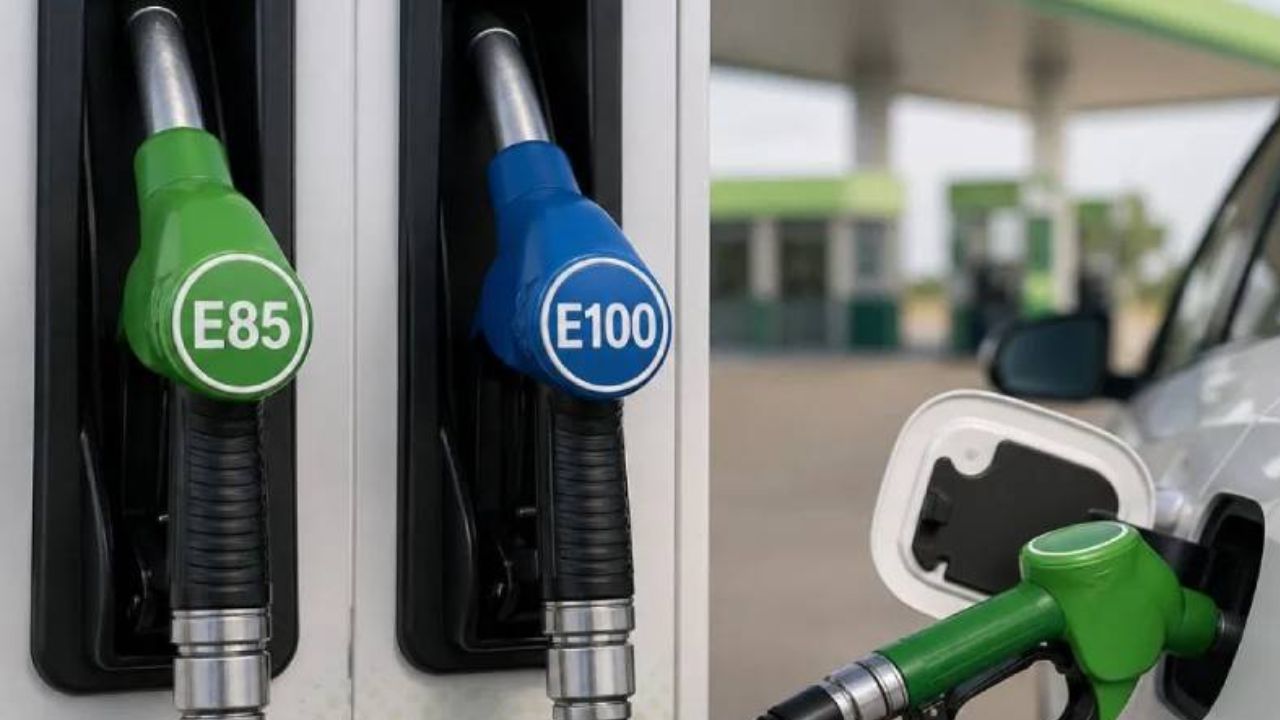
The Indian government has issued a draft notification proposing amendments to the Central Motor Vehicles Rules to formally incorporate higher ethanol blends in petrol, up to and including E85 and E100, within the country’s regulatory framework. The draft is currently open for public comments, after which a final decision will be taken. The move follows the nationwide rollout of E20 fuel in April last year and reflects the government’s broader push to reduce dependence on crude oil imports, a goal that has taken on added urgency amid supply disruptions triggered by the ongoing Iran-US conflict.
What the Draft Notification Proposes
The draft covers several distinct areas beyond introducing higher ethanol blends into the fuel mix.
Revised Fuel Classification Framework:
| Fuel Type | Current Classification | Proposed Classification |
|---|---|---|
| Petrol | E10/E | E10/E20 with E85 and E100 explicitly included |
| Biodiesel | B10 | B100 covering up to 100 percent biodiesel |
| Hydrogen Fuel | Hydrogen + CN | Hydrogen + CNG |
Additional Proposals in the Draft:
- Standardisation of emission-testing parameters and technical terminology across the rules
- Gross vehicle weight threshold increased from 3,000 kg to 3,500 kg in select vehicle categories
- Revised hydrogen fuel classification from Hydrogen + CN to Hydrogen + CNG
Ethanol Blend Roadmap: Where India Stands
| Blend | Ethanol Content | Status in India |
|---|---|---|
| E10 | 10 percent | Already standard nationwide |
| E20 | 20 percent | Nationwide rollout from April 2025 |
| E85 | 85 percent | Proposed under new draft notification |
| E100 | 100 percent | Proposed under new draft notification |
What It Means for Consumers and the Auto Industry
Moving to higher ethanol blends carries significant technical and practical implications for vehicle manufacturers, fuel retailers, and end consumers alike.
For Existing Vehicles: Cars manufactured after April 2023 are E20-compliant and materially compatible with blends of up to 30 percent ethanol. Blends beyond that level will require manufacturers to redesign specific engine components to handle the higher ethanol content reliably without accelerated wear or corrosion.
Technical Challenges for OEMs:
- Higher ethanol content increases moisture absorption in the fuel system, raising the risk of accelerated corrosion in fuel lines, injectors, and engine components
- Ethanol’s lower energy density compared to petrol means that higher blends will result in reduced engine output and lower fuel efficiency
- Flex-fuel vehicles capable of running on E85 or E100 carry higher production costs than conventional petrol vehicles, which will likely translate into higher prices for consumers
For Fuel Retail Infrastructure: A nationwide E85 rollout would require fuel stations across the country to install separate storage tanks for regular petrol and high-ethanol blends, along with dedicated dispensing equipment for each fuel type. This represents a substantial capital investment at the retail level before E85 can become practically accessible to the average driver.
Pros and Cons of Higher Ethanol Blending
| Pros | Cons |
|---|---|
| Reduces India’s dependence on crude oil imports directly | Lower energy density means reduced mileage at higher ethanol content |
| Supports domestic ethanol production and the agricultural economy | Engine components need redesigning for blends above E30 |
| Lowers carbon emissions compared to pure petrol combustion | Flex-fuel vehicles cost more to manufacture and buy |
| Reduces vulnerability to global crude oil supply disruptions | Fuel station infrastructure requires major investment to support E85 |
| Aligns with India’s long-term energy security objectives | Corrosion risk in fuel systems increases significantly at higher blends |
The draft notification on higher ethanol blends is a logical and expected next step in India’s ethanol blending programme, which has progressed steadily from E5 to E10 to E20 over the past decade. Bringing E85 and E100 into the regulatory framework formally opens the door for flex-fuel vehicles to become a mainstream option in India, and reduces the country’s exposure to the kind of crude oil supply volatility that the ongoing Iran-US conflict has highlighted. However, the technical demands on manufacturers, the infrastructure investment required at fuel retail level, and the real-world efficiency trade-offs of higher ethanol blends mean that the transition from a draft notification to widespread E85 availability will take several years. The outcome of the public consultation process will play an important role in shaping how and how quickly these rules are finally brought into effect.