Battery-as-a-Service (BaaS) has emerged as a practical solution to one of the primary barriers to electric vehicle (EV) adoption in India: the high upfront cost driven largely by the battery pack. By separating the battery from the vehicle purchase through a subscription model, manufacturers allow buyers to pay a significantly lower initial amount for the car while covering battery usage through a per-kilometer fee. This approach makes EVs more accessible, particularly for buyers concerned about battery depreciation, maintenance, or long-term ownership costs. As of June 2026, six major mass-market manufacturers: Citroen, MG Motor, Maruti Suzuki, Kia, Tata Motors, and Toyota offer BaaS options across several models, covering everything from affordable hatchbacks to family-oriented MPVs and SUVs.
The BaaS model typically involves the manufacturer or a financing partner retaining ownership of the battery, with the customer paying a usage-based rental fee. This often includes warranties and maintenance for the battery pack. While it reduces entry costs substantially, buyers must consider their annual mileage, as higher usage increases monthly expenses. The schemes have gained traction, helping boost sales in a market where EV penetration continues to grow amid improving infrastructure and policy support.
Citroen eC3X: Most Affordable BaaS Entry
Citroen introduced its BaaS scheme for the eC3X in June 2026, making it one of the most cost-effective options for budget-conscious buyers. The scheme slashes the upfront price by up to Rs 5.26 lakh, with the entry-level Live variant available at Rs 6.89 lakh plus a battery subscription fee of Rs 2.26 per km. The lowest per-kilometer rate among current offerings. There is a minimum monthly commitment of 2,000 km (Rs 4,520), with additional charges applying beyond that. Non-BaaS buyers can avail introductory discounts bringing prices down to Rs 10.49 lakh ex-showroom.
The eC3X retains its practical hatchback design, efficient electric powertrain, and family-friendly features, making the BaaS variant attractive for city commuters.
Citroen eC3X Ex-Showroom Prices (in Rs)
| Variant | Non-BaaS Price | BaaS Price | Upfront Cost Saving |
|---|---|---|---|
| Live | 11.99 lakh | 6.89 lakh + 2.26 per km | 5.10 lakh |
| Live (O) | 12.35 lakh | 7.09 lakh + 2.26 per km | 5.26 lakh |
| Shine | 13.26 lakh | 8.30 lakh + 2.26 per km | 4.96 lakh |
Tata Tiago EV and Punch EV: Accessible Everyday Options
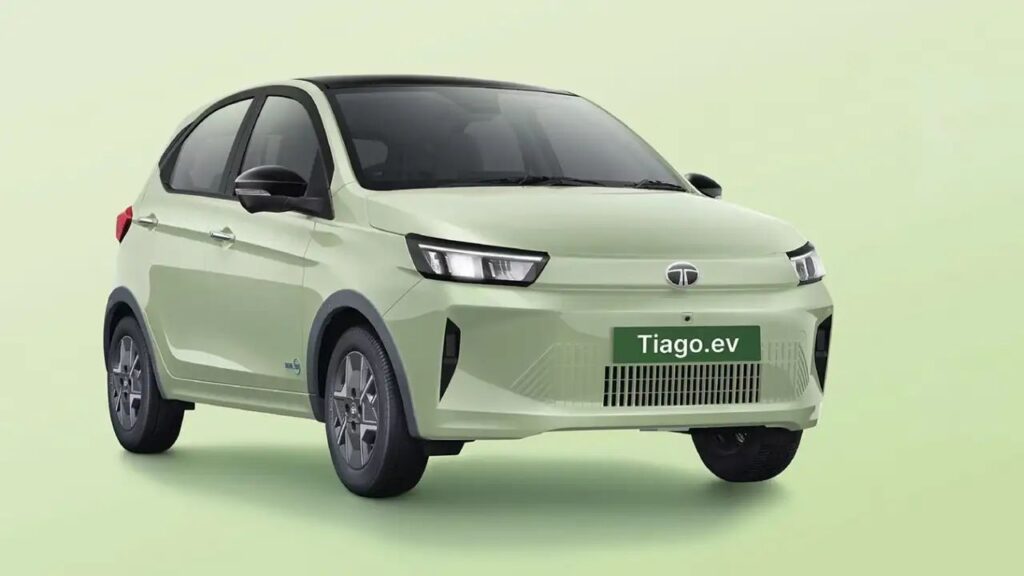
Tata Motors, a pioneer in mass-market EVs in India, offers BaaS on the Tiago EV and Punch EV. The Tiago EV, India’s most affordable electric car with non-BaaS prices starting at Rs 6.99 lakh, becomes even more accessible at Rs 4.69 lakh under BaaS with a Rs 2.6 per km fee. This represents a saving of Rs 2.30 lakh on the base Smart 19 variant. Full variant-wise details for higher trims were still being finalized at the time of recent updates.
The Punch EV, a more rugged micro-SUV option, starts at Rs 6.49 lakh under BaaS for the Smart 30 kWh variant (non-BaaS from Rs 9.69 lakh), also with a Rs 2.6 per km subscription. This saves Rs 3.20 lakh upfront, appealing to buyers seeking higher ground clearance and practicality without the full battery ownership burden. These Tata models benefit from the company’s established service network and proven battery technology, making BaaS a low-risk entry into EV ownership.
MG Motor: Leading with Multiple BaaS Offerings
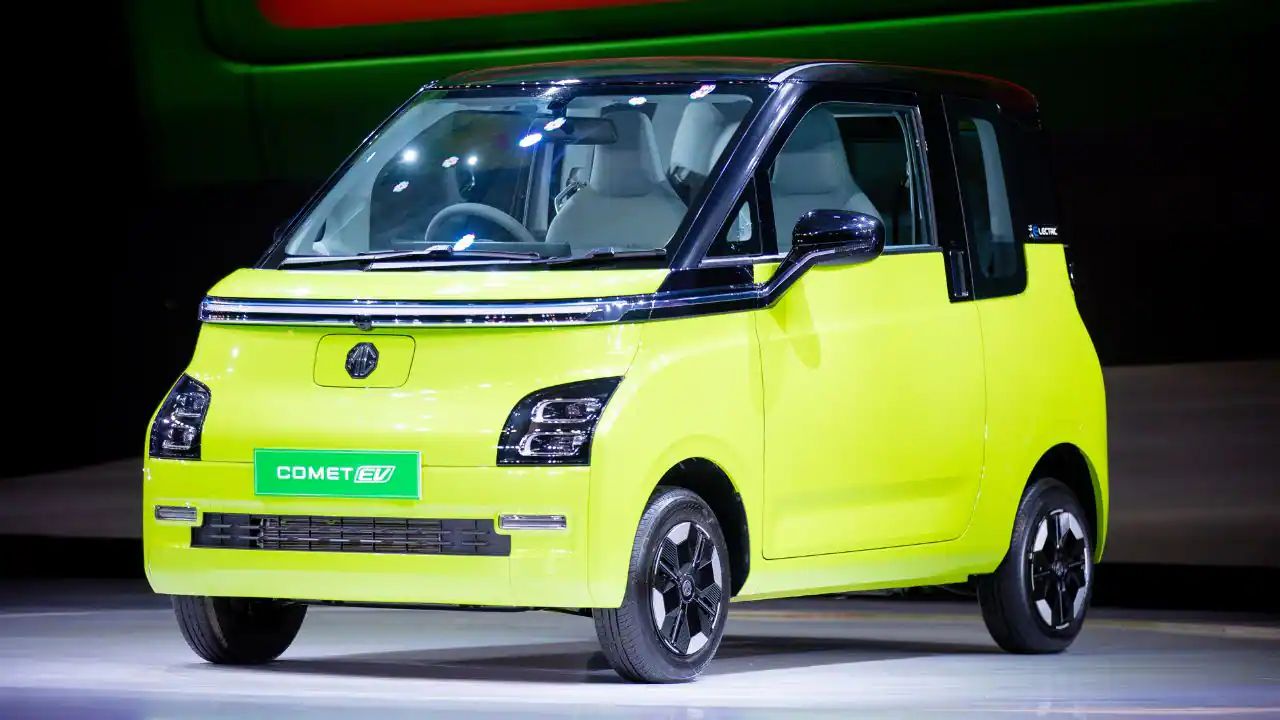
MG Motor has been aggressive with BaaS, rolling it out across the Comet EV, Windsor EV, and ZS EV. The compact Comet EV starts at Rs 4.99 lakh under BaaS (non-BaaS from Rs 7.63 lakh) with a Rs 3.2 per km fee, offering savings of Rs 2.64 lakh across variants. Its small footprint and city-friendly nature suit buyers with moderate usage.
MG Comet EV Ex-Showroom Prices (in Rs)
| Variant | Non-BaaS Price | BaaS Price | Upfront Cost Saving |
|---|---|---|---|
| Executive 17.3 kWh | 7.63 lakh | 4.99 lakh + 3.2 per km | 2.64 lakh |
| Excite 17.3 kWh | 8.73 lakh | 6.09 lakh + 3.2 per km | 2.64 lakh |
| Excite 17.4 kWh | 9 lakh | 6.36 lakh + 3.2 per km | 2.64 lakh |
| Exclusive 17.3 kWh | 9.73 lakh | 7.09 lakh + 3.2 per km | 2.64 lakh |
| Exclusive 17.4 kWh | 10 lakh | 7.36 lakh + 3.2 per km | 2.64 lakh |
The Windsor EV, a popular crossover, offers BaaS from Rs 9.99 lakh with fees of Rs 3.9 per km (38 kWh) or Rs 4.5 per km (52.9 kWh), delivering savings up to Rs 5 lakh. The ZS EV, a midsize SUV, starts at Rs 13 lakh under BaaS with a Rs 4.5 per km fee and savings up to Rs 5.24 lakh. MG’s extensive BaaS portfolio demonstrates confidence in battery longevity and customer satisfaction.
Maruti Suzuki e Vitara: Mainstream Push with BaaS
Maruti Suzuki entered the EV space with the e Vitara, offering BaaS to leverage its vast dealer network. Prices start at Rs 10.99 lakh for the Delta 49 kWh variant (saving Rs 5 lakh) with a Rs 3.99 per km fee. Higher Zeta and Alpha 61 kWh variants are priced at Rs 12.29 lakh and Rs 14.49 lakh under BaaS respectively, with a Rs 4.39 per km fee and savings of Rs 5.5 lakh. The model’s efficient LFP batteries and claimed ranges make it suitable for varied usage patterns.
Kia Carens Clavis EV: The MPV Option
Kia stands out by offering BaaS on the Carens Clavis EV, the only MPV in this list. Launched in May 2026, it provides savings of Rs 5.16 lakh on the HTK+ 42 kWh (Rs 12.84 lakh BaaS) and Rs 6.06 lakh on the HTX E ER 51.4 kWh (Rs 15.94 lakh BaaS), with a uniform Rs 3.3 per km fee. This makes family-oriented electric mobility more affordable for larger households.
Toyota Urban Cruiser Ebella: Premium BaaS Entry
Toyota’s first India-specific EV, the Urban Cruiser Ebella, offers BaaS on its top E3 variant with a 61 kWh battery. The upfront price drops to Rs 15.25 lakh (saving around Rs 8.35 lakh from Rs 23.60 lakh) with a Rs 4.99 per km fee. As the premium offering in the list, it targets buyers seeking Toyota’s renowned reliability alongside lower initial outlay.
Summary of BaaS Benefits and Considerations
BaaS schemes collectively reduce upfront costs by Rs 2-8 lakh depending on the model, broadening the appeal of EVs. They often bundle battery warranty and maintenance, mitigating concerns over long-term battery health. However, total ownership costs depend heavily on mileage lower-mileage users benefit most, while high-usage drivers may find cumulative fees substantial over time. Buyers should also evaluate resale implications, as the vehicle without battery ownership may have different market dynamics.
The adoption of BaaS by leading manufacturers signals a maturing EV ecosystem in India. As infrastructure expands and more models join the fray, these schemes are likely to play a pivotal role in accelerating the transition to electric mobility. Prospective buyers are advised to calculate personal usage patterns and consult dealers for the latest terms, state incentives, and full variant availability, as some details continue to evolve. With options spanning multiple segments and price points, BaaS is helping make EVs a viable choice for a wider cross-section of Indian consumers.