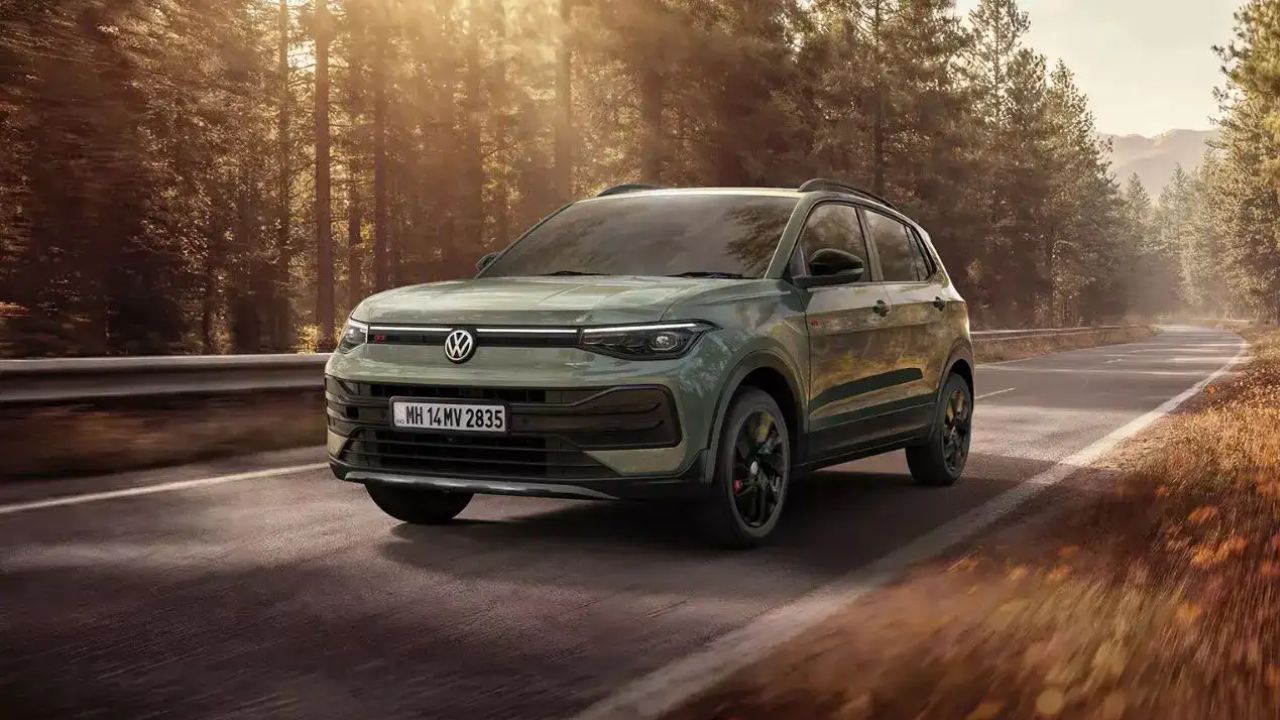
Most compact SUVs in India today are designed to impress you in the first five minutes. Large screens, feature-loaded dashboards, plush rides and eye-catching interiors are all carefully engineered to land a strong first impression. The Volkswagen Taigun has never worked that way. It never tried to win you over immediately. And with this facelift, it still does not. There are visual updates, a larger digital cockpit, a panoramic sunroof and a significant powertrain change for the 1.0 TSI variant. But the core of this car, what makes it different, is unchanged. We drove it across a demanding route from Bhuj to Dholavira and onward toward Udaipur to find out whether that is still enough in 2026.
2026 Taigun Facelift: What Is New at a Glance
The facelift brings a set of updates that feel measured rather than dramatic, which is very much in keeping with Volkswagen’s approach to this car. The changes address the areas where the Taigun was beginning to feel dated without altering the fundamentals that have always defined it.
Key changes in the 2026 Volkswagen Taigun facelift include:
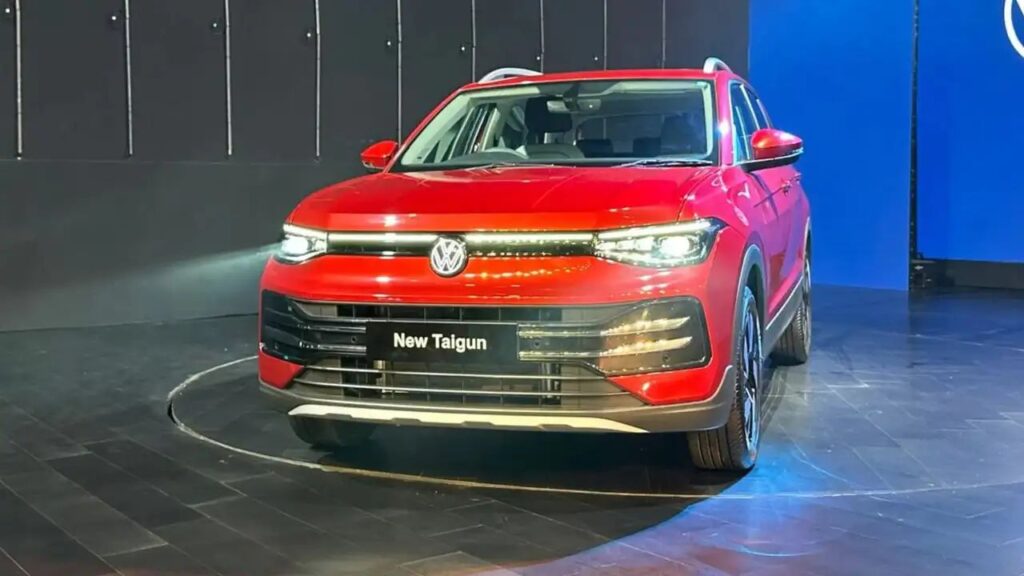
- New light band across the grille with illuminated Volkswagen logos front and rear
- Updated LED daytime running light signatures for a more contemporary look
- Slightly refreshed exterior stance
- Larger digital cockpit display replacing the older setup
- Panoramic sunroof added, now almost expected in this segment
- Updated infotainment system with wireless Android Auto and Apple CarPlay
- Front seat ventilation added for better comfort in warmer climates
- New 8-speed torque converter automatic gearbox for the 1.0-litre TSI engine, replacing the older 6-speed unit
The interior feels fresher and more current than before. The digital cockpit is clear, configurable and well-integrated into the dashboard. Material quality remains solid, and the build feels robust, two areas where the Taigun has consistently performed well over its lifecycle.
How It Drives: Precision and Composure on a Demanding Route
The real test of any car is not a suburban car park or a smooth ring road. We drove the Taigun across long open highways, broken road patches, uneven surfaces and stretches that demand genuine ability from a chassis. The route from Bhuj to Dholavira and onward toward Udaipur provided exactly that kind of variety, and within the first few kilometres, the Taigun began to make its case.
The MQB A0 IN platform continues to be the foundation of everything that makes this car stand apart in its segment. The steering responds immediately when you turn in, with none of the softness or delay that characterises many of its rivals. Once you are committed to a corner, the car settles into a line and holds it without requiring constant micro-corrections. It simply stays where you put it, and that quality builds confidence quickly.
The ride sits on the firmer side of the spectrum. Sharp edges and broken patches are more noticeable than they would be in a car tuned primarily for comfort. But the Taigun never feels unsettled. It absorbs impacts, regains composure and continues without fuss. The faster you travel, the better it begins to feel. On open roads, there is a planted, tied-down quality to its movement that softer rivals cannot match. Drive something Korean or Indian in the same segment immediately after, and the contrast becomes clear. Those cars feel easier and more impressive at lower speeds. But as speeds rise, the Taigun’s fundamentally superior composure becomes apparent.
Engine Options Compared: 1.0 TSI vs 1.5 TSI
The 2026 Taigun continues with two engine options, but the character split between them is now more pronounced than ever. The most significant mechanical change in this facelift is the pairing of the 1.0-litre TSI with a new 8-speed torque converter automatic, replacing the older 6-speed unit. This changes the driving character of that variant considerably.
| Specification | 1.0-litre TSI (Automatic) | 1.5-litre TSI (DSG) |
|---|---|---|
| Displacement | 999cc | 1498cc |
| Peak Power | 115 bhp | 148 bhp |
| Peak Torque | 178 Nm | 250 Nm |
| Gearbox | 8-speed Torque Converter Automatic (new) | 7-speed DSG |
| Character | Smooth, refined, city-friendly | Engaging, responsive, performance-focused |
| Cylinder Deactivation | No | Yes |
| Best Suited For | Daily commuters, city driving | Highway driving, driving enthusiasts |
The new 8-speed automatic makes the 1.0 TSI noticeably smoother in city conditions. It creeps more naturally in traffic, is less abrupt at low speeds and requires less driver attention overall. However, when you push it, the response is more relaxed than before. There is a slight delay when you demand performance quickly, a trade-off that comes with the torque converter’s inherently different character compared to a dual-clutch unit.
The 1.5 TSI with the DSG remains the definitive Taigun experience. The mid-range is strong, the pull through the rev range is clean and there is enough top-end performance to keep things genuinely engaging. The gearbox shifts are quick and seamless, maintaining the car’s rhythm without interruption. Cylinder deactivation operates transparently in the background, improving efficiency on long runs without the driver ever noticing it.
Steering and Handling: Where the Taigun Still Stands Apart
Steering has always been one of the Taigun’s most talked-about qualities, and that continues to be the case with the facelift. The setup is precise and predictable, allowing the driver to place the car accurately on the road with a consistency that builds genuine confidence. It is the kind of steering feel that reveals itself gradually, rewarding those who spend time with the car rather than making an instant statement.
At higher speeds, however, a slightly heavier weighting would have been welcome. The precision is there in full, but a touch more heft in the steering feel at speed would have enhanced the sense of connection between driver and car. It is a minor observation on an otherwise excellent setup, but it is worth noting for buyers who prioritise that specific quality in their driving experience.
The chassis, built around the MQB A0 IN platform, plays the largest role in setting the Taigun apart from its segment rivals. This platform was engineered specifically for this market and class of vehicle, and its influence on how the car rides, handles and responds is felt in almost every driving situation.
Interior Updates: More Modern, Still Functional
The cabin changes in this facelift are more noticeable than the exterior updates. The larger digital cockpit immediately creates a sense of modernity and is genuinely useful in practice, being clear, configurable and easy to navigate without unnecessary complexity. The infotainment system update brings improved functionality, wireless connectivity for both Android Auto and Apple CarPlay, and a more responsive interface overall.
The panoramic sunroof is a welcome addition and enhances the sense of spaciousness inside the cabin. Front seat ventilation improves comfort significantly in the hot conditions that most Indian buyers drive in for much of the year. The overall cabin layout remains largely unchanged, which is not a criticism. The Taigun’s interior has always been functional and well put together, and those qualities continue here.
What the cabin does not do is try to overwhelm you. It is not flashy. It does not lead with design drama or an intimidating array of features. This restraint is both a strength and a talking point, because it means the Taigun will not win showroom battles against rivals that lead with visual impact.
What Is Still Missing: Features the Taigun Needs to Address
Honest reviews require honest assessments of what a car gets wrong, and the 2026 Taigun facelift has some notable gaps that Volkswagen will need to address if it wants to stay competitive as the segment continues to evolve.
Features missing from the 2026 Volkswagen Taigun facelift include:
- No ADAS (Advanced Driver Assistance Systems) suite, which multiple rivals now offer as standard or optional
- No 360-degree camera, increasingly expected in this price bracket
- No rear passenger sunshades
- Rear-view camera quality is below the standard now set by newer competitors
- Rear seat space is adequate but not class-leading, with newer rivals offering more room and flexibility
These are not deal-breakers for every buyer, but they are noticeable in a segment where feature lists play a significant role in purchase decisions. The absence of ADAS in particular is becoming harder to overlook as more rivals in this price range begin to include lane-keeping assist, autonomous emergency braking, and adaptive cruise control as part of their standard or optional packages.
Taigun Facelift vs Key Rivals: How It Compares on Paper
The Taigun competes in one of the most hotly contested segments in the Indian market. The table below compares it against its most directly relevant rivals across the specifications and features that matter most to buyers in this category.
| Specification | VW Taigun Facelift | Hyundai Creta | Kia Seltos | Skoda Kushaq |
|---|---|---|---|---|
| Top Engine Option | 1.5 TSI, 148 bhp | 1.5 Turbo, 160 bhp | 1.5 Turbo, 160 bhp | 1.5 TSI, 148 bhp |
| Platform | MQB A0 IN | Hyundai K platform | Hyundai K platform | MQB A0 IN |
| Panoramic Sunroof | Yes (new) | Yes | Yes | Yes |
| ADAS Suite | No | Yes | Yes | No |
| 360-Degree Camera | No | Yes | Yes | No |
| Driving Dynamics | Class-leading | Comfort-focused | Comfort-focused | Class-leading |
| Build Quality | Excellent | Good | Good | Excellent |
The table makes the Taigun’s position clear. It leads on driving dynamics and build quality, shares platform advantages with the Kushaq, but trails the Korean rivals on features like ADAS and camera systems. For buyers who prioritise the spec sheet and feature count, the Creta and Seltos win on paper. For buyers who prioritise how a car actually drives, the Taigun remains one of the best options in the segment.
Who Should Buy the 2026 Volkswagen Taigun Facelift
The 2026 Taigun facelift is a refinement of something that was already well-made rather than a reinvention. It adds the features buyers had begun to expect while retaining everything that made the original version special. The digital cockpit and panoramic sunroof bring it up to segment expectations. The new 8-speed automatic makes the 1.0 TSI more liveable in daily use. The 1.5 TSI with DSG continues to be one of the most rewarding drivetrains in this class.
What it does not do is fix everything. The absence of ADAS and a 360-degree camera remains a gap. The rear seat space is adequate but not generous. These are trade-offs a buyer must consciously accept.
But here is the honest summary of who this car is for and who it is not for:
- Buy it if you value driving dynamics, steering precision and chassis composure above all else
- Buy it if you spend meaningful time at higher speeds on highways where the Taigun’s abilities become fully apparent
- Buy it if build quality, long-term reliability and a premium ownership experience matter more than feature count
- Look elsewhere if ADAS and safety tech are non-negotiable priorities for you
- Look elsewhere if rear passenger space and feature density are your primary purchase criteria
- The 1.5 TSI DSG is the variant to choose if driving engagement matters; the 1.0 TSI automatic suits buyers who prioritise city comfort
The Taigun has always been a car that rewards patience. It does not try to win you over in a showroom or impress in the first five minutes on the road. It reveals itself gradually, and for the kind of buyer who notices the difference between a chassis that is truly sorted and one that merely feels comfortable, the reward is worth the wait. That philosophy has not changed with this facelift. And in a segment increasingly designed for instant gratification, that makes the Taigun quietly special.