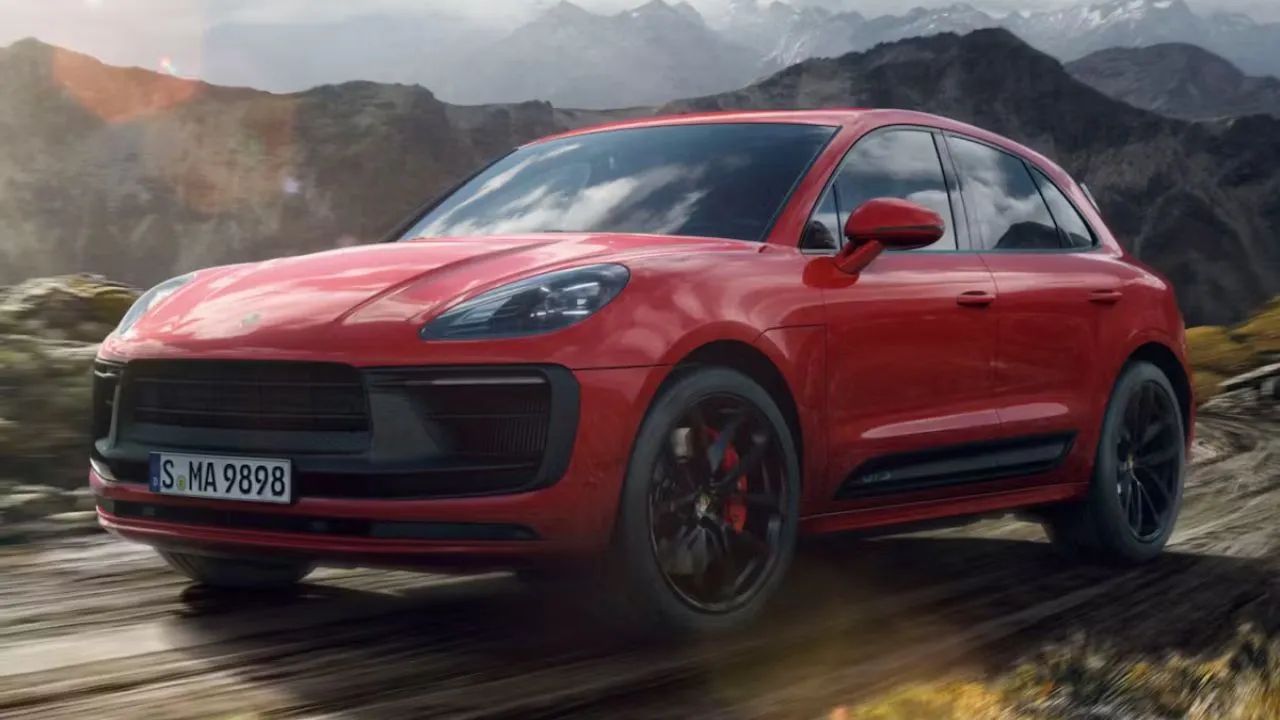
The Porsche Macan, one of the most successful compact luxury SUVs of the past decade, is approaching the end of its petrol-powered life. Porsche’s finance chief Jochen Breckner confirmed during a recent earnings call that production of the internal combustion engine version of the Macan is expected to cease by mid-2026, with existing inventory continuing to be sold in select markets into 2027. The electric Macan will carry the nameplate forward, while a new combustion SUV internally codenamed M1 is being developed as a spiritual successor, expected to arrive around 2028. Here is a complete breakdown of the timeline, the transition strategy, and what the next chapter looks like for Porsche’s SUV lineup.
Porsche Macan ICE Production Ends Mid-2026: What the Timeline Looks Like
The confirmation from Porsche’s finance chief Jochen Breckner during an earnings call makes the timeline clear. Production of the petrol-powered Macan will wrap up by mid-2026. This does not mean the model immediately disappears from dealerships. Existing inventory is expected to be available for purchase in select markets through 2027, giving buyers who specifically want the combustion version a window to make their decision.
Key dates and milestones in the Porsche Macan transition are as follows:
- 2014: Petrol Macan introduced in India, marking the start of a long and successful lifecycle
- Mid-2026: Production of the ICE Macan expected to end at the factory level
- 2027: Existing ICE Macan inventory expected to continue selling in select global markets
- 2028: New Porsche SUV codenamed M1 expected to arrive as a spiritual successor
The gap between the end of ICE Macan production and the arrival of the M1 in 2028 is deliberate. During this period, the electric Macan will serve as Porsche’s primary offering in the compact SUV segment, while the brand develops the new combustion platform that will eventually fill the gap for buyers who prefer a petrol-powered option.
Despite Discontinuation Plans, the ICE Macan Is Still Selling Well
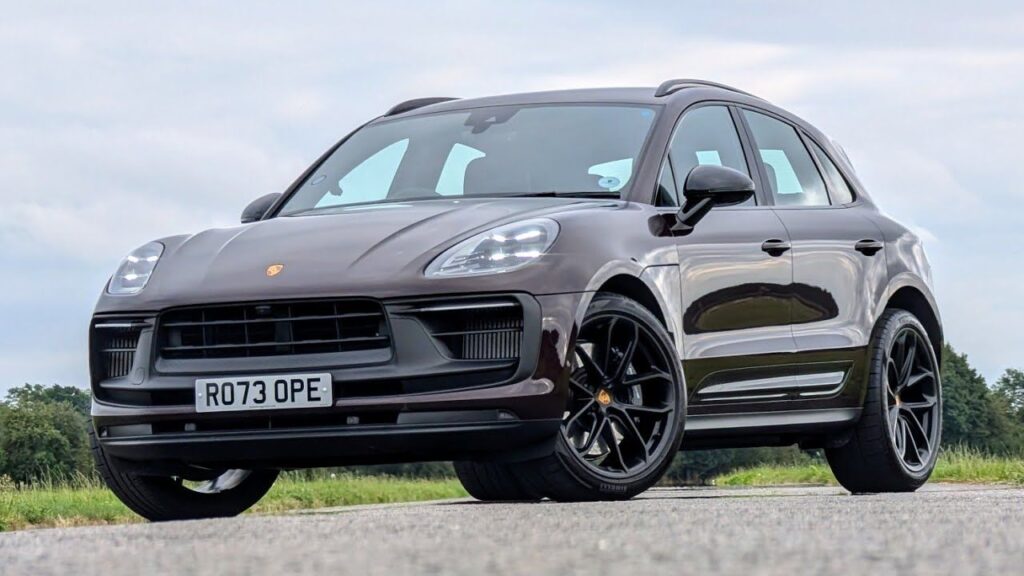
One of the more striking details in the Porsche announcement is that the ICE Macan is being discontinued not because it has stopped selling, but precisely because the brand is confident enough in its electric replacement to make the transition. The petrol Macan sold over 10,000 units globally in the first quarter of 2026 alone, a figure that represents an increase compared to the same period in 2025.
This context matters. The Macan is not being retired due to declining relevance or falling demand. It is being phased out as part of a planned electrification strategy, with Porsche choosing to channel the model’s commercial momentum into the electric version rather than continuing to invest in developing the combustion platform further. The strong Q1 2026 numbers also suggest that there will be no shortage of buyers looking to pick up one of the last petrol Macans before production ends, which may translate into healthy residual values for the model in the near term.
The Electric Macan: Porsche’s Core SUV Offering Going Forward
With the petrol version being phased out, the Macan Electric becomes Porsche’s primary answer in the compact luxury SUV space. The electric Macan is built on a completely different platform from the combustion version and has been developed specifically as an EV rather than an adaptation of an existing petrol car.
Key points about the Macan Electric and its role in Porsche’s lineup include:
- The Macan Electric will continue as a core model in Porsche’s global portfolio after the ICE version ends
- It is built on a dedicated EV architecture, not a converted combustion platform
- Former CEO Oliver Blume has confirmed that the new M1 SUV will be clearly differentiated from the electric Macan, allowing both to coexist without cannibalising each other
- The electric Macan caters to buyers prioritising zero-emission driving, while the M1 will serve those who prefer a combustion powertrain
- This dual-track approach allows Porsche to serve both types of buyers during what the brand acknowledges is a period of transition
The strategy reflects a broader reality in the premium automotive market: demand for electric vehicles is growing but has not yet reached the point where a single powertrain choice satisfies all buyers in a given segment. Porsche is hedging intelligently by keeping a combustion option in development even as it commits to the electric Macan as its flagship compact SUV.
Meet the M1: Porsche’s New Combustion SUV Coming in 2028
The most forward-looking part of the announcement is the confirmation of the M1, an entirely new Porsche SUV that will arrive around 2028 to serve buyers who want a combustion-powered option from the brand. The M1 is not a direct replacement for the ICE Macan in terms of platform or positioning, but rather a spiritual successor that addresses the same market need in a more modern and cost-efficient way.
Here is what is known about the upcoming Porsche M1 SUV:
- Expected launch timeline: Around 2028
- Platform: Premium Platform Combustion (PPC), a shared architecture also used by the latest Audi Q5
- Engine: Expected to feature a 2.0-litre turbocharged petrol producing over 200 HP
- Higher-performance variants: S, GTS, and Turbo versions are anticipated
- Chassis enhancements planned to align the driving experience with Porsche’s performance positioning despite the shared platform
- Development timeline has been accelerated to approximately three years from concept to production, significantly shorter than the industry norm
- Will be clearly differentiated from the electric Macan in terms of design and positioning
The three-year development cycle is particularly noteworthy. Standard automotive development timelines typically run to five or six years. Porsche’s ability to compress this to approximately three years, confirmed by former CEO Oliver Blume, suggests that the PPC platform’s shared architecture with Audi is enabling significant development efficiency.
The PPC Platform: How Sharing with Audi Shapes the New Porsche SUV
The Premium Platform Combustion, or PPC, is a jointly developed architecture shared between Porsche and Audi within the Volkswagen Group. The latest Audi Q5 rides on this same platform, and the upcoming M1 will leverage it as its foundation. This kind of platform sharing is common across the Volkswagen Group and is designed to spread development and tooling costs across multiple models, improving overall financial efficiency.
For Porsche, the challenge with any shared platform is maintaining the distinct driving character that separates a Porsche from its platform siblings. The brand has indicated that targeted engineering changes will be made to the M1’s chassis and suspension setup to ensure it delivers the dynamic feel associated with the Porsche name, even if the underlying architecture is shared.
The table below summarises how the three key models in Porsche’s SUV transition compare to each other across the most relevant dimensions.
| Model | Powertrain | Platform | Status | Expected Year |
|---|---|---|---|---|
| Porsche Macan ICE | Petrol (ICE) | MLP (Modular Longitudinal) | Production ending mid-2026 | Stock available until 2027 |
| Porsche Macan Electric | Fully Electric | PPE (Premium Platform Electric) | Current and continuing | On sale now |
| Porsche M1 (New SUV) | Petrol (ICE), 2.0L Turbo+ | PPC (shared with Audi Q5) | In development | Around 2028 |
A Significant Engineering Shift: The M1 Moves Away from Rear-Biased Dynamics
One of the most philosophically significant changes coming with the M1 is a shift in how its all-wheel-drive system is configured. Traditional Porsche models have historically been engineered with a rear-biased dynamic balance, meaning the handling character leans toward rear-wheel-drive behaviour even in all-wheel-drive configurations. This approach has been a defining part of Porsche’s driving philosophy since the brand was founded in 1931.
The M1 is expected to adopt a front-biased all-wheel-drive system, where the front wheels drive the car under normal conditions and the rear wheels engage only when additional traction is needed. This configuration is more in line with how most conventional SUVs are engineered and is likely a consequence of adopting the PPC platform that was designed primarily around front-engine, front-biased packaging.
Porsche has acknowledged this departure and indicated that chassis-level tuning will be used to preserve as much of the brand’s characteristic handling feel as possible within the constraints of the new platform. Whether that is achievable to the satisfaction of traditional Porsche buyers will be one of the most closely watched questions when the M1 eventually arrives in showrooms.
What This Means for Porsche Buyers in India and Globally
For buyers in India, where the Macan has been on sale since 2014 and has built a loyal following, the end of the petrol version raises practical questions. Existing ICE Macan inventory is expected to be available for sale into 2027, so there is still a window for buyers who specifically want the petrol model. After that, the choice within the Porsche compact SUV space will be the electric Macan until the M1 arrives.
| Buyer Type | Recommended Action | Timeline to Act |
|---|---|---|
| Wants the petrol Macan before it is gone | Purchase from existing inventory while available | By end of 2027 at the latest |
| Open to the electric Macan | The electric Macan is available now and continues | Available now |
| Wants a new petrol Porsche SUV | Wait for the M1 on the PPC platform | Around 2028 |
The end of the ICE Macan is ultimately a milestone rather than a crisis for the brand. Porsche is one of the few manufacturers that has managed its electrification transition without losing sight of what made it successful in the first place: a genuine commitment to driving dynamics and a willingness to invest in engineering differentiation even when sharing platforms with other brands. Whether the M1 lives up to that commitment when it arrives in 2028 will define the next chapter of Porsche’s SUV story.