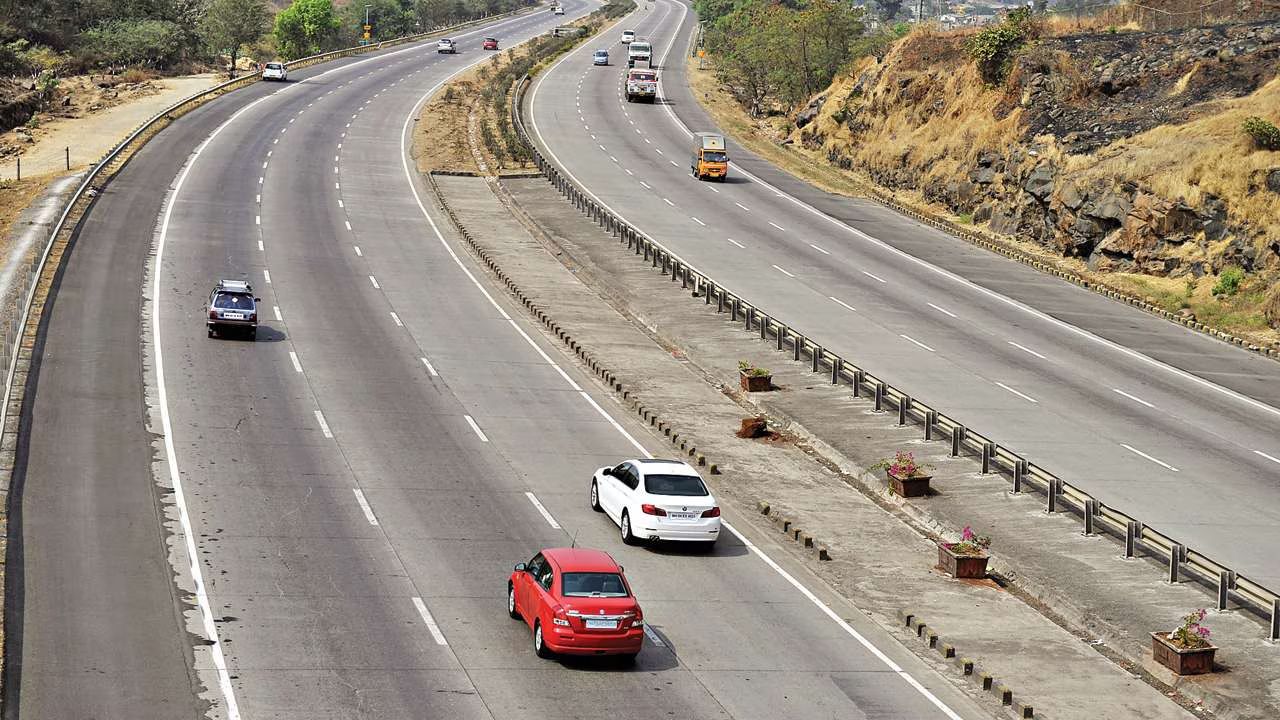
The long wait for a better, faster, and safer route between Mumbai and Pune is finally over. Maharashtra Chief Minister Devendra Fadnavis has formally inaugurated the Missing Link on the Mumbai-Pune Expressway, a project that has been decades in the making. The newly completed 13.3 km stretch bypasses the notoriously congested and accident-prone Khandala ghat section, cutting travel time by approximately 25 minutes and reducing total distance by around 6 km. Built at a cost of Rs 6,695 crore, the Missing Link is not just a road project. It is one of the most complex pieces of transport infrastructure Maharashtra has ever constructed, featuring two of the widest road tunnels in the world and a spectacular cable-stayed bridge over the Tiger Valley. Here is everything you need to know about this landmark project.
Old Route vs New Route: How Much Time and Distance Do You Save
The most immediate question for anyone who regularly travels between Mumbai and Pune is how much of a difference the Missing Link actually makes to their journey. The comparison between the old ghat section and the new route is substantial across every meaningful metric.
| Parameter | Old Khandala Ghat Section | New Missing Link |
|---|---|---|
| Route Length | 19.8 km | 13.3 km |
| Distance Saved | Reference point | Approximately 6 km shorter |
| Travel Time | Reference point | Approximately 25 minutes faster |
| Speed Limit | 60 km/h | 100 km/h |
| Gradient | Steep ghat section | Less steep, smoother drive |
| Additional Toll | Existing toll applies | No additional toll |
The jump in permissible speed from 60 km/h on the old ghat to 100 km/h on the new route is particularly significant. Combined with the shorter distance and gentler gradients, the new route offers a driving experience that is not just faster but considerably less stressful, especially for drivers of larger vehicles that struggled on the steep Khandala ghat.
Engineering Highlights: Tunnels, Bridge and What Makes This Project Remarkable
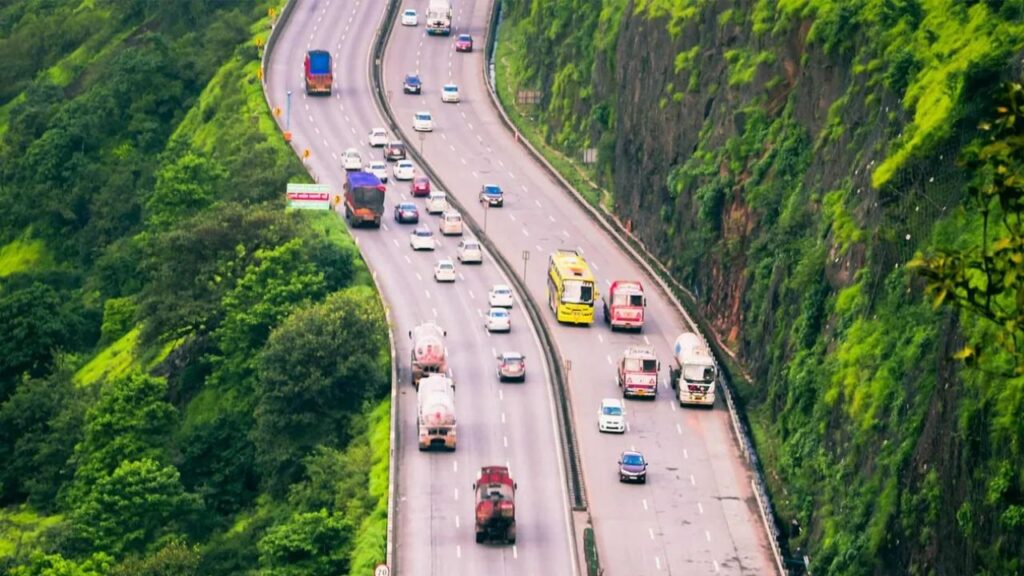
The Missing Link is not simply a new stretch of road. It is a showcase of engineering ambition that includes structures that rank among the most impressive of their kind anywhere in the world.
Key engineering features of the Mumbai-Pune Expressway Missing Link include:
- Total length of the new stretch: 13.3 km
- Two road tunnels measuring approximately 1.6 km and 8.9 km in length
- Both tunnels are among the widest road tunnels globally, built to accommodate multiple lanes of traffic
- A 650 m cable-stayed bridge spanning the Tiger Valley near Lonavala at a height of approximately 125 m
- Emergency cross passages built inside the tunnels for evacuation in case of accidents or fires
- Automated traffic monitoring systems to manage flow and detect incidents in real time
- Integrated fire-control mechanisms throughout the tunnel sections
- Total project cost: Rs 6,695 crore
The 8.9 km tunnel in particular is a landmark achievement. Long tunnels of this scale in an Indian context require sophisticated ventilation, lighting, and emergency systems to be safe for continuous use, all of which have been incorporated into the design. The cable-stayed bridge over Tiger Valley is expected to become one of the most photographed pieces of infrastructure in Maharashtra, given both its scale and its scenic location.
Which Vehicles Can Use the Missing Link Right Now
While the Missing Link has been inaugurated, it is important to note that access in the initial phase is not open to all vehicle types. Authorities have put in place a phased approach to opening the route, with heavier vehicles to be permitted only after a review period.
Current access rules for the Mumbai-Pune Expressway Missing Link are as follows:
- Private cars and personal vehicles: Permitted from the time of opening
- Light motor vehicles: Permitted from the time of opening
- Buses: Permitted from the time of opening
- Heavy goods vehicles: Expected to be allowed after a review period of approximately six months
- Vehicles carrying hazardous materials: Restricted and not permitted on this route
The phased approach makes practical sense given the presence of long tunnels on the route. Authorities will likely use the initial months to monitor traffic behaviour, assess safety system performance, and evaluate the structural response before permitting heavier commercial vehicles that place greater demands on the road surface and tunnel infrastructure.
Toll Charges: Will You Have to Pay Extra to Use the New Route
One of the most welcome aspects of the Missing Link for regular commuters is the toll structure. Despite the scale of investment involved in building this route, there will be no additional toll charge for using the new section. Motorists will continue to pay only the existing toll that is already applicable on the Mumbai-Pune Expressway.
This decision removes what could have been a significant barrier to adoption. Had an additional toll been imposed, many commuters might have continued to use the older ghat section to avoid the extra cost, which would have undermined the traffic diversion benefit that the Missing Link is intended to deliver. By keeping the toll structure unchanged, the authorities have ensured that the benefits of the new route are accessible to all expressway users from day one.
Why the Khandala Ghat Section Needed a Bypass
To appreciate the significance of the Missing Link, it helps to understand just how problematic the old Khandala ghat section had become over the years. The 19.8 km stretch was not just slow. It was one of the most consistently congested and accident-prone sections of highway in Maharashtra.
The main problems with the old Khandala ghat section included:
- Steep gradients that caused frequent breakdowns among heavy vehicles, leading to extended traffic stoppages
- A speed limit of just 60 km/h that made the section a significant bottleneck on an otherwise high-speed corridor
- Severe congestion during monsoons when reduced visibility and slippery roads slowed traffic to a crawl
- A higher-than-average accident rate due to the combination of steep grades, sharp curves, and mixed traffic
- Prolonged disruptions whenever a single breakdown or accident occurred, with no viable alternative route available
By routing a meaningful portion of traffic through the new 13.3 km Missing Link, authorities expect the overall traffic flow on the expressway to improve significantly, reducing the frequency and severity of congestion events on the old ghat section as well.
History of the Project: Why It Took So Long to Build
The Missing Link was not a last-minute addition to the Mumbai-Pune Expressway. It was actually part of the original plan when the expressway was first conceived in the early 2000s. The fact that it has taken more than two decades to materialise is a reflection of the extraordinary challenges involved.
The project faced a combination of financial, environmental, and technical hurdles that pushed it repeatedly off schedule. Securing the necessary environmental clearances for a project that passes through ecologically sensitive terrain near Lonavala was a prolonged process. The engineering complexity of constructing wide-bore tunnels through the Western Ghats also required specialised expertise and equipment that added to both the timeline and the cost.
The project was revived in 2018 after years of inactivity, with construction beginning in 2019. From that point, the project progressed through the challenges of difficult terrain, the disruption caused by the pandemic, and the logistical demands of working on tunnels and an elevated bridge simultaneously. The inauguration in May 2026 marks the conclusion of a journey that began on a drawing board more than 25 years ago.
What the Missing Link Means for Mumbai-Pune Commuters Going Forward
The practical impact of the Missing Link will be felt most clearly by the millions of people who travel between Mumbai and Pune regularly, whether for work, family visits, or leisure. The 25-minute time saving on a journey that currently takes between two and three hours depending on traffic conditions is a meaningful improvement.
| Benefit | Details |
|---|---|
| Travel Time Saving | Approximately 25 minutes under normal traffic conditions |
| Distance Saving | Approximately 6 km shorter than the old ghat section |
| Fuel Saving | Estimated daily savings due to reduced idling and shorter distance |
| Safety Improvement | Reduced exposure to accident-prone steep ghat section |
| Monsoon Reliability | Tunnel route less affected by rain and low visibility conditions |
| Additional Toll | None, existing expressway toll applies |
Beyond the individual journey, the Missing Link has the potential to generate broader economic benefits for the Mumbai-Pune corridor. Faster and more reliable connectivity between two of India’s most economically productive cities reduces logistics costs, improves supply chain efficiency, and makes the corridor more attractive for businesses that depend on movement between the two hubs. The inauguration of the Missing Link is in many ways the completion of a vision that has taken a generation to fulfil, and its impact on daily life along one of India’s busiest intercity routes is likely to be felt for decades to come.