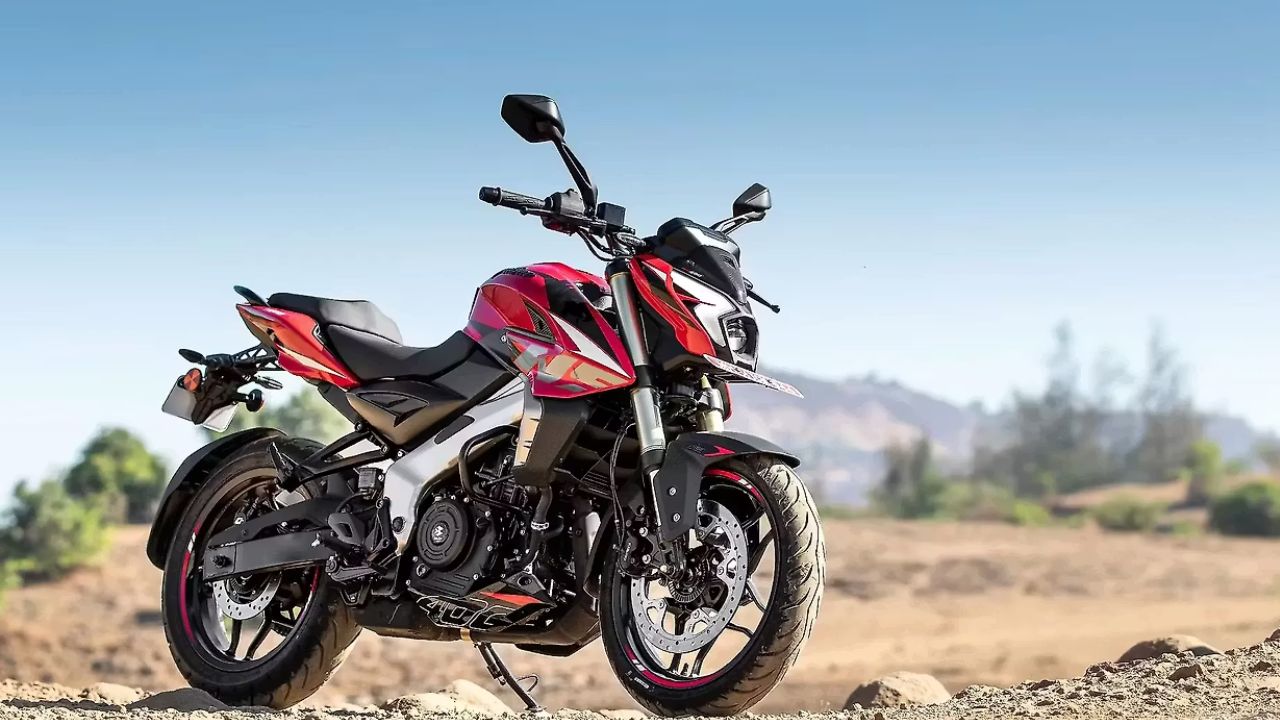
Bajaj Auto has made the Pulsar NS400z significantly more affordable with a price reduction of Rs 14,000, bringing the updated motorcycle down to Rs 1.80 lakh ex-showroom from its earlier introductory price of Rs 1.94 lakh. This is not just a routine price revision. The reduction is a direct result of a strategic engine downsize from 373cc to 349cc, which allows the Pulsar NS400z to benefit from lower tax rates applicable to sub-350cc motorcycles in India.
For buyers, the total savings on the final on-road price could be as much as Rs 24,500. Here is a complete breakdown of what changed, what stayed the same, and how the updated NS400z stacks up against its key rivals.
Why Bajaj Cut the Price: The Sub-350cc Tax Advantage Explained
The price reduction on the Pulsar NS400z is directly linked to India’s GST structure, which applies lower tax rates to motorcycles with engine displacements below 350cc. By downsizing the engine from 373cc to 349cc, Bajaj has moved the NS400z into a more favourable tax bracket, and it has passed on the resulting cost benefit to the customer.
The financial impact of this decision is meaningful. While the ex-showroom price has dropped by Rs 14,000, Bajaj states that the total on-road savings could reach Rs 24,500 when the lower taxes are factored across insurance, registration, and other on-road charges. This makes the updated NS400z not just cheaper on paper but noticeably more affordable in practice when you actually complete the purchase.
This move follows a broader trend in the Indian motorcycle market where manufacturers have been strategically engineering their products to stay below the 350cc threshold, a displacement boundary that carries significant commercial implications due to the difference in tax treatment on either side of it.
Bajaj Pulsar NS400z Old Price vs New Price: How Much Do You Save
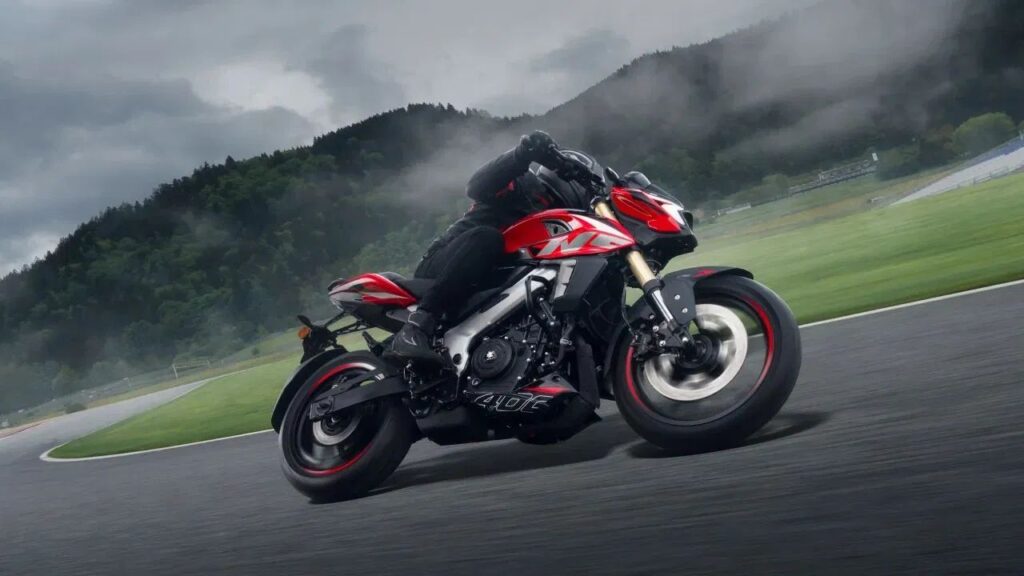
The table below captures the key pricing changes between the original 373cc Pulsar NS400z and the updated 349cc version, giving a clear picture of the financial benefit for buyers.
| Detail | Previous NS400z (373cc) | Updated NS400z (349cc) |
|---|---|---|
| Ex-Showroom Price | Rs 1.94 lakh | Rs 1.80 lakh |
| Ex-Showroom Saving | Reference point | Rs 14,000 less |
| Total On-Road Saving (Est.) | Reference point | Up to Rs 24,500 |
| Engine Displacement | 373cc | 349cc |
| Peak Power | 42.4 bhp | 40 bhp |
| Peak Torque | 35 Nm | 33.2 Nm |
The trade-off is clear: buyers give up a modest 2.4 bhp and 1.8 Nm of torque in exchange for savings of up to Rs 24,500 on the total purchase cost. For most everyday riders and performance enthusiasts in this segment, that is a straightforward and sensible exchange.
New 349cc Engine: What Changed Under the Hood
The engineering change at the heart of this update centres on the displacement reduction from 373cc to 349cc. Bajaj achieved this by keeping the bore dimension identical while shortening the stroke, a common approach when a manufacturer needs to reduce displacement without redesigning the entire engine architecture.
Key engine specifications of the updated Bajaj Pulsar NS400z include:
- Engine type: Single-cylinder, liquid-cooled
- Displacement: 349cc (reduced from 373cc)
- Bore: 89 mm (unchanged from the previous 373cc engine)
- Stroke: 56.1 mm (reduced from 60 mm on the older unit)
- Peak power: 40 bhp at 9,000 rpm (down from 42.4 bhp)
- Peak torque: 33.2 Nm at 7,500 rpm (down from 35 Nm)
By retaining the same 89 mm bore and only reducing the stroke, Bajaj has minimised the changes needed at the component level while achieving the displacement target. The result is an engine that remains close in character to the outgoing unit, with the power and torque figures sitting just marginally below the previous version. In real-world riding conditions, the difference between 40 bhp and 42.4 bhp is unlikely to be perceptible to most riders.
Features: What the Pulsar NS400z Still Gets
Despite the engine downsize and price reduction, Bajaj has made no cuts to the feature list of the NS400z. The motorcycle retains the full equipment specification that made it one of the best-equipped bikes in its price bracket when it was first launched.
The complete feature list on the updated Bajaj Pulsar NS400z includes:
- USD (upside-down) front forks for better handling and a premium feel
- Assist and slipper clutch for smoother downshifts and reduced lever effort
- Ride-by-wire electronic throttle control
- Four ride modes and four ABS modes for varied riding conditions
- Traction control system
- LCD instrument cluster with Bluetooth connectivity
- Turn-by-turn navigation support
- All-LED lighting setup
The retention of this feature set is significant. At Rs 1.80 lakh ex-showroom, the NS400z now offers hardware like USD forks, ride-by-wire, traction control, and multiple ride modes at a price that is highly competitive within the 300-400cc performance motorcycle segment in India.
Bajaj Pulsar NS400z vs Rivals: How It Compares at the New Price
With the price now reduced to Rs 1.80 lakh, the Pulsar NS400z finds itself in a sharper competitive position against the two most directly comparable motorcycles in the segment: the Triumph Speed 400 and the KTM 390 Duke.
| Motorcycle | Engine | Peak Power | Peak Torque | Price (Ex-Showroom) |
|---|---|---|---|---|
| Bajaj Pulsar NS400z (Updated) | 349cc, Single-cylinder | 40 bhp | 33.2 Nm | Rs 1.80 lakh |
| Triumph Speed 400 | 398.15cc, Single-cylinder | 39.5 bhp | 37.5 Nm | Rs 2.33 lakh |
| KTM 390 Duke | 399cc, Single-cylinder | 46 bhp | 39 Nm | Rs 3.14 lakh |
The comparison makes for compelling reading. The Pulsar NS400z now undercuts the Triumph Speed 400 by over Rs 53,000 and the KTM 390 Duke by over Rs 1.34 lakh, while offering a power output that is broadly comparable to the Speed 400. For a buyer who wants genuine performance hardware including USD forks, traction control, and multiple ride modes without crossing the Rs 2 lakh mark, the updated NS400z becomes a very difficult proposition to argue against.
Should You Buy the Updated Bajaj Pulsar NS400z
The updated Pulsar NS400z makes a strong case for itself at Rs 1.80 lakh. The engine downsize from 373cc to 349cc is a commercially driven decision, but the real-world performance impact is minimal. A reduction of 2.4 bhp and 1.8 Nm of torque in a motorcycle producing 40 bhp is not something most riders will ever notice on the road. What they will notice is the Rs 24,500 that stays in their pocket when compared to the purchase price of the original version.
The feature set remains class-leading for the price, the USD fork and slipper clutch setup gives it a hardware advantage over several more expensive rivals, and the Bajaj service network provides the kind of nationwide coverage and affordable maintenance access that newer brands in this segment simply cannot match. If you are looking for a performance-oriented naked motorcycle under Rs 2 lakh that is well-equipped, properly developed, and backed by a trusted brand, the updated Bajaj Pulsar NS400z is one of the strongest options available in the Indian market in 2026.