Tata Motors has introduced the Sierra EV alongside its internal combustion engine counterpart creating an interesting comparison for buyers considering both electric and traditional powertrains. The electric version launched recently with prices starting from Rs 18.79 lakh ex showroom. While the two models share a strong family resemblance several distinctions in design features powertrain and pricing set them apart. Understanding these aspects helps potential customers make an informed decision based on their priorities and usage patterns.
Exterior Design Comparisons
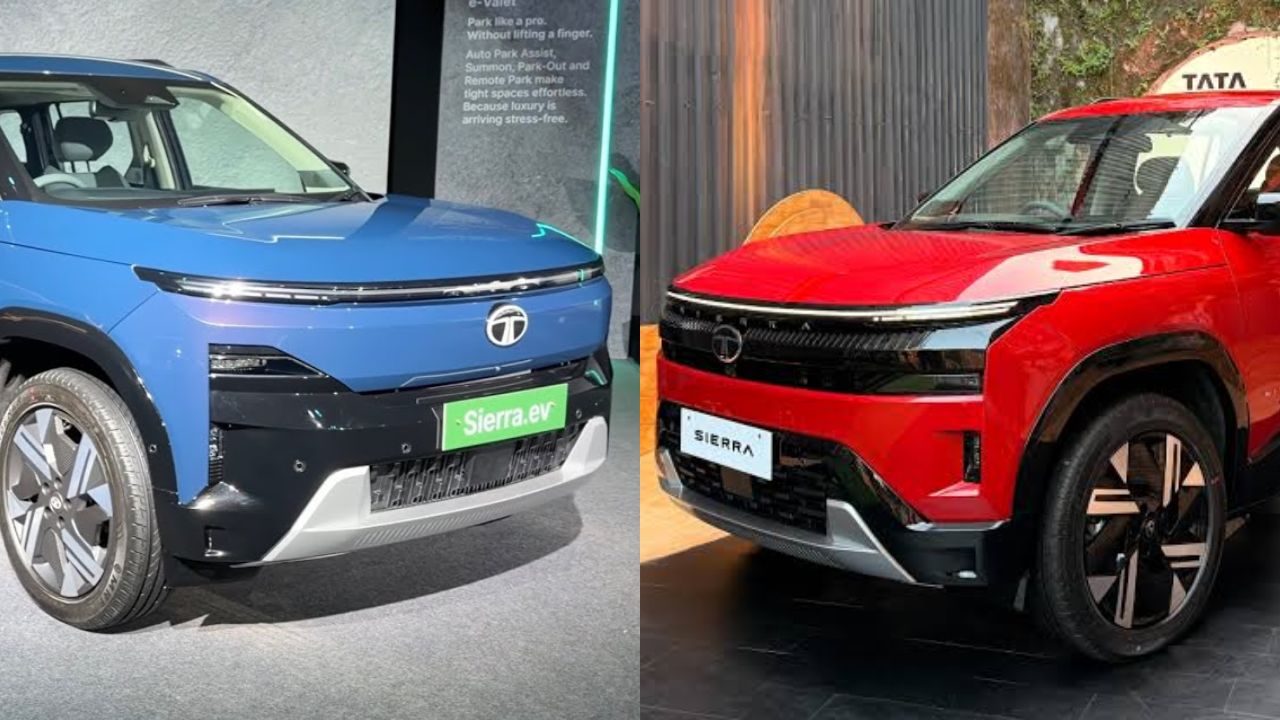
The Tata Sierra EV and its internal combustion engine sibling maintain a bold upright stance that defines the Sierra identity. Both models feature slim projector LED headlights connected by a light bar that enhances their modern appearance. Vertical LED fog lamps and a faux silver skid plate also remain consistent across both versions contributing to a rugged yet contemporary look.
Subtle changes distinguish the front end of the electric model. The Sierra EV adopts a body coloured blanked off grille without air vents while the internal combustion engine variant uses a gloss black unit with functional openings and prominent Sierra lettering. The front bumper on the electric SUV incorporates a larger gloss black panel below the headlights whereas the combustion model limits this finish to the lower section with more body coloured elements. These modifications give the electric version a cleaner and more futuristic aesthetic suited to its zero emission powertrain.
Side Profile and Wheel Details
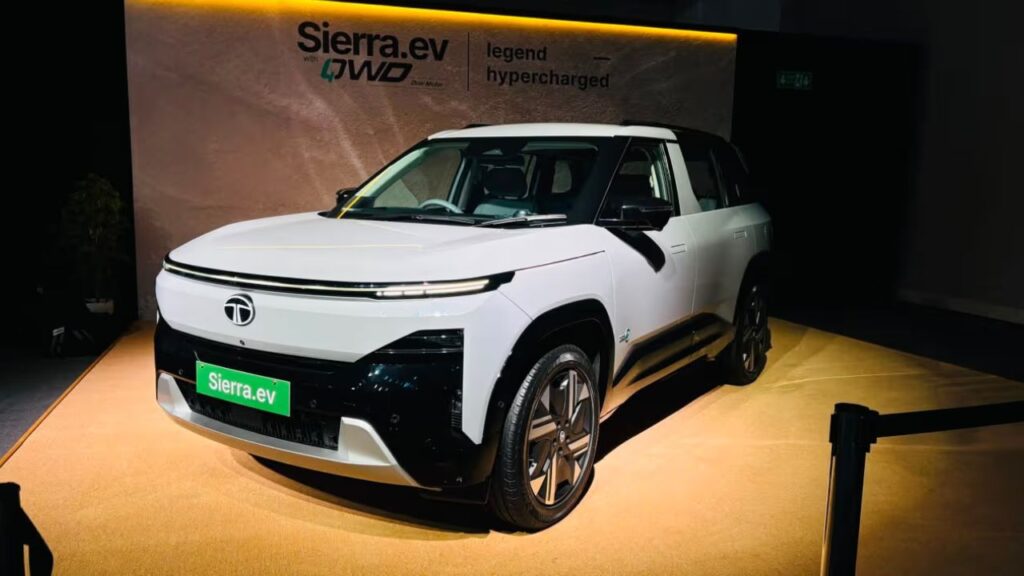
In profile the Sierra EV and internal combustion engine Sierra appear nearly identical at first glance. Both share flush door handles an Alpine style rear window design gloss black cladding along the wheel arches and lower doors plus identical 19 inch alloy wheel designs. The primary distinction lies in the badging where the electric model displays a Tata dot ev emblem on the front doors instead of the standard Sierra marking. This subtle cue signals the powertrain difference without altering the overall silhouette.
The shared proportions and stance ensure both vehicles offer similar road presence and practicality. Ground clearance levels remain comparable making them suitable for varied Indian road conditions including light off road excursions.
Rear Design Elements
The rear profiles of the Tata Sierra EV and internal combustion engine Sierra align closely with shared slim LED tail light bars gloss black bumpers with reflectors and body coloured roof mounted spoilers. A faux silver skid plate completes the rugged appearance on both. The main differentiator appears in the tailgate badging where the electric version prominently features Sierra dot ev lettering. These minor changes maintain design harmony while highlighting the electric variant unique identity. Overall the exterior similarities allow the Sierra EV to blend seamlessly within the broader Sierra family while targeted updates emphasise its advanced electric architecture.
Interior Layout and Cabin Themes
Both the Tata Sierra EV and internal combustion engine Sierra utilise an identical dashboard architecture including a four spoke steering wheel and triple screen setup. This comprises a 10.25 inch digital driver display a 12.3 inch central infotainment touchscreen and a dedicated 12.3 inch passenger entertainment screen. The panoramic sunroof wireless phone charger coloured head up display 12 speaker JBL Black audio system with Dolby Atmos dual zone climate control powered and ventilated front seats and powered tailgate are common to both models.
Differences emerge in the colour themes and material accents. The electric variant adopts a grey and off white cabin scheme with green contrasting stitching on the seat upholstery for a fresh and eco friendly feel. In contrast the internal combustion engine model uses a black and beige palette that conveys a more traditional premium ambiance. These thematic choices reflect the distinct character of each powertrain option.
EV Specific Interior Features and Technology
The Sierra EV introduces several features not available on the internal combustion engine version. These include vehicle to load and vehicle to vehicle charging capabilities a 540 degree camera system with under bonnet view auto park assist and summon mode. Such additions enhance the practicality and technological appeal of the electric SUV particularly for modern users who value connectivity and convenience.
The safety equipment remains largely identical with six airbags standard Level 2 advanced driver assistance systems electronic parking brake with auto hold and multiple assistance features. However the electric model gains the enhanced 540 degree camera and auto park functionality further improving low speed manoeuvrability and parking ease.
Powertrain and Performance Contrasts
The most significant differences between the Tata Sierra EV and internal combustion engine Sierra lie in their powertrains. The electric SUV utilises the Acti dot ev plus platform shared with the Harrier EV and offers two battery pack options. The 63 kilowatt hour battery powers a rear wheel drive setup with 238 horsepower and 315 Newton metres of torque delivering a claimed range of 535 kilometres. The 75 kilowatt hour battery is available in both rear wheel drive and all wheel drive configurations. The rear wheel drive version produces 209 horsepower with the same torque figure and extends the claimed range to 665 kilometres. The all wheel drive variant combines motors for a total of 504 Newton metres of torque and a 624 kilometre range. Fast charging support allows substantial range addition in short times making the electric model convenient for longer trips.
In comparison the internal combustion engine Sierra relies on a front wheel drive layout with multiple engine choices including naturally aspirated petrol turbo petrol and diesel options. This variety caters to buyers preferring traditional refuelling and potentially higher torque in certain scenarios but lacks the instant response and zero emission benefits of the electric powertrain. The Sierra EV stands as the second Tata electric vehicle to offer all wheel drive enhancing its versatility in challenging conditions.
Pricing and Value Considerations
Pricing represents another key area of divergence. The Tata Sierra EV range spans from Rs 18.79 lakh to Rs 25.99 lakh ex showroom reflecting the advanced battery technology and features. The internal combustion engine Sierra sits in a more accessible bracket from Rs 11.49 lakh to Rs 21.29 lakh making it appealing for cost conscious buyers. The base electric variant commands a premium of around Rs 7.30 lakh over its combustion counterpart though the gap narrows at the top end where the all wheel drive capability of the EV adds unique value.
This pricing positions the Sierra EV against other electric SUVs such as the Hyundai Creta Electric Mahindra BE 6 and similar models while the internal combustion engine version competes in the traditional midsize SUV space. Buyers must weigh the higher upfront cost of the electric model against long term savings on fuel maintenance and potential incentives.
Practical Ownership and Market Positioning
Ownership experiences differ notably due to the powertrain choices. The Sierra EV benefits from lower running costs instant torque smooth operation and over the air update capabilities that keep the vehicle current. Its all wheel drive option and terrain modes expand usability beyond what the internal combustion engine model offers. However charging infrastructure availability and initial purchase price remain important considerations.
The internal combustion engine Sierra provides familiar refuelling convenience a broader engine selection and potentially simpler maintenance in regions with limited electric support. Both models share robust build quality safety features and practical interiors ensuring strong appeal across segments.
In the broader market the Tata Sierra EV strengthens the brand electric offensive by offering a stylish range capable option with modern features. It appeals to environmentally conscious buyers seeking performance and technology. The internal combustion engine variant continues to serve customers who prefer conventional powertrains or require higher accessibility.
Final Thoughts on Choosing Between Them
The Tata Sierra EV and internal combustion engine Sierra share a common design language spacious cabins and comprehensive feature sets that make the family cohesive. Differences in front and rear styling badging colour themes power sources and select technologies create meaningful distinctions that cater to varied preferences. The electric model excels in efficiency performance innovation and long term economics while the combustion version offers affordability familiarity and refuelling flexibility.
Prospective buyers should evaluate their daily driving patterns access to charging home or public budget constraints and environmental priorities. Test drives of both variants can provide valuable insights into real world behaviour. With Tata expanding its electric portfolio the Sierra duo provides versatile choices that address diverse mobility needs in the evolving Indian automotive landscape.