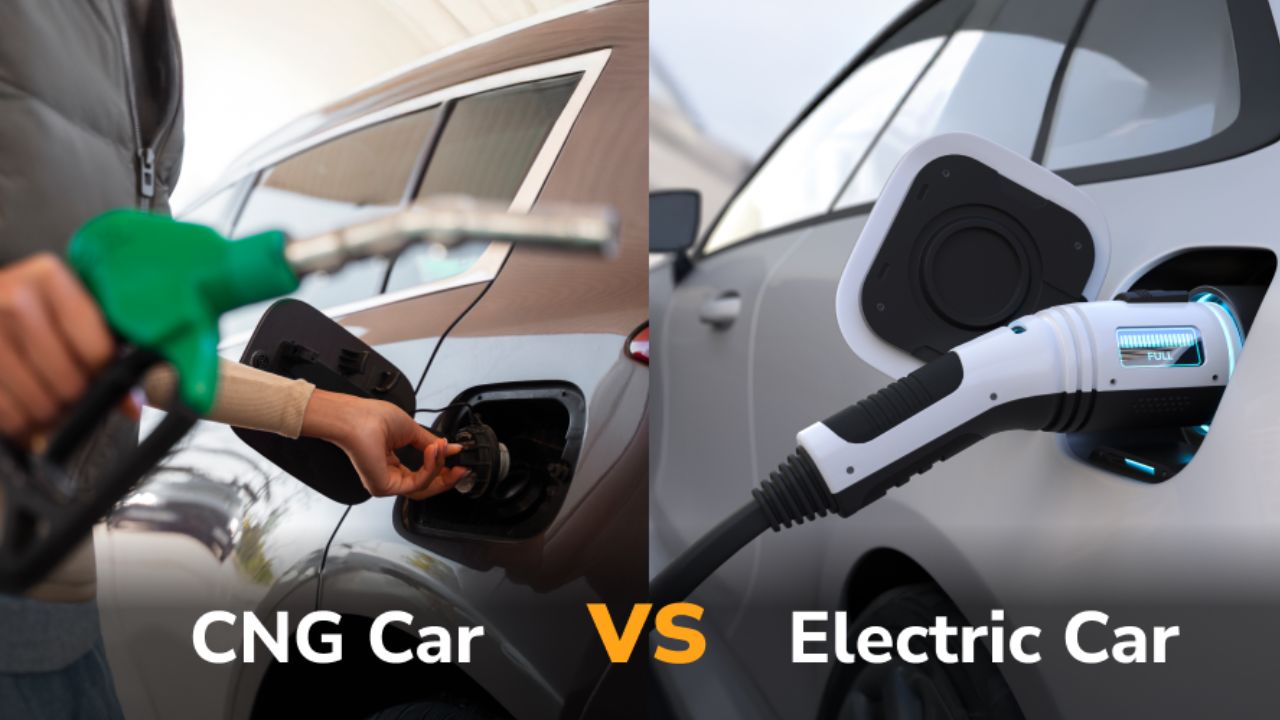
The urban automotive landscape across India’s burgeoning metropolitan centers is undergoing a structural and paradigm-shifting transformation. As of 2026, the traditional Internal Combustion Engine (ICE) reliant strictly on petrol or diesel is facing unprecedented pressure from regulatory bodies, environmental mandates, and highly volatile global energy markets. For the contemporary urban commuter, navigating the dense, stop-and-go traffic characterizing cities like Indore, Mumbai, and Bhopal, the decision matrix for vehicle acquisition has increasingly narrowed down to two prominent, alternative propulsion technologies: Compressed Natural Gas (CNG) and Battery Electric Vehicles (EVs).
This transition represents far more than a mere substitution of fuel types; it signifies a fundamental recalibration of vehicle ownership economics, infrastructure reliance, and daily operational convenience. Historically, CNG has served as the default transitionary fuel in India. Favored primarily for its significantly lower per-kilometer running costs compared to conventional fossil fuels, it drove a massive wave of adoption among commercial fleet operators, auto-rickshaws, and budget-conscious private buyers. However, the subsequent maturation of the EV ecosystem, spearheaded by aggressive localization and mass-market product deployments by domestic manufacturers such as Tata Motors, has introduced a highly compelling, zero-emission value proposition. EVs offer the allure of residential charging convenience, near-silent operation, and a dramatic reduction in mechanical maintenance liabilities.
The decision between an EV and a CNG vehicle for city driving is an extraordinarily multifaceted economic, logistical, and behavioral calculation. It requires a granular examination of initial Capital Expenditures (CapEx), which are heavily influenced by state-level taxation and policy subsidies. Furthermore, it demands an exhaustive analysis of ongoing Operational Expenditures (OpEx), dictated by localized utility tariffs, global natural gas pricing, and real-world powertrain efficiencies. Beyond the balance sheet, long-term maintenance liabilities including regulatory compliance for high-pressure gas cylinders and battery degradation curves – must be synthesized with the subjective yet critical factors of daily convenience, boot space packaging, and infrastructure reliability. By analyzing the prevailing market dynamics of 2026, and utilizing specific, high-volume examples from the highly competitive entry-level hatchback (Tata Tiago) and micro-SUV (Tata Punch) segments, this report delivers an exhaustive comparative framework to determine the optimal powertrain for urban driving.
Macroeconomic Baselines and Energy Pricing Dynamics in 2026
To accurately model the comparative economics of EV versus CNG ownership, it is imperative to establish the macroeconomic baselines and regulatory frameworks governing energy prices. The state of Madhya Pradesh, with a specific focus on the rapidly expanding urban center of Indore, serves as an optimal microcosm for this analysis due to its recent policy shifts, utility tariff revisions, and localized infrastructure constraints.
The Geopolitics and Trajectory of Compressed Natural Gas Pricing
The retail pricing of CNG in the Indian domestic market is inextricably linked to the volatility of global natural gas supply chains. These markets are inherently subject to geopolitical vulnerabilities involving major global producers, including the Russian Federation, the United States, and the Organization of Petroleum Exporting Countries (OPEC). Recent geopolitical friction, including conflicts in West Asia and blockades affecting key energy transshipment routes such as the Strait of Hormuz, has placed sustained pressure on the importation of natural gas, which India relies upon to augment its domestic production.
Historically, CNG enjoyed a massive, subsidized price advantage over deregulated petrol, which primarily drove its initial adoption. However, by 2026, this price disparity has narrowed and structurally stabilized at a higher plateau. In Indore, the retail selling price of CNG, managed by entities like Aavantika Gas Limited (AGL), has plateaued between ₹93.55 and ₹95.00 per kilogram. While the price has demonstrated relative stability over the preceding 12 months, remaining completely unchanged at ₹93.55 since January 2026 following minor downward corrections of roughly ₹3.90 between mid-2025 and 2026, it sits at a historically elevated baseline. This structural stabilization at a near-₹95 price point significantly alters the break-even calculations for prospective CNG vehicle buyers, elongating the total distance required to offset the higher initial purchase price of a factory-fitted CNG vehicle. Local factors such as state tax policies have remained static, meaning any future price shocks will likely stem directly from international crude and gas market fluctuations.
Electricity Tariffs, Grid Management, and the Cost of Urban Charging
Conversely, the operational economics of an Electric Vehicle are governed by state electricity regulatory commissions and local distribution companies (DISCOMs). In Madhya Pradesh, the regulatory environment for electricity pricing underwent a notable and highly impactful shift for the financial year 2026-27. The Madhya Pradesh Electricity Regulatory Commission (MPERC) authorized a comprehensive tariff revision, resulting in an average 4.8% hike in power tariffs across the state, effective from April 1, 2026.
This tariff revision disproportionately affects the middle-to-high consumption urban households that constitute the primary demographic for private EV ownership. The revised tariff structure explicitly targeted higher consumption brackets to cross-subsidize lower-income households. While consumers utilizing up to 100 units of electricity continue to receive existing concessions, those exceeding 150 units face significant escalations. The MPERC abolished previous mid-tier slabs (such as the 151-300 unit bracket), simplifying the structure but increasing both fixed and volumetric energy charges. For instance, fixed charges for domestic consumers escalated from ₹28 to ₹30 per 0.1 kW of connected load. Consequently, monthly electricity bills for households consuming between 300 and 400 units, a highly common bracket when factoring in the concurrent usage of domestic air conditioning and EV charging – witnessed increases approaching 5%, pushing the effective per-unit cost higher.
Furthermore, the implementation of Time of Day (TOD) pricing mechanisms introduces a behavioral economics component to EV ownership. The state grid, managed by entities like the Madhya Pradesh Paschim Kshetra Vidyut Vitaran Co. Ltd. (MPPKVVCL), penalizes heavy electrical loads during peak evening hours (typically between 6:00 PM and 10:00 PM). Charging an EV during this TOD window can incur surcharges that elevate the charging cost by 10% to 20%.
To streamline this, the Madhya Pradesh Electric Vehicle Policy stipulates that the standard tariff applicable for domestic consumption shall also apply to residential EV charging, but the state government has made it mandatory for EV owners setting up dedicated charging points to acquire a separate electricity connection from the DISCOM. This isolation of the EV charging load ensures grid stability but requires upfront administrative compliance from the homeowner. For commercial Public Charging Stations (PCS), the tariff is regulated not to exceed the average cost of supply plus a 15% margin, ensuring public charging remains somewhat protected from extreme price gouging.
Regulatory Frameworks, Subsidies, and State Incentives
To accelerate the transition toward zero-emission mobility and mitigate urban air pollution, regional governments deploy aggressive demand-side financial incentives. The Madhya Pradesh Electric Vehicle Policy 2025 has systematically reduced the acquisition friction for EVs through substantial capital and taxation waivers, aiming for EVs to constitute 25% of all new public transport registrations by 2026.
The policy provides profound relief at the Regional Transport Office (RTO) level. It stipulates that the first 6,000 electric cars registered in the state will incur a nominal motor vehicle road tax of merely 1%. Furthermore, vehicle registration fees are entirely exempted for the first 9,000 electric cars. The central government’s Faster Adoption and Manufacturing of Electric Vehicles (FAME II) scheme, alongside newer initiatives like PM E-DRIVE, provides additional structural support, although the automotive industry (via bodies like the Federation of Automobile Dealers Associations – FADA) continuously lobbies for the extension of these schemes and further GST rationalization on EV charging services to stimulate consumer demand.
In stark contrast, Internal Combustion Engine vehicles, including their CNG variants, are subject to the standard, unmitigated RTO taxation brackets, which in Madhya Pradesh scale significantly with the vehicle’s ex-showroom price. This asymmetry in taxation policy acts as a powerful financial lever. It artificially compresses the ex-showroom price premium of EVs when calculating the final, out-the-door on-road price, shifting the financial calculus heavily in favor of battery-powered vehicles at the point of purchase.
Capital Expenditure Analysis: Acquisition Costs and Variant Economics
The foundational barrier to EV adoption has historically been the high capital expenditure required upfront, driven largely by the cost of the lithium-ion battery pack and its associated Battery Management System (BMS). However, as battery chemistries improve, manufacturing scales up, and localized supply chains mature, price parity with ICE vehicles is gradually being achieved in specific sub-segments. To comprehensively illustrate this, an analysis of two distinct, high-volume vehicle segments is required: the entry-level hatchback (Tata Tiago) and the micro-SUV (Tata Punch).
The Hatchback Segment: Tata Tiago EV vs. Tiago iCNG
The Tata Tiago represents a critical battleground for first-time urban car buyers, where absolute price sensitivity is paramount and every thousand rupees impacts the purchase decision.
The Tiago iCNG range begins at an accessible ₹6.33 Lakh for the baseline XE manual variant and peaks at ₹8.95 Lakh for the top-tier XZA automatic (AMT) variant (on-road prices in Indore). These CNG variants command a premium of approximately ₹90,000 over their pure petrol equivalents. This premium represents the physical cost of the factory-fitted sequential CNG injection system, the heavy-duty suspension components required to bear the cylinder weight, and the high-pressure storage tanks themselves.
Conversely, the Tiago EV requires a substantially steeper entry price. The base XE Medium Range, equipped with a 19.2 kWh battery pack, is priced at ₹8.40 Lakh on-road in Indore. The top-spec XZ Plus Tech LUX Long Range, housing a larger 24.0 kWh battery, extends to ₹12.42 Lakh on-road.
| Vehicle Model (Tata Tiago) | Powertrain / Variant | Energy Capacity | Ex-Showroom Price | Estimated RTO & Others | Insurance | Total On-Road Price (Indore) |
| Tiago iCNG | Manual (XE Base) | 60L Water Capacity | ₹5,48,990 | ~₹46,794 | ~₹36,993 | ~₹6,32,777 |
| Tiago iCNG | Automatic (XZA Top) | 60L Water Capacity | ₹7,90,000 | ~₹68,000 | ~₹37,000 | ~₹8,95,000 |
| Tiago EV | Electric (XE MR) | 19.2 kWh | ₹7,99,000 | ₹5,500 (Subsidized) | ₹35,294 | ~₹8,39,794 |
| Tiago EV | Electric (XZ+ Tech LUX) | 24.0 kWh | ₹11,14,000 | ₹82,900 (RTO+Others) | ₹44,692 | ~₹12,41,592 |
Data synthesis indicates the profound impact of MP’s 1% road tax exemption policies on the base EV model, keeping registration costs minimal compared to the CNG equivalent.
The data reveals a stark upfront CapEx gap. At the entry-level, the EV demands a premium of approximately ₹2.07 Lakh over the base CNG model. At the premium level (comparing the top automatic variants), the gap widens to ₹3.46 Lakh. For a highly price-sensitive buyer navigating the entry-level hatchback segment, financing an additional ₹2 Lakh requires a robust operational savings justification. For instance, the monthly Equated Monthly Installment (EMI) for a base Tiago CNG stands at approximately ₹11,591 (assuming a 5-year loan at 8.5% interest with a ~₹1.3 Lakh down payment). In contrast, the Tiago EV XE commands an EMI of roughly ₹15,278. This ₹3,687 monthly differential in debt servicing must be actively recovered through fuel savings.
The Micro-SUV Segment: Tata Punch EV vs. Punch iCNG
The financial dynamics shift notably in the higher-priced, aspirational micro-SUV segment, where consumers exhibit slightly higher purchasing power and demand premium features. The Tata Punch iCNG ranges from ₹7.64 Lakh for the base model up to ₹12.37 Lakh for the fully-loaded Accomplished Plus (S) Automatic variant.
The Tata Punch EV, fundamentally differing from the Tiago by being built on Tata’s dedicated “acti.ev” pure electric architecture rather than an adapted ICE platform, commands a higher overall premium but offers a more sophisticated electrical ecosystem. The base Smart variant (featuring a 30.0 kWh battery) begins at ₹10.19 Lakh on-road, while the top-tier Empowered Plus (housing a 40.0 kWh battery) reaches ₹13.77 Lakh.
| Vehicle Model (Tata Punch) | Powertrain / Variant | Energy Capacity | Ex-Showroom Price | Estimated RTO & Others | Insurance | Total On-Road Price (Indore) |
| Punch iCNG | Manual (Pure Base) | 60L Water Capacity | ₹7,10,000 | ~₹54,000 | ~₹35,000 | ~₹7,64,689 |
| Punch iCNG | Automatic (Accomplished+) | 60L Water Capacity | ₹10,90,000 | ~₹100,000 | ~₹47,000 | ~₹12,37,000 |
| Punch EV | Electric (Smart 30kWh) | 30.0 kWh | ₹9,69,000 | ₹8,500 (Subsidized) | ₹41,086 | ~₹10,18,586 |
| Punch EV | Electric (Empowered 40kWh) | 40.0 kWh | ₹12,59,000 | ₹12,590 (Subsidized) | ~₹55,000 | ~₹13,77,857 |
In this segment, the gap between the top-spec CNG automatic (₹12.37 Lakh) and the base EV (₹10.18 Lakh) actually favors the EV, though comparing feature-equivalent top models still presents an EV premium of roughly ₹1.4 Lakh. However, when factoring in the driving experience, the inherent smoothness of an EV’s single-speed transmission vastly outperforms the Automated Manual Transmission (AMT) utilized in the CNG Punch. For urban buyers prioritizing driving comfort in the ₹10–13 Lakh bracket, the EV presents a highly competitive initial value proposition.
Powertrain Packaging, Boot Space, and Urban Utility
Beyond pure economics, the physical viability of a vehicle in an urban environment is heavily influenced by packaging engineering. The storage of alternative energy sources, whether highly pressurized gas or dense chemical batteries – forces significant engineering compromises within the compact footprint of city cars.
The Evolution of CNG Packaging: Twin-Cylinder Technology
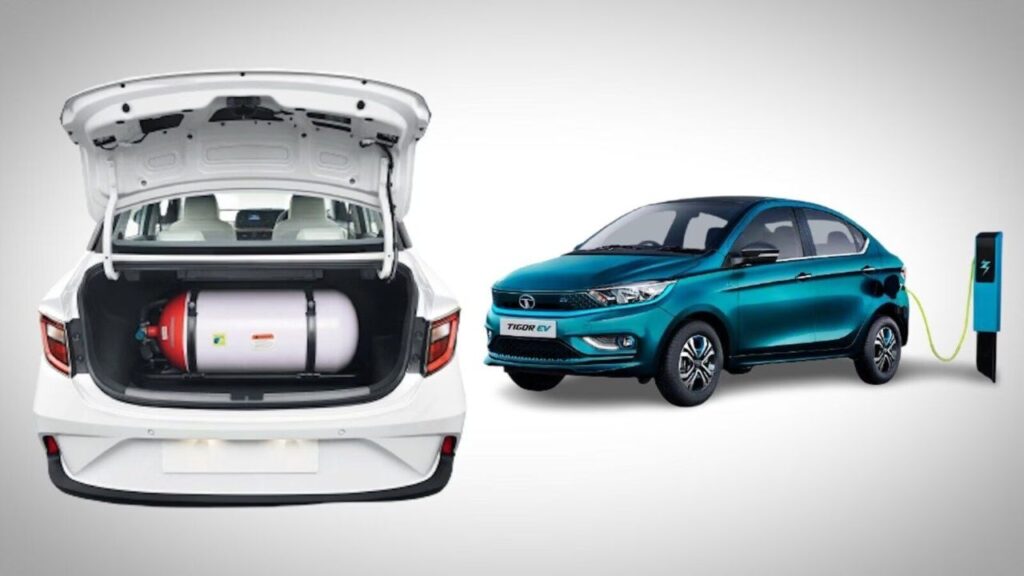
Traditionally, a standard 60-liter water capacity CNG cylinder is a massive, cylindrical steel tank that consumes nearly the entirety of a hatchback’s boot space, rendering the vehicle highly impractical for airport runs or family trips. Tata Motors revolutionized this constraint with the introduction of their proprietary “Twin-Cylinder Technology”.
This engineering solution splits the single large cylinder into two smaller, parallel 30-liter cylinders. These are nested deeply beneath the luggage floor, sitting where the spare tire well traditionally exists. While this ingeniously preserves a flat loading bay and restores daily usability, the volumetric compromise is still measurable. In the standard petrol Tata Punch, the boot capacity is a generous 366 liters. In the Punch iCNG variant, the under-floor placement of the cylinders reduces the usable volume to a reasonable, but compromised, 210 liters. Similarly, the Tiago CNG offers 242 liters of boot space, which is tighter but functional.
EV Skateboard Architecture and the Frunk
Electric vehicles utilize entirely different packaging philosophies. Purpose-built EVs utilize a “skateboard” architecture, packing the heavy lithium-ion battery cells low and flat within the floorpan between the axles. This not only dramatically lowers the vehicle’s center of gravity, improving handling but completely preserves cabin and luggage space.
The Punch EV retains the full 366 liters of rear boot space found in its petrol counterpart. Furthermore, because electric motors are drastically smaller than internal combustion engines, the Punch EV features a “frunk” (front trunk) under the hood, providing additional secure storage for charging cables or small bags. The Tiago EV, which is an ICE-adapted platform rather than a pure skateboard, still manages to offer 240 liters of boot space, virtually identical to its CNG sibling, without the heavy steel tanks.
The Spare Wheel Controversy and Urban Vulnerabilities
However, the pursuit of maximizing battery volume, optimizing aerodynamics, and mitigating the gross vehicle weight penalty of alternative powertrains has led to a highly controversial engineering omission: the removal of the physical spare tire.
Both the Tiago EV and the Punch EV, alongside their twin-cylinder CNG counterparts, do not come equipped with a traditional “stepney” spare wheel. Instead, the manufacturer supplies a liquid puncture repair kit and a 12V portable air inflator. While this saves weight and space, urban drivers have expressed severe dissatisfaction with this arrangement.
The reality of Indian urban infrastructure includes poorly maintained tarmac, deep potholes, and construction debris. Tire damage is frequently not a clean tread puncture (which a liquid sealant can fix), but a catastrophic sidewall laceration. In the event of a sidewall tear, the provided puncture kit is entirely useless. This forces owners to either purchase a spare wheel and jack independently, which then sits loose in the boot, defeating the purpose of the space-saving engineering or rely entirely on manufacturer-provided tow trucks.
To mitigate this, Tata Motors provides comprehensive 24×7 Roadside Assistance (RSA) programs, such as Tata Alert, in partnership with TVS Auto Assist. These programs guarantee mechanical breakdown assistance, towing to the nearest authorized workshop, and even compensation (up to ₹1000/day) if vehicle restoration is delayed beyond 48 hours. While robust on paper, waiting for a flatbed tow truck due to a blown tire introduces a severe vulnerability and stress factor for urban families, especially elderly drivers or those traveling late at night.
Operational Economics: Per-Kilometer Cost and the Break-Even Horizon
While CapEx slightly favors CNG, Operational Expenditure (OpEx) overwhelmingly and undeniably champions the Electric Vehicle. The core driver of urban vehicle economics is the per-kilometer cost of propulsion, determined by real-world efficiency and prevailing energy rates.
Efficiency Metrics: ARAI Certifications vs. Real-World Realities
Manufacturer claims, standardized via Automotive Research Association of India (ARAI) certifications, rarely align with the physical realities of Indian city driving, which is characterized by heavy congestion, continuous idling, and pervasive, high-load air conditioner usage.
The Tiago iCNG boasts an impressive ARAI-certified fuel economy of 26.49 km/kg for the manual transmission and 28.06 km/kg for the AMT automatic. However, longitudinal user reports and independent automotive testing indicate that real-world city efficiency settles between a more modest 20 to 23 km/kg. It is worth noting the physics of the fuel; petrol returns higher economy than CNG because it possesses a 10-15% higher calorific value, meaning more energy is extracted per unit of volume. Thus, expecting petrol-like mileage from CNG in dense traffic is a thermodynamic impossibility.
Conversely, EV efficiency is measured in kilometers per kilowatt-hour (km/kWh). The Tiago EV Medium Range (19.2 kWh) claims an ARAI range of 223 km, while the Long Range (24 kWh) claims 293 km (MIDC cycle). In urban conditions, the real-world range settles between 170-210 km and 200-240 km per charge, respectively. Exhaustive real-world testing of the 24 kWh variant indicates an efficiency of approximately 7.77 km per kWh.
An inherent and massive advantage of EVs in city driving is regenerative braking. Unlike ICE and CNG vehicles that waste kinetic energy as dissipated heat during braking, EVs run the electric motor in reverse, recapturing this energy and feeding it back into the battery. Therefore, EVs are uniquely and paradoxically more efficient in stop-and-go city traffic than they are on open highways.
Per-Kilometer Cost Calculation
Utilizing the standardized fuel and energy costs specific to Indore in 2026, the financial divergence between the two powertrains becomes acute.
CNG Running Cost:
- Current CNG Retail Price: ₹93.55 per kg.
- Real-world urban efficiency: ~21.5 km/kg (average of 20-23 km/kg).
- Calculated Cost per kilometer: ₹93.55 / 21.5 = ₹4.35 per km.
EV Running Cost:
- Current residential electricity tariff (post 4.8% MPERC hike, assuming an upper slab estimate including fixed charges and taxes): ~₹9.00 per kWh.
- Real-world urban efficiency: ~7.77 km/kWh.
- Calculated Cost per kilometer: ₹9.00 / 7.77 = ₹1.15 per km. (Note: Depending on the specific consumption slab and off-peak charging, users can achieve costs as low as ₹0.66/km , but ₹1.15 provides a conservative, inflation-adjusted baseline for 2026).
| Economic Metric | Tiago iCNG | Tiago EV | Differential Savings (Favoring EV) |
| Cost per Kilometer | ₹4.35 | ₹1.15 | ₹3.20 per km |
| Monthly Fuel Cost (1,000 km) | ₹4,350 | ₹1,150 | ₹3,200 per month |
| Annual Fuel Cost (12,000 km) | ₹52,200 | ₹13,800 | ₹38,400 per year |
| 5-Year Lifecycle Cost (60,000 km) | ₹2,61,000 | ₹69,000 | ₹1,92,000 over 5 years |
Amortization and the Break-Even Horizon
The fundamental economic viability of the EV relies on its ability to amortize its higher initial CapEx through these substantially lower OpEx metrics over time.
For the Tiago base variants, the CapEx gap is roughly ₹2.07 Lakh. At a running cost savings of ₹3.20 per kilometer, the vehicle must be driven approximately 64,600 kilometers to achieve total absolute cost parity with the CNG equivalent. For the average urban private driver covering 1,000 km monthly (12,000 km annually), this break-even point is reached in approximately 5.4 years. If the vehicle is driven more intensively such as 20,000 km per year for long suburban commutes or commercial ride-sharing applications, the break-even timeline collapses to an attractive 3.2 years. Beyond this inflection point, the EV generates pure financial surplus compared to the CNG vehicle.
Maintenance Lifecycle, Regulatory Compliance, and Tail-Risk Liabilities
A holistic Total Cost of Ownership (TCO) model cannot be limited to fuel costs; it must rigorously account for the mechanical maintenance intrinsic to the chosen powertrain, alongside specialized regulatory compliance and the risk of catastrophic component failure.
Internal Combustion Complexities and CNG Maintenance
A CNG vehicle is, fundamentally, a standard Internal Combustion Engine vehicle burdened with an additional, highly pressurized secondary fuel injection system. Consequently, it inherits all the traditional servicing liabilities of a petrol engine, compounded by the specific sensitivities of natural gas combustion.
Routine servicing for a CNG vehicle entails regular engine oil changes, oil filter replacements, coolant flushing, and standard air filter changes. The average cost of scheduled maintenance for a standard Tata Tiago over a 5-year period ranges predictably between ₹20,000 to ₹25,000. However, CNG models incur an additional 10% to 15% premium in maintenance costs. This premium is directly attributed to the accelerated wear on spark plugs (due to the hotter, drier combustion temperatures of natural gas), the mandatory replacement of low-pressure CNG filter cartridges (recommended every 30,000 km), and necessary throttle body cleanings every 20,000 to 25,000 km to prevent rough idling and stalling. Furthermore, the suspension components, particularly the rear shock absorbers, endure faster wear due to the permanent ~100 kg weight penalty of the steel gas cylinders. Replacing a rear shock assembly on a Tiago costs approximately ₹6,000 per side.
Beyond mechanical wear, CNG vehicles are subject to stringent, mandatory regulatory oversight. Under the Gas Cylinder Rules of 2004, monitored by the Petroleum & Explosives Safety Organization (PESO), high-pressure CNG cylinders, which store volatile gas at an immense pressure of ~200 bar must undergo rigorous hydrostatic testing every three years. This process involves physically removing the cylinder from the vehicle, filling it with water, and pressurizing it beyond its standard operating limits to certify structural integrity and detect microscopic leaks.
This compliance test incurs an additional recurring cost of ₹1,200 to ₹3,000 per cycle, depending on the testing center. Cylinders are color-coded (e.g., green for valid, red for expired), and failure to maintain a valid compliance certificate results in authorized refuelling stations legally refusing to dispense gas into the vehicle. Furthermore, an expired cylinder test immediately nullifies the vehicle’s automotive insurance claims in the event of an accident.
The EV Servicing Paradigm and the Battery Degradation Risk
Electric vehicles operate on an entirely different mechanical paradigm, utilizing a fraction of the moving parts found in an ICE vehicle. There is no engine oil to degrade, no spark plugs to foul, no complex multi-gear transmission to service, no exhaust system to rust, and no high-pressure gas lines to leak. Periodic maintenance is largely relegated to inexpensive cabin air filters, brake fluid moisture inspections, tire rotations, and topping up windshield washer fluid. The regenerative braking system also drastically extends the life of traditional brake pads and rotors. Consequently, the routine service intervals are significantly less financially burdensome.
However, the dominant financial vulnerability in EV ownership, the “tail-risk” is the high-voltage (HV) lithium-ion battery pack and its Battery Management System (BMS). While routine maintenance is negligible, the electrochemical degradation of lithium-ion cells presents a severe, long-term liability. Automotive battery packs undergo a natural, irreversible decline in their State of Health (SOH) over thousands of charging cycles. This degradation is driven by internal resistance build-up and the subtle unbalancing of individual cells. As experts note, no two lithium-ion cells are identical; minor manufacturing variations mean that over 80,000 kilometers, some cells age faster than others. The BMS utilizes sophisticated algorithms, such as Kalman filters, to keep hundreds of cells balanced, but eventually, the pack’s capacity to hold a charge diminishes.
The out-of-warranty replacement cost for these components is staggering. In 2026, replacing a 30.2 kWh battery pack in a Tata EV costs between ₹3.5 Lakh and ₹4.5 Lakh, while the smaller 19.2 kWh pack in the Tiago EV costs approximately ₹3.8 Lakh. To mitigate profound consumer anxiety regarding this risk, manufacturers provide robust warranties, typically 8 years or 1,60,000 kilometers. Under this warranty, if the battery fails or its SOH drops below a defined threshold (usually 80%), the manufacturer will repair or replace the pack free of charge. Anecdotal evidence suggests impressive longevity; instances of fleet Nexon EVs crossing 4,00,000 kilometers on original battery packs indicate that degradation is often slower than feared, allowing owners to recover the replacement cost multiple times over in fuel savings.
Additionally, owners can purchase extended warranties for the vehicle’s other complex electrical components (covering up to 3 years or 1,60,000 km) for ₹17,999 to ₹48,999. This acts as a necessary insurance policy against the high cost of specialized EV electronics.
The lifecycle analysis reveals a stark dichotomy: CNG presents a steady, highly predictable stream of moderate mechanical maintenance and bureaucratic compliance costs. In contrast, EVs offer near-zero routine costs but harbor a catastrophic financial tail-risk once the vehicle exits its 8-year warranty window, fundamentally altering the vehicle’s long-term resale value and lifecycle planning.
Infrastructure, Refueling Psychology, and the Opportunity Cost of Time
Beyond spreadsheets and pure economics, the viability of a vehicle in a stressful urban environment is heavily influenced by the daily friction associated with its operation, specifically regarding infrastructure availability and refueling convenience.
The Psychology of Urban Refueling: The CNG Queue Crisis
The most critical, often deal-breaking failure point for CNG ownership in 2026 is the severe, systemic strain on distribution infrastructure. While major Indian cities have aggressively attempted to expand their CNG pipeline networks, consumer demand, fueled by high petrol prices has vastly outstripped the physical capabilities of the dispensing stations.
Indore, despite being a major commercial hub, possesses approximately 43 active CNG dispensing stations operated by Aavantika Gas Limited and others, forced to service an exponentially growing fleet of private cars, auto-rickshaws, and commercial logistics vehicles. By comparison, the city boasts nearly 200 standard petrol and diesel outlets. This acute supply-demand imbalance manifests in chronic, debilitating queues.
Reports from central and western India indicate that wait times for CNG refuelling routinely stretch to two hours, heavily exacerbated during morning and evening peak hours. The situation is highly fragile; minor supply disruptions, such as third-party damage to trunk pipelines (as seen recently in Mumbai, where 60% of pumps were rendered non-operational), cause immediate city-wide panic refueling, with drivers sleeping in their auto-rickshaws overnight just to secure fuel.
For the urban commuter, this exacts a heavy toll in lost productivity and personal time. An individual spending just one hour per week waiting in a CNG queue sacrifices over 50 hours annually more than a full work week. This hidden “opportunity cost of time” drastically diminishes the perceived value of CNG’s lower running cost. Furthermore, stringent safety protocols necessitate that all occupants physically exit the vehicle during the high-pressure CNG dispensing process. While a minor inconvenience for a solo commuter, this requirement becomes highly cumbersome and uncomfortable for families traveling with elderly individuals or infants, especially during monsoon rains or peak summer heat.
The EV Charging Ecosystem: Decentralization and Smart Grids
Electric vehicles fundamentally alter the refueling paradigm by decentralizing energy distribution. For the urban resident possessing dedicated parking, the EV operates identically to a consumer electronic device like a smartphone, it is plugged in overnight and the driver wakes to a fully replenished “tank.” This complete elimination of the infrastructural friction associated with visiting a commercial pump is a massive psychological and temporal advantage.
For instances requiring public charging, the infrastructure is maturing rapidly, though it remains a secondary solution for city dwellers. Indore has seen the deployment of over 40 public EV charging nodes operated by entities like Tata Power, Aavantika Gas Ltd, and IOCL, strategically located at premium hotels (e.g., Marriott, Sayaji), shopping malls (Treasure Island), and major transit corridors. State-led initiatives are also prominent; Atal Indore Transport Services Limited (AICTSL) has proposed 47 public charging stations throughout the city, including India’s first fully solar-powered public EV charging station capable of charging six vehicles simultaneously.
However, public charging presents its own hurdles. Commercial Public Charging Stations (PCS) face utilization challenges, with demand fluctuating wildly between peak hours and mid-day lulls. Rapid advancement in technology also creates obsolescence risks for operators, where a 60 kW fast charger installed today may seem painfully slow compared to upcoming 350 kW ultra-fast standards. For the consumer, relying solely on public DC fast charging is more expensive than residential rates and requires a time commitment (typically 45-60 minutes for a 10% to 80% charge), reinforcing the reality that EV ownership is currently optimized primarily for those with secure, home-charging capabilities.
Driving Dynamics and Urban Drivability
In the dense, chaotic confines of Indian city traffic, the drivability traits and refinement of the two powertrains diverge sharply, directly impacting driver fatigue.
A CNG vehicle inherently experiences a measurable power deficit. When running on natural gas, the specific combustion properties reduce engine output. For example, the Tata Tiago’s 1.2L 3-cylinder engine produces 72 BHP and 95 Nm of torque in CNG mode, compared to its slightly higher output when running on petrol. While this is entirely adequate for sedate city commutes, the throttle response is noticeably muted, and overtaking requires deliberate planning and downshifting. Furthermore, as previously noted, to accommodate the heavy steel gas cylinders in the rear, the vehicle’s suspension must be stiffened. While fine on smooth roads, this firmer setup transmits broken urban tarmac and sharp potholes more harshly into the cabin, reducing overall ride comfort.
Conversely, the EV powertrain is practically bespoke for urban environments. Electric motors deliver 100% of their maximum torque instantaneously from zero RPM. The Tiago EV (24 kWh) provides 74 bhp and 114 Nm of torque, while the Punch EV Smart offers 87 bhp and 154 Nm, scaling up to 127 bhp and 190 Nm in the larger battery variants. This instantaneous torque translates to effortless, silent acceleration, making gap-hunting in dense traffic exceptionally easy. The absence of a multi-speed transmission ensures a perfectly linear, jolt-free power delivery, a stark contrast to the often jerky shifts of the AMT gearboxes found in automatic CNG variants. Finally, the utter lack of engine noise, vibration, and harshness (NVH) in an EV significantly reduces driver fatigue in prolonged stop-and-go traffic scenarios. The “D” (Drive) mode is perfectly calibrated for city speeds, while aggressive regenerative braking allows for comfortable “one-pedal” driving in heavy congestion.
Deeper Second and Third-Order Market Implications
Synthesizing this exhaustive data reveals broader, systemic trends that will dictate the trajectory of the urban mobility sector over the remainder of the decade.
The Paradox of Accessibility vs. Usability
The data outlines a critical market paradox: CNG remains highly accessible from an initial CapEx perspective but is becoming increasingly unusable from a time-value perspective. The queue crisis is not a temporary supply-chain hiccup; it is a structural failure born from the asymmetric growth of vehicle fleets versus the physical constraints of dispensing infrastructure. Installing a high-pressure natural gas station requires specific land-use permissions, stringent safety clearances from PESO, and physical proximity to underground trunk pipelines, bureaucratic and physical hurdles that severely throttle rapid expansion. Therefore, the implicit “cost” of CNG is rapidly shifting from the monetary price of the fuel itself to the opportunity cost of the driver’s time.
The Behavioral Shift in Energy Consumption
The transition to EV forces a profound behavioral shift from “active, external refueling” to “passive, internal charging.” By migrating automotive energy consumption to the residential electricity meter, vehicle owners effectively become mini-industrial power consumers. The 2026 MPPKVVCL tariff hikes and the elimination of middle-tier consumption slabs demonstrate that state utility companies are acutely aware of this massive load shift. Moving forward, the economics of EV ownership will become increasingly dependent on smart-grid integration and automated TOD (Time of Day) charging schedulers. If a consumer routinely plugs their vehicle in at 6:00 PM during peak tariff hours, the OpEx advantage of the EV degrades. Consequently, realizing the full financial benefit of an EV requires behavioral discipline, a shift toward late-night charging, and a technological fluency that is entirely absent in the traditional “fill-and-forget” ICE model.
The Commoditization of the Chassis vs. The Risk of the Battery
Historically, an automobile’s value depreciated linearly based on mechanical wear and tear of the engine and transmission. In the EV paradigm, the chassis and electric motors endure far longer than ICE components due to minimal internal friction. However, the value of the vehicle becomes overwhelmingly tethered to the electrochemical degradation of the battery pack. As the 8-year warranty cliff approaches, second-hand EV valuations are likely to plummet dramatically unless third-party battery refurbishment and recycling industries scale effectively. The ₹4 Lakh replacement cost acts as a terminal event for the vehicle’s economic lifespan for a second or third owner. Conversely, a CNG vehicle, provided it passes its mandatory tri-annual hydro-testing, maintains a predictable, albeit lower, residual value curve well into its second decade of operation.
Major Takeways
The definitive determination of whether an Electric Vehicle or a Compressed Natural Gas vehicle is the superior option for city driving in 2026 rests upon the specific logistical capabilities, financial horizon, and daily operational tolerance of the consumer.
For the urban resident operating within a highly constrained, price-sensitive budget, lacking access to dedicated overnight parking with electrical infrastructure, and willing to endure the frictional costs of refueling queues, the CNG vehicle remains a highly pragmatic and economically sound choice. Its lower barrier to entry (saving upwards of ₹2 Lakh on CapEx for entry-level models), proven longevity, and innovative packaging solutions like Tata’s twin-cylinder technology mitigate some of the historical drawbacks of the powertrain, making it a reliable workhorse for point-to-point urban transit.
However, from an objective standpoint evaluating superior driving dynamics, total cost of ownership over a 5-to-8 year lifecycle, and the profound elevation of daily convenience, the Electric Vehicle emerges as the definitively superior option for city driving. Despite the 4.8% escalation in electricity tariffs in regions like Madhya Pradesh, the fundamental thermodynamic efficiency of the EV ensures an insurmountable operational cost advantage, saving users upwards of ₹3.20 per kilometer compared to CNG at stabilized 2026 prices.
Furthermore, the EV structurally eliminates the severe time-tax exacted by overburdened CNG infrastructure. When state policies, such as Madhya Pradesh’s 1% road tax scheme, successfully compress the initial CapEx gap, the break-even horizon becomes highly favorable, often collapsing to under four years for heavy urban users. The superior NVH levels, the instantaneous torque delivery explicitly tailored for dense traffic, and the sheer luxury of passive home refueling create a localized driving experience that CNG simply cannot replicate. Provided the buyer is shielded by comprehensive 8-year battery warranties and adapts to the realities of puncture repair kits and smart-charging schedules, the EV represents the optimal synthesis of economic rationale and refined urban mobility.