Nostalgia works incredibly well in the Indian automotive market. If you grew up during the 1990s, you definitely remember the original Sierra with its large curved rear glass window. That design looked completely different from any other vehicle on the road back then. Now, Tata Motors is officially bringing this iconic nameplate back to life on June 30, 2026. The production-spec Tata Sierra EV will debut as the seventh electric model in the brand’s line-up.
Car buyers have waited a long time for this specific release. The manufacturer showed the initial concept at the Auto Expo 2020, followed by a refined version at the Auto Expo 2023. Late last year, a teaser video dropped online alongside the standard combustion models, giving everyone a clear look at the final design. The price will probably start near ₹18.49 Lakh and go up to ₹23.49 Lakh for the top variants.
The new vehicle fits perfectly between two existing models in the current lineup. It satisfies people who need more cabin room without moving to a massive vehicle. It utilizes a modern monocoque chassis layout instead of an old ladder frame. This structural choice changes how the vehicle behaves on tarmac, making it handle like a predictable modern car. The body measures 1841 mm in width, creating a broad stance on the street.
You Won’t Believe What Tata Did to the Iconic Rear Glass Window of the Sierra EV
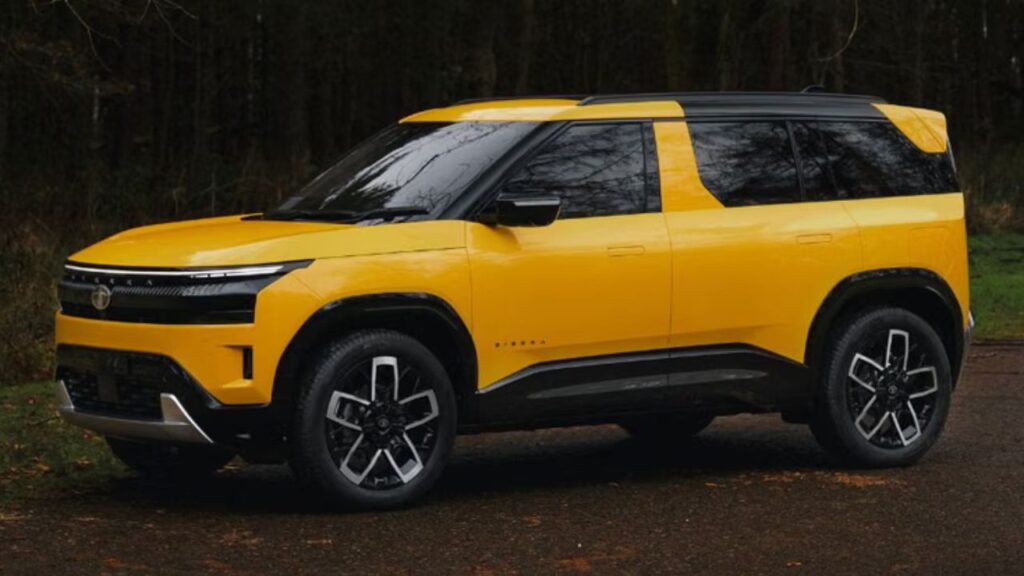
The design team faced a difficult task when recreating this body style. They had to respect the old profile, but they also needed excellent aerodynamic efficiency for an electric car. The official teaser confirms they preserved the visual look of the large wrap-around rear window. They used blacked-out pillars to create that classic look, though the actual side glass functions normally for modern safety reasons.
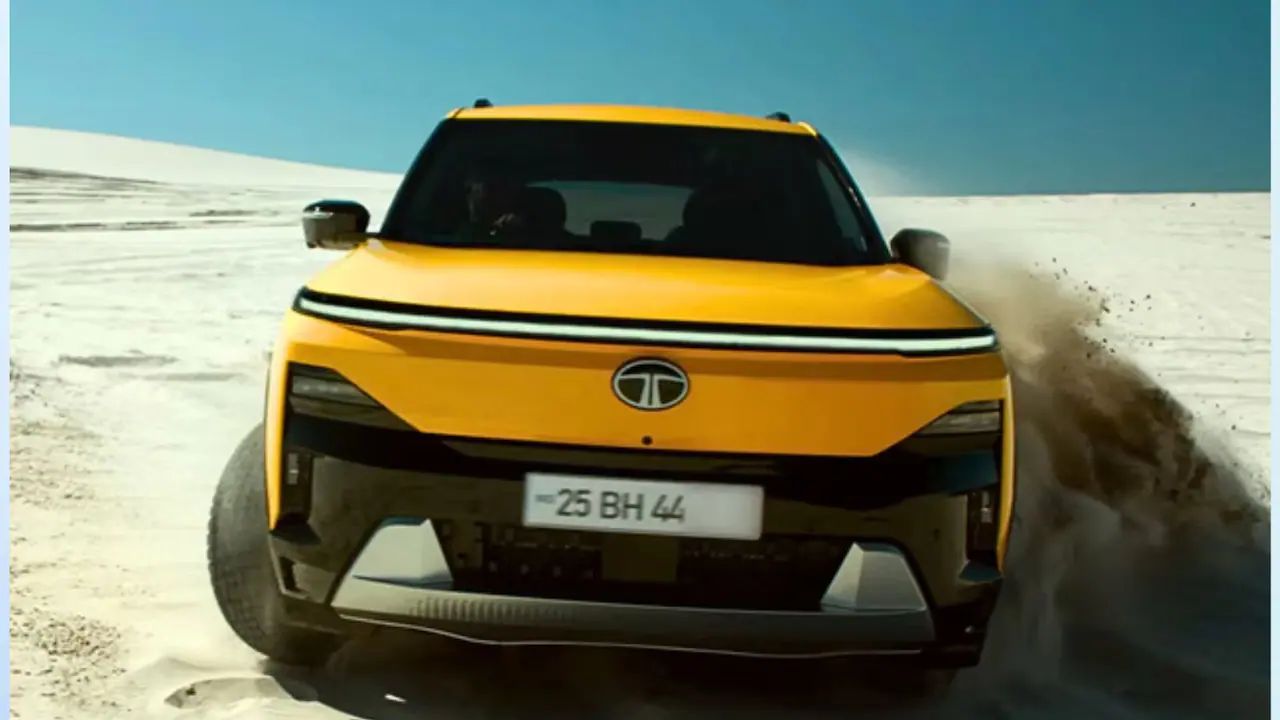
The specific styling cues separate the electric variant from the petrol and diesel versions. You get a completely blanked-off front grille on this Sierra EV model. This design choice reduces wind resistance because electric motors do not need massive frontal airflow. The front bumper has been completely redesigned, featuring clean lines and specialized vents near the wheels to route air smoothly.
You will notice standard badge details placed near the front fenders and the rear tailgate. The alloy wheels look similar to the petrol model in the teaser, but the Sierra EV might utilize unique aerodynamic inserts. These inserts prevent air turbulence around the wheels, saving battery power when cruising at high speeds. The front brakes use ventilated discs to stop the vehicle quickly. The rear assembly uses standard hardware to keep maintenance simple.
The Shocking Battery Sizes Stolen Straight From the Harrier EV
The mechanical architecture relies on the advanced acti.ev+ platform. This platform is the exact same one that underpins the upcoming Harrier EV. Sharing a platform keeps production costs down, allowing the brand to offer massive battery options in a smaller vehicle frame. The floor is completely flat, which means the battery modules pack tightly under the cabin seats.
Riders can choose between two distinct battery sizes when the vehicle arrives in showrooms. The entry variant uses a 65kWh pack, while the long-range edition gets a large 75kWh pack. These numbers are substantial for an electric vehicle of this size. Many competitors in this price segment still use much smaller 40kWh or 50kWh batteries.
The real-world range will alter how people plan long highway journeys. While formal certification numbers are not out yet, the 75kWh battery should provide around 480 kilometres of actual highway driving. The smaller 65kWh version will easily cover 400 kilometres in standard city commuting conditions. Liquid cooling systems keep the internal battery temperatures stable when using high-speed DC fast chargers on the road.
AWD or RWD? The Power Setup That Will Change the Sierra EV
The commercial director of the company confirmed in an interview that the Sierra EV will come with rear-wheel drive and all-wheel drive options. This represents a major change from their older front-wheel-drive electric platforms. Moving the electric motor to the rear axle improves steering feel, allowing the front wheels to focus entirely on guiding the vehicle.
The all-wheel drive hardware will remain exclusive to the 75kWh battery variant. This mechanical setup places one electric motor on the front axle and a second motor on the rear axle. The onboard computer system controls power distribution to the wheels instantly, preventing tyre spin on wet surfaces.
The rear-wheel-drive models will feel responsive when you accelerate from a complete stop. Electric motors deliver their power instantly, so the vehicle moves forward without any hesitation. The monocoque body layout prevents excessive leaning when you take a sharp turn. The ride stays level and highly controlled.
Why the Dashboard Layout of the Sierra EV Makes Every Other 2026 EV Look Ancient
Inside the passenger cabin, the dashboard design catches your attention immediately. The manufacturer is using the cabin architecture from their premium petrol models to establish an upscale environment. High-spec variants will offer a triple-screen electronic dashboard that stretches across the interior.
The driver uses a 10.25-inch digital instrument cluster that displays navigation routing, power consumption, and safety parameters. The center area features a 12.3-inch main touchscreen for media playback, vehicle adjustments, and climate controls. The most unusual feature is the separate 12.3-inch passenger screen mounted right in front of the co-driver seat. This screen lets passengers stream videos or manage music without interrupting the driver.
Cheaper variants will drop this third passenger screen, relying on a clean dual-screen setup instead. These lower versions will still provide a clear head-up display to project your speed onto the glass windscreen. The steering wheel features an illuminated logo with touch switches for media control. The cabin materials feel solid, though some hard plastics are present on the lower door sections.
Prices, Dimensions, and Variants
Understanding the version structure requires analyzing the actual numbers. The price targets the middle of the premium electric market, placing the vehicle directly above the Curvv EV while staying below the larger Harrier EV.
This table shows the technical figures and variant pricing details:
| Variant Name | Battery Capacity | Motor Placement | Expected Ex-Showroom Price |
| RWD 65kWh Base | 65kWh | Rear-Wheel Drive | ₹18,49,000 |
| RWD 75kWh Mid | 75kWh | Rear-Wheel Drive | ₹21,00,000 |
| AWD 75kWh Top | 75kWh | All-Wheel Drive | ₹23,49,000 |
The physical dimensions provide plenty of interior volume. The width of 1841 mm ensures excellent shoulder room for three passengers in the back seat. Headroom feels great because the roofline remains high all the way to the rear tailgate. The vehicle includes standard Anti-Lock Brakes across all versions to prevent tyre lockup during sudden stops.
Real-World Features You Will Actually Use Every Single Day
Car brands often include unnecessary electronic gadgets to make their sales brochures look fancy. This model concentrates on features that directly impact your daily driving experience. The interior layout feels highly practical, offering smart storage trays throughout the central console.
- The panoramic sunroof features an electronic sunshade that blocks out ambient heat during warm summer afternoons.
- Powered front seats allow you to change your seating position easily using door-mounted switches.
- Cooled front seats keep you comfortable during long, humid summer highway drives.
- Multi-mode regen braking lets you slow down the car simply by releasing the accelerator pedal.
The premium sound system features an external amplifier and a dedicated subwoofer hidden in the boot side panel. It plays clear music with good bass response, helping drown out highway tyre noise. The drive modes change the throttle calibration immediately. Eco mode limits acceleration to save battery power, while Sport mode sharpens the motor for rapid overtaking.
How the Sierra EV Will Fight the Mahindra BE 6 and Maruti e Vitara
The mid-size electric segment is becoming crowded this year. Tata Motors used to dominate the local electric market, but new competition is changing things quickly. The new Sierra EV model must compete directly against the Mahindra BE 6, the Hyundai Creta Electric, the MG ZS EV, and the Maruti e Vitara.
The Mahindra BE 6 uses very futuristic styling and high power ratings to attract buyers. However, Mahindra does not have the years of public charging data that Tata has gathered over the last five seasons. The Maruti e Vitara offers all-wheel drive, but its batteries are smaller than the 75kWh pack found here. The Hyundai Creta Electric utilizes a very standard design that lacks a distinct visual history.
The acti.ev+ platform gives this model a major production advantage. This platform accommodates high charging speeds, meaning you spend less time waiting at roadside charging points. The car supports over-the-air software updates, allowing the system to receive range updates and digital fixes while parked at home.
The Secret Strategy Behind the Rs 18 Lakh Price Tag
Achieving a starting price of ₹18.49 Lakh required sharing major platform elements across multiple vehicles. The engineering team utilized suspension links, electric motors, and electronic control modules directly from the Harrier EV program.
This part-sharing strategy keeps replacement components highly affordable. If you damage a suspension arm on a bad road, your local service center will likely have the item in stock immediately. It also means factory technicians can build the vehicle on existing manufacturing lines, reducing factory overhead costs.
The base 65kWh model makes perfect sense if you drive mostly inside city limits. You do not need all-wheel drive or a massive battery if your daily commute is under 50 kilometres. The base variant saves you money upfront while delivering the exact same cabin dimensions, commanding view, and seating comfort as the top-spec model.
The Actual Truth About Charging Speeds and Daily Utility
A large battery is only helpful if you can charge it at a reasonable speed. If you plug the 75kWh version into a standard 15A home outlet, it takes over thirty hours to charge fully. Proper home charging requires a 7.2kW AC wall box, which lowers the charging time to about 10.5 hours. You plug the car in at night, and it is ready when you wake up.
The real speed benefit happens when you use a 100kW DC fast charger on the highway. The vehicle can charge from 10% to 80% capacity in roughly 35 minutes when conditions are optimal. This lets you stop for a quick meal and return to a vehicle that is ready for the highway.
The electrical system also supports vehicle-to-load functions. This feature allows the car to work like a giant power bank. You can connect standard household tools directly to the charging port using a specific outlet adapter. It can run laptop bricks, electric grills, or campsite lights easily if you decide to take the vehicle on a weekend trip.
Should You Wait for the June 30 Launch of the Sierra EV?
If you are planning to buy an electric vehicle around the ₹20 Lakh mark, waiting for this launch is a smart move. The June 30 debut will reveal the exact feature lists for each model trim. The rear-wheel-drive mechanics and the large 75kWh battery make the Sierra EV a much more capable highway car than the smaller electric crossovers currently available.
The missing gear indicator on some digital layouts can be annoying, and the software might have some initial release bugs. Even with those potential issues, the mechanical design looks excellent on paper. The high ground clearance ensures the car can drive over deep potholes without scratching the battery pack casing underneath.
This vehicle is not designed to be a cheap city runabout. It offers a premium cabin experience that combines historic styling cues with modern electric performance. Watch the formal launch closely at the end of the month to see how the final pricing looks for the Sierra EV in your specific region.