Tata Motors has officially revealed the production-ready Tata Sierra EV ahead of its much-anticipated launch on June 30, 2026. The electric midsize SUV revives a legendary nameplate from the brand’s heritage while embracing contemporary electric vehicle design cues. Positioned between the Curvv EV and Harrier EV in Tata’s growing portfolio, the Sierra EV combines rugged styling with advanced electrification. It promises strong performance, practical features, and competitive range, targeting buyers seeking a versatile and capable electric SUV in the popular midsize segment.
Exterior Design: EV-Specific Updates with Heritage Charm
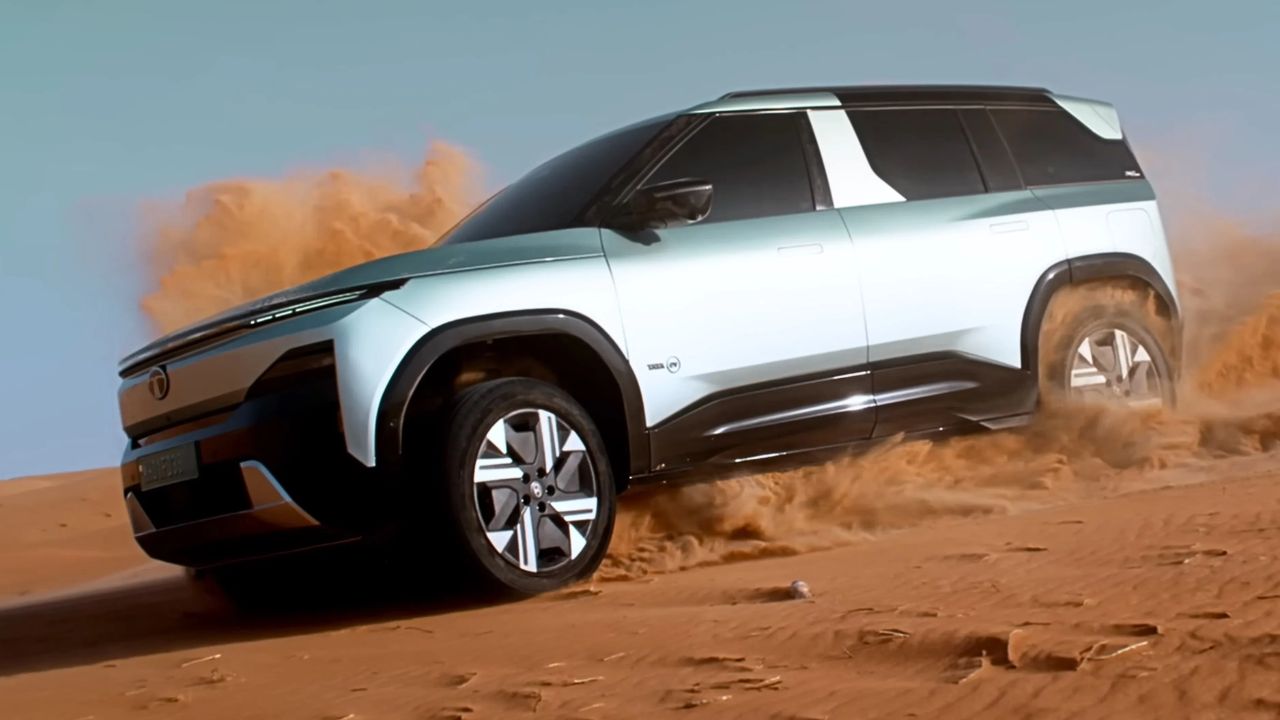
The Sierra EV closely follows the design philosophy of Tata’s recent ICE-to-EV transitions. It retains the iconic boxy silhouette and commanding stance of the ICE Sierra but incorporates subtle yet distinctive electric vehicle elements. The most noticeable change appears at the front, where the functional blacked-out grille of the petrol/diesel version gives way to a body-coloured blanked-off panel. This creates a cleaner, more futuristic appearance typical of modern EVs.
The LED lighting signature remains consistent with signature elements like the connected light bar, but the EV variant omits the prominent “Sierra” branding below it. The lower bumper features a gloss-black finish paired with a faux silver skid plate, reversing some colour elements from the ICE model for a fresh look. These modifications maintain the SUV’s rugged character while signaling its electric identity.
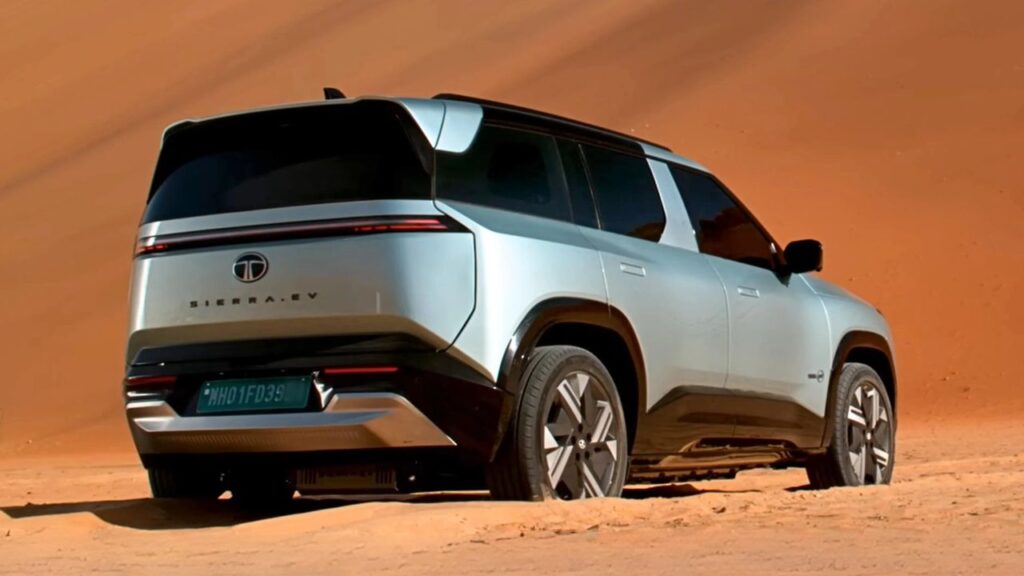
In profile and at the rear, changes are more restrained. New “Sierra.ev” badges appear on the front doors and tailgate. The 19-inch alloy wheels carry over largely unchanged, preserving the vehicle’s bold road presence. Tata is expected to introduce fresh colour options, including a striking silver shade showcased in recent visuals, to appeal to buyers seeking distinction. Flush door handles and aerodynamic enhancements further support efficiency goals. Overall dimensions and proportions stay true to the ICE sibling, ensuring familiarity for fans of the original Sierra’s lifestyle-oriented design.
Interior and Features: Premium Tech Expected
While Tata has not yet fully disclosed the cabin details, strong similarities with the Harrier EV are anticipated. Higher trims are likely to feature an advanced triple-screen setup consisting of a 10.25-inch digital instrument cluster, a 12.3-inch central infotainment touchscreen, and a dedicated 12.3-inch passenger display. Lower variants may offer a dual-screen configuration supplemented by a head-up display.
Premium amenities such as a panoramic sunroof, powered and ventilated front seats, a high-quality audio system, wireless charging, and multiple drive modes are expected. Connected car technology, over-the-air updates, and Level 2 advanced driver assistance systems should further enhance the ownership experience. The spacious and practical interior, combined with the Sierra’s signature wraparound rear glass element, promises excellent visibility and a premium ambiance suitable for family use and long journeys.
Powertrain and Performance: Shared Architecture with Harrier EV
The Sierra EV will draw heavily from the Harrier EV’s mechanical underpinnings, utilising Tata’s advanced acti.ev+ platform. Battery options are expected to include 65 kWh and 75 kWh packs, offering flexibility for different range and performance needs. Rear-wheel-drive configuration will likely power base and mid variants, while the top-spec model will offer all-wheel drive with dual motors for superior traction and performance.
This setup mirrors the Harrier EV’s capabilities but benefits from the Sierra’s slightly smaller and lighter dimensions, potentially delivering a higher real-world range. The Harrier EV achieves up to 627 km on a single charge, and the Sierra EV could match or exceed this figure depending on final tuning. Fast-charging support and efficient power delivery should make the vehicle suitable for both urban commuting and highway touring. Exact power outputs remain under wraps but are expected to deliver strong acceleration and responsive driving dynamics.
Expected Powertrain Variants:
- RWD 65 kWh: Balanced range and efficiency for daily use.
- RWD 75 kWh: Extended range with single-motor setup.
- AWD 75 kWh: Dual-motor configuration for enhanced performance and capability.
These options will allow Tata to cater to diverse customer preferences within the midsize EV segment.
Pricing and Market Positioning
Tata is expected to price the Sierra EV between Rs 18 lakh and Rs 25 lakh ex-showroom. This competitive positioning places it directly against strong rivals such as the Mahindra BE 6, Hyundai Creta Electric, MG ZS EV, and Maruti e Vitara. The blend of iconic styling, modern electrification, and practical features should help the Sierra EV carve a unique identity in India’s rapidly expanding electric midsize SUV market.
As Tata’s seventh electric model, the Sierra EV strengthens the brand’s portfolio and builds on the success of models like the Nexon EV and Curvv EV. Its heritage appeal combined with contemporary technology positions it as an aspirational yet accessible choice for buyers transitioning to electric mobility.
Expected Range, Charging, and Efficiency
With the larger 75 kWh battery and efficient platform, the Sierra EV is projected to deliver a claimed range exceeding 500 km under standard testing conditions. Real-world figures will vary based on driving style, terrain, and load, but the smaller footprint compared to the Harrier EV should yield competitive efficiency. DC fast charging capability will support quick top-ups, making long-distance travel more feasible.
Tata’s focus on thermal management and battery technology ensures reliable performance across varying climatic conditions common in India. The AWD variant will particularly benefit buyers in regions with challenging roads or occasional off-road requirements.
Strategic Importance for Tata Motors
The Sierra EV marks another step in Tata’s aggressive electrification strategy. By reviving the iconic Sierra nameplate in electric form, the company taps into emotional connections with loyal customers while attracting new buyers in the premium midsize segment. The vehicle’s boxy, rugged design differentiates it from sleeker crossover rivals, appealing to those who value presence and practicality.
Production on the acti.ev+ architecture ensures high localisation and cost efficiency, supporting competitive pricing and strong margins. As India’s EV infrastructure continues to mature, models like the Sierra EV will play a crucial role in accelerating adoption among family-oriented buyers seeking range, features, and brand trust.
What to Expect at Launch
The official unveiling on June 30, 2026, will provide complete specifications, variant details, pricing, and range figures. Customers can anticipate a comprehensive feature list, multiple colour options, and possibly introductory offers. Test drives and bookings are expected to follow shortly after the reveal, with deliveries commencing in the coming months.
Early interest suggests strong demand, particularly for the AWD variant that showcases Tata’s growing expertise in performance-oriented electric vehicles. The Sierra EV’s ability to blend heritage styling with forward-looking technology positions it as a compelling proposition in a crowded market.
A Heritage Reborn in Electric Form
The Tata Sierra EV successfully modernises a beloved nameplate while addressing the practical needs of today’s electric vehicle buyers. Its distinctive design, capable powertrain options, and feature-rich cabin make it a strong contender in the midsize segment. With an expected price range of Rs 18 lakh to Rs 25 lakh and competitive range figures, the Sierra EV has the potential to broaden Tata’s appeal and accelerate the shift toward sustainable mobility in India.
As the June 30 reveal approaches, anticipation continues to build around this latest addition to Tata’s EV lineup. The Sierra EV not only honours its storied past but also charts an exciting future for electric SUVs that combine character, capability, and efficiency. Buyers seeking a bold, practical, and technologically advanced midsize electric SUV will find much to appreciate in this revived icon.