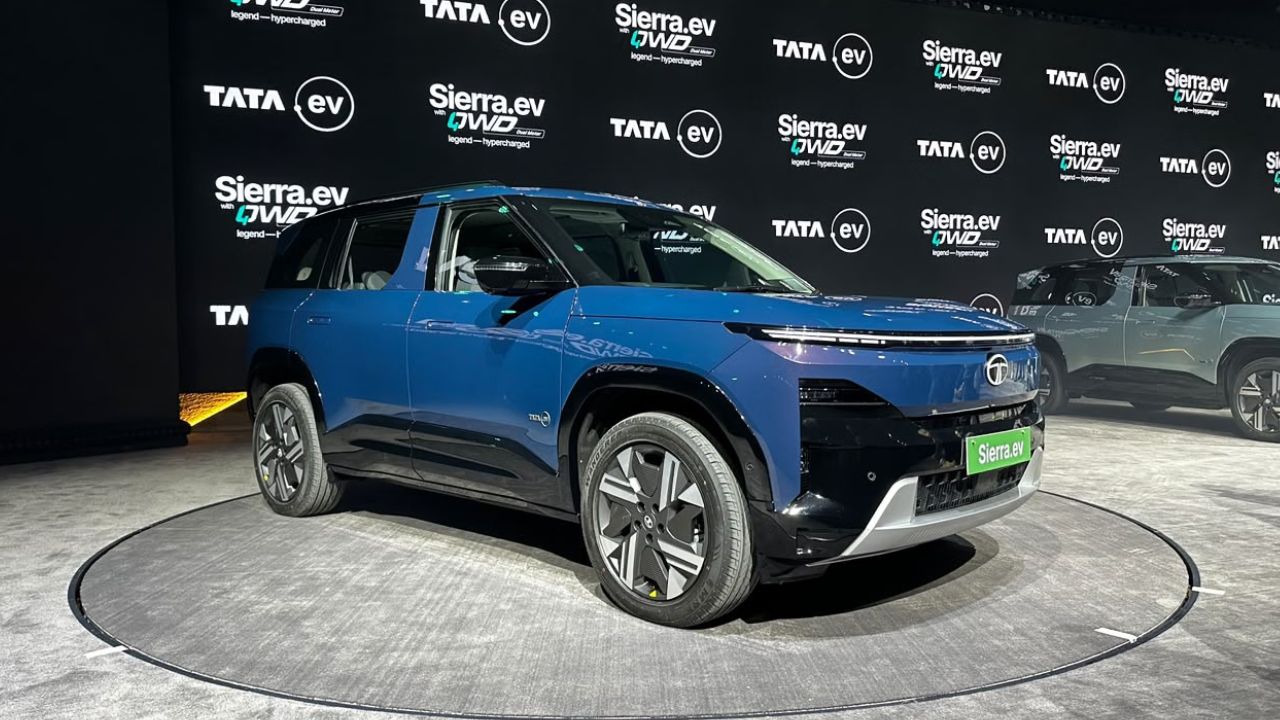
Tata Motors has officially introduced the Sierra EV marking another significant step in its electric vehicle expansion strategy. Priced from Rs 18.79 lakh ex showroom the new electric SUV aims to combine rugged styling advanced technology and practical utility in the competitive midsize segment. This launch follows the successful introduction of the internal combustion engine powered Sierra and positions Tata strongly against rivals offering electric alternatives.
The Sierra EV arrives at a time when demand for electric SUVs continues to grow driven by improving infrastructure and government incentives. As the second electric Tata model to offer all wheel drive it brings enhanced capability and performance to buyers seeking versatility beyond traditional crossovers.
Pricing and Variant Structure
The Sierra EV is available in multiple variants catering to different customer preferences and budgets. The base Pure variant with the 63 kilowatt hour battery and rear wheel drive starts at Rs 18.79 lakh while higher trims with larger batteries and all wheel drive options extend up to approximately Rs 25.99 lakh. A 7.2 kilowatt home charger and installation costs an additional Rs 49000.
Compared to the Curvv EV the Sierra EV commands a premium reflecting its larger size and added capabilities. It is however priced competitively against models like the Mahindra BE 6 and other electric SUVs in the segment. The structure allows buyers to choose between efficiency focused rear wheel drive versions and more capable all wheel drive configurations.
Battery Options and Impressive Range Claims
The Sierra EV offers two battery pack choices a 63 kilowatt hour unit and a larger 75 kilowatt hour pack. Both are paired with rear mounted electric motors as standard while the bigger battery is available with dual motors for all wheel drive. The 63 kilowatt hour variants produce 238 horsepower while the 75 kilowatt hour models deliver 209 horsepower in rear wheel drive form. The all wheel drive version combines outputs for a total of 504 Newton metres of torque.
Range figures are competitive with the 75 kilowatt hour rear wheel drive claiming up to 665 kilometres the all wheel drive variant rated at 624 kilometres and the 63 kilowatt hour models offering 535 kilometres under MIDC testing. Fast charging with a 120 kilowatt direct current unit can add up to 263 kilometres in 15 minutes while a 20 to 80 percent charge takes around 26 minutes. Alternating current charging with a 7.2 kilowatt unit completes a full charge in 8.9 to 10.5 hours depending on battery size.
The inclusion of vehicle to load and vehicle to vehicle functionality adds practical utility allowing the Sierra EV to power external devices or even support other electric vehicles in emergencies. A lifetime battery warranty covering 15 years from first registration provides long term peace of mind.
Exterior Design Retaining Rugged Appeal
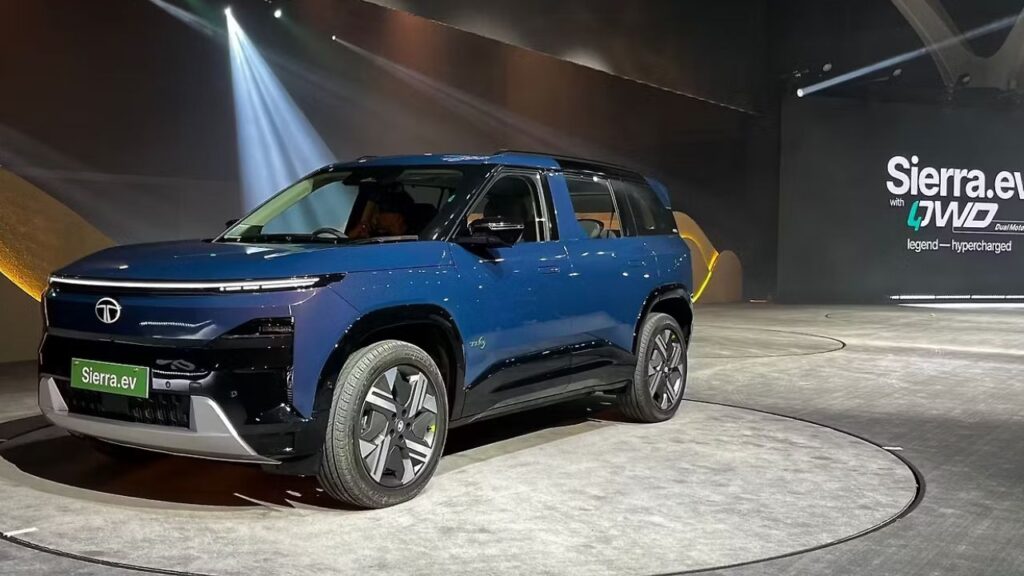
The Sierra EV closely mirrors the design of its internal combustion engine sibling with minor distinctions to highlight its electric nature. The front end features a revised bumper with more gloss black trim and lacks the full width blacked out section seen on the petrol version. EV specific badging and lettering complete the visual updates.
The side profile and rear remain largely identical to the standard Sierra offering a commanding presence with 18 inch or 19 inch alloy wheels depending on the variant. Ground clearance stands at 205 millimetres ensuring the SUV can handle light off road duties and poor road conditions common in India. The overall stance maintains the adventurous character that has defined the Sierra nameplate.
Feature Rich and Spacious Interior
The cabin of the Sierra EV mirrors the layout of the internal combustion engine model but with subtle differences in colour schemes and material choices. A triple screen setup comprising a 12.3 inch touchscreen a 10.25 inch driver display and a 12.3 inch passenger display is available on higher variants creating an immersive digital environment.
Feature highlights include ambient lighting a 12 speaker JBL audio system dual zone climate control a panoramic sunroof powered and ventilated front seats a powered tailgate level two advanced driver assistance systems connected car technology auto park assist a heads up display and a digital key. Over the air updates ensure the vehicle remains current with the latest software improvements.
Practicality remains a strong point with 450 litres of boot space up to the parcel shelf expanding to 622 litres when measured to the roof. With rear seats folded total luggage capacity reaches 1257 litres making it suitable for family trips and weekend getaways.
Key Feature Highlights
- Triple screen digital cockpit on higher variants
- Panoramic sunroof and ambient lighting
- Ventilated and massaging front seats
- Level two advanced driver assistance systems
- Vehicle to load and vehicle to vehicle functionality
Market Positioning and Rivals
The Sierra EV enters a crowded electric midsize SUV segment competing with models like the Mahindra BE 6 Maruti Suzuki e Vitara VinFast VF6 Hyundai Creta Electric and MG ZS EV. Its combination of rugged design impressive range and practical seven seat layout if offered differentiates it from more car like crossovers.
Pricing places it as a premium option but the value proposition remains strong with extensive standard equipment and Tata renowned build quality. The availability of both rear wheel drive and all wheel drive configurations broadens its appeal to different customer needs from urban commuting to occasional off road adventures.
Significance for Tata Electric Vehicle Strategy
The Sierra EV launch reinforces Tata Motors commitment to expanding its electric portfolio across multiple segments. As a more direct rival to several key competitors it strengthens the brands presence in the rapidly growing electric SUV market. The model builds on the success of previous electric offerings like the Nexon EV and Curvv EV by offering larger dimensions and enhanced capabilities.
Tata continues to leverage its vertically integrated approach with in house battery technology and manufacturing expertise ensuring competitive pricing and reliability. The Sierra EV also benefits from the companys extensive charging network and service infrastructure providing confidence for potential buyers.
Bookings for the Sierra EV are now open with deliveries commencing from July 15. Interested customers can visit Tata dealerships to explore variants book test drives and understand financing options. The model is expected to generate strong interest given the positive reception to recent Tata electric launches.
In conclusion the Tata Sierra EV launched at Rs 18.79 lakh brings a compelling blend of style performance and practicality to the electric SUV segment. With multiple battery options advanced features and a rugged design it addresses diverse customer requirements while advancing Tata electrification journey. The upcoming deliveries will provide real world feedback on its capabilities but early indications suggest it has the potential to be a strong contender in its class. As the electric vehicle market matures models like the Sierra EV play a crucial role in driving wider adoption through improved range technology and value.